Interprofessional teamwork: Nursing
Introduction0:00–0:33
Nurse Dara works in the surgical step-down unit where she has been assigned to care for Ms. Hart who experienced abdominal wound dehiscence 4 days ago after surgery for hernia repair, and is scheduled to be discharged today.
Hart’s needs are met prior to her discharge. Now, interprofessional teams are groups of healthcare professionals working together to provide effective, client-centered care.
Defining the Interprofessional Team0:33–1:17
This could include everyone from doctors and nurses, to pharmacists and therapists, dieticians, psychologists, technologists and technicians, to social workers and care managers.
The members of the team will depend on the specific needs of the client. Interprofessional teams require interprofessional collaboration so the team can work together to create and carry out a healthcare plan that treats the client as a whole person.
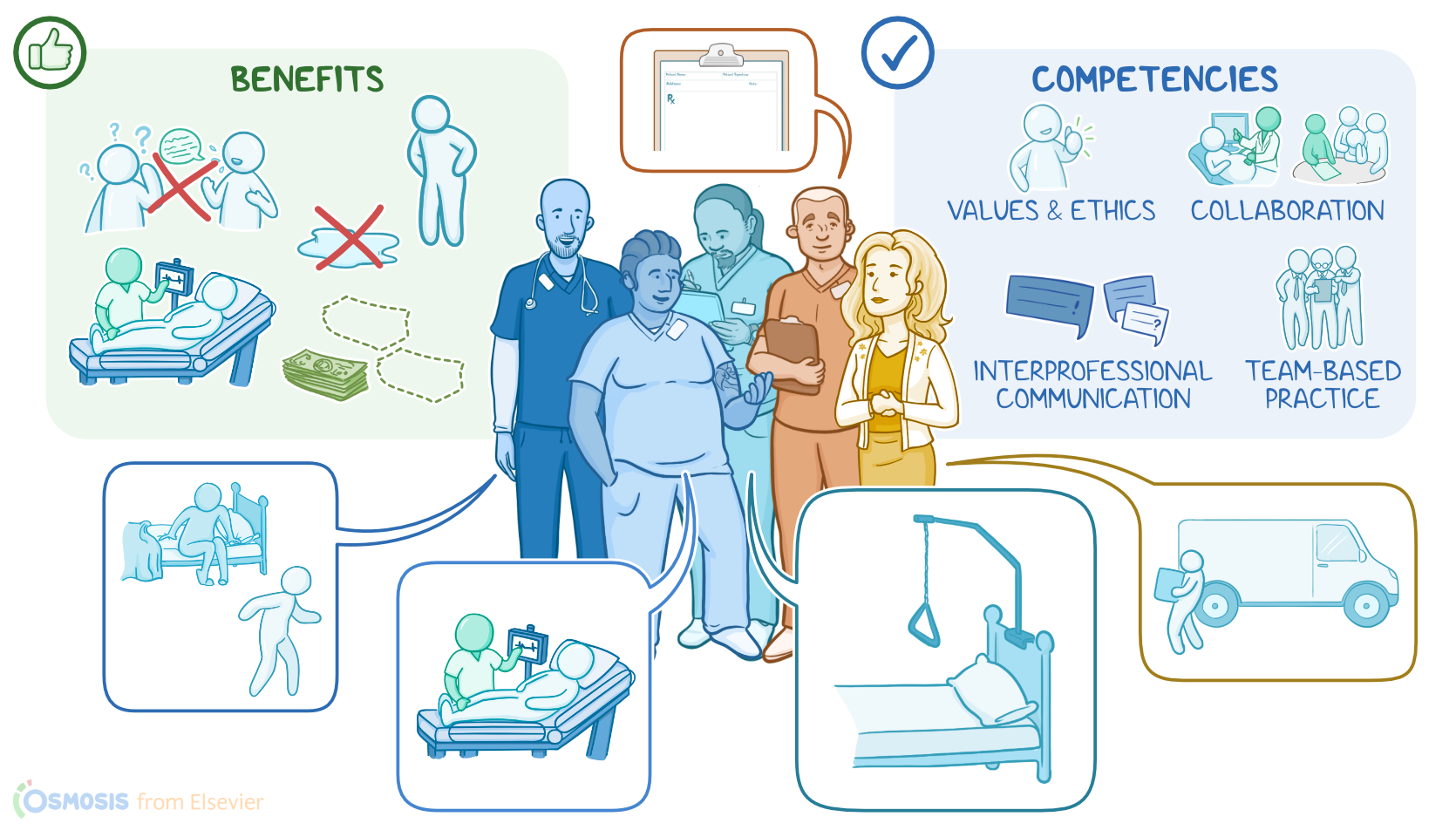
This will help prevent communication breakdown,reduce errors, improve efficiency of care delivery, and cut down healthcare costs.Okay, there are 4 core competencies for effective interprofessional teamwork.
Core Competencies of Interprofessional Teamwork1:17–2:08
First, there are values and ethics for interprofessional practice, which means that team members should appreciate each team member’s contribution to the team in order to create shared values, such as a commitment to patient-centeredness, as well as safer, more effective care.
Next are roles and responsibilities for collaborative practice, which means that team members should understand their own role and the roles of others so everyone can best apply their skills to meet the needs of the client.
Then, there’s interprofessional communication, which emphasizes the need for open and effective communication between team members and with the client.
And finally, team-based practice competencies focus on using shared decision-making to build consensus within the team, while working towards a common goal.
The RN Role2:08–3:19
When working as part of an interprofessional team, your role as a nurse will involve interacting with both the client and other team members.
First, since nurses spend the most time with the client, they are in the perfect position to update the team on the client’s condition and report important information to other members, like informing the pharmacist when there’s an adverse effect from a new medication, or reporting a significant change in vital signs to the physician during treatment.
Next, the nurse can act as the coordinator of the interprofessional team. This can facilitate communication among other team members, like when a physical therapist informs the nurse that the client needs orthotic shoes, and the nurse relays that information to the physician to write the prescription.
The nurse can also coordinate care by reviewing the treatment plan and making sure the team members are following it consistently and continuously.
For example, they can check to make sure that the dietician is updating the client’s nutritional needs based on the treatment plan.
Interprofessional Teamwork in Practice3:19–4:35
Hart is having difficulty getting out of bed independently but once she is standing, she is able to ambulate steadily and independently.
The physical therapist, who worked with Ms. Hart yesterday, agrees with that assessment and recommends a trapeze device be installed over Ms.
Hart’s bed at home. The physician writes a prescription for this home device and the case manager says that she will coordinate with the delivery service to be sure that it is delivered today.
Hart after the interprofessional meeting, and Ms. Hart says that she now feels comfortable to be discharged with this plan in place.
All right, as a quick recap… An interprofessional team is a group of healthcare professionals working collaboratively toward a common goal of providing efficient client-centered care.
Review4:35–5:27
Interprofessional teams are becoming more common due to the benefits of decreasing medical errors, reducing miscommunications, improving the quality of care, and containing healthcare costs.
Interprofessional teams can be present in any healthcare setting and have different members depending on the needs of the clients in that setting.
There are a set of four competencies that help to foster interprofessional team collaboration by serving as a framework: values and ethics for interprofessional practice, roles and responsibilities for collaborative practice, interprofessional communication, and team-based practice.
The role of the RN in an interprofessional team is to bring their own specialized skills to the team while collaborating with members from other professions to provide the best
| INTERPROFESSIONAL TEAMWORK | ||
| KEY POINTS | NOTES | |
| INTRODUCTION |
| |
| DEFINITIONS |
| |
| CORE COMPETENCIES |
| |
| THE NURSE'S ROLE |
| |
No notes for this video yet
Try adding a note below