Intraoperative care: Nursing
Introduction0:00–0:31
The intraoperative phase of surgery is when your patient undergoes a surgical procedure, beginning when they enter the operating room and ending when they leave the operating room.
Your role during this period is to promote patient safety by performing frequent assessments, preventing infection, and advocating for them, since they cannot speak for themselves.
When caring for your patients during the intraoperative phase, you will follow the steps of the Clinical Judgment Measurement Model, or CJMM, to make clinical decisions about patient care.
Surgical Team Members0:31–1:50
Okay, let’s review the roles of the surgical team, which is typically separated into a sterile group and a nonsterile group.
Sterile team members include the scrub nurse, surgeon, and registered nurse first assistant, or RNFA, and they work strictly within the sterile field.
On the other hand, the nonsterile team members work outside the sterile field and include the circulating nurse, the anesthesiologist or certified registered nurse anesthetist, also known as the CRNA, and other assistive personnel.
Now when it comes to the nursing team members, the scrub nurse is responsible for preparing and maintaining the sterile field, draping the patient, and assisting the surgeon by passing instruments and supplies.
The circulating nurse advocates for the patient, coordinates communication between the nonsterile and sterile team members, and initiates the “time-out” procedure, when the team pauses before surgery to verify that they’re performing the right procedure on the right surgical site on the right patient.
Additionally, the RNFA promotes optimal patient outcomes by fostering communication and collaboration with the team during surgery.
It’s important to note that it’s the responsibility of every team member to practice surgical conscience through continual assessment and vigilance, to ensure adherence to sterile technique.
Recognizing Cues1:50–2:41
Now, as the circulating nurse, you will ensure patient safety by using the Clinical Judgment Measurement Model to gather and recognize important cues during your assessment.
These cues can include indications of the patient’s response to anesthesia, like vital signs, ECG, and airway patency. Other cues you should recognize include those that are associated with malignant hyperthermia, which is a rare life-threatening genetic condition triggered by inhaled general anesthetics during the intraoperative phase of surgery, characterized by muscle rigidity, tachycardia, pyrexia, and tachypnea.
You should also watch closely for indications of improper body alignment; so, during your assessment, you should watch for cues like an extremity that’s not properly supported and is slightly hyperextended.
You will also note if the body part is cool, or the capillary refill is sluggish. Next, you will analyze the cues by determining the relationship between the cues and linking them to your patient’s history and clinical presentation.
Analyzing Cues2:41–3:00
For instance, you will determine whether a cool extremity is due to chilling from the cool operative environment or if it’s due to impaired circulation from the patient’s body position.
Prioritizing Hypotheses and Generating Solutions3:00–3:48
Then, you will determine a priority hypothesis related to the intraoperative phase, such as altered body temperature, improper body alignment, or risk for infection.
You will rank the hypotheses by considering whether your findings are potentially life-threatening, like malignant hyperthermia; or an immediate concern, like hypothermia, infection, or tissue damage due to improper positioning.
When your analysis of cues points to a problem that’s potentially life-threatening, you will generate solutions to address it first.
When an immediate concern is present, you will generate a solution such as “My patient will develop no complications from the surgical procedure due to improper body alignment, such as skin breakdown, joint damage, muscle strain, or postoperative pain.” Okay, once the solutions have been generated, you will take action to implement the solutions.
Taking Action and Evaluating Outcomes3:48–5:11
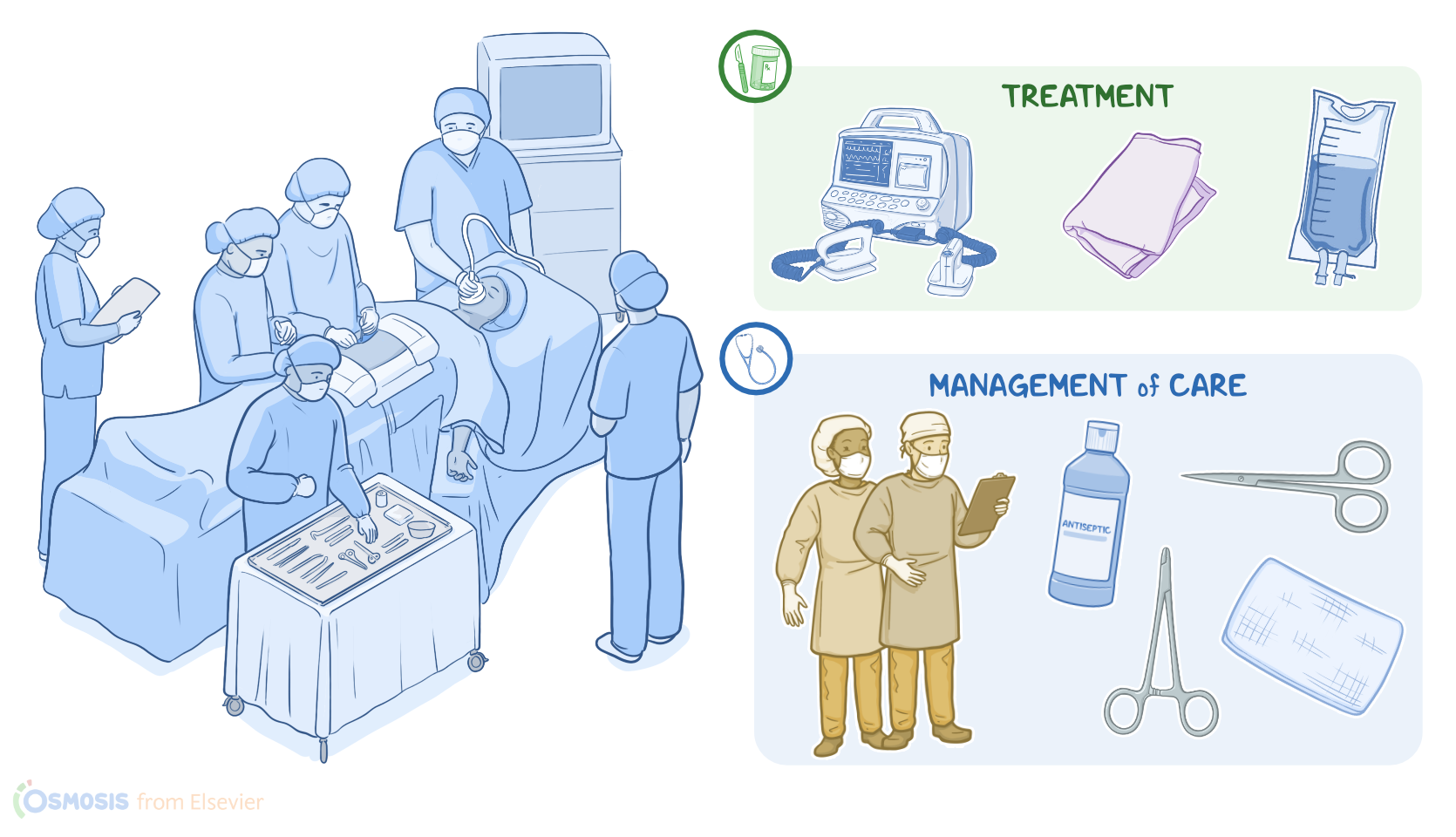
For all patients, be sure to have emergency equipment readily available in case of a life-threatening change in status. You will use blankets, warmed IV fluids, and thermal drapes to maintain adequate body temperature during surgery.
You will also collaborate with the surgical team to support your patient in proper alignment to promote circulation, and avoid stretching and compression of muscles and nerves, or injury to skin and underlying tissue.
To prevent infection, the surgical site is prepped with an antimicrobial skin prep, the sterile field is maintained, and sharps and sponges are counted prior to the end of surgery to ensure these items have not been left inside your patient.
If your patient’s condition is declining or hasn’t changed, you will revise the plan of care, take additional actions, and document the operating room activities accordingly.
For example, if you notice the patient is developing signs of increased tissue pressure, you’ll bring this to the attention of the surgical team for repositioning and additional pressure reduction techniques.
Alright, as a quick recap... The intraoperative phase of surgery begins when your patient enters the operating room and ends when they leave the operating room.
Review5:11–5:31
As the circulating nurse, you will go through the steps of the Clinical Judgment Measurement Model to make clinical decisions about patient care by recognizing and analyzing cues, prioritizing hypotheses, generating solutions, taking action,
| INTRAOPERATIVE CARE | ||
| KEY POINTS | NOTES | |
| DEFINITION |
| |
| SURGICAL TEAM MEMBERS |
| |
| RECOGNIZING CUES |
| |
| ANALYZING CUES |
| |
| PRIORITIZING HYPOTHESES AND GENERATING SOLUTIONS |
| |
| TAKING ACTION AND EVALUATING OUTCOMES |
| |
- "Fundamentals of nursing (11th ed.)" Elsevier (2023)
- "Fundamentals of nursing: Active learning for collaborative practice (3rd ed.)" Elsevier (2022)
No notes for this video yet
Try adding a note below