Medical asepsis: Nursing skills
Sepsis refers to infection, while the prefix “a'' means “the absence of.” In other words, asepsis is defined as the absence of pathogens. Now, there are two basic types of asepsis: medical asepsis and surgical asepsis. We will focus on medical asepsis, which is also known as “clean technique”. These are practices that kill some microorganisms to prevent them from spreading.
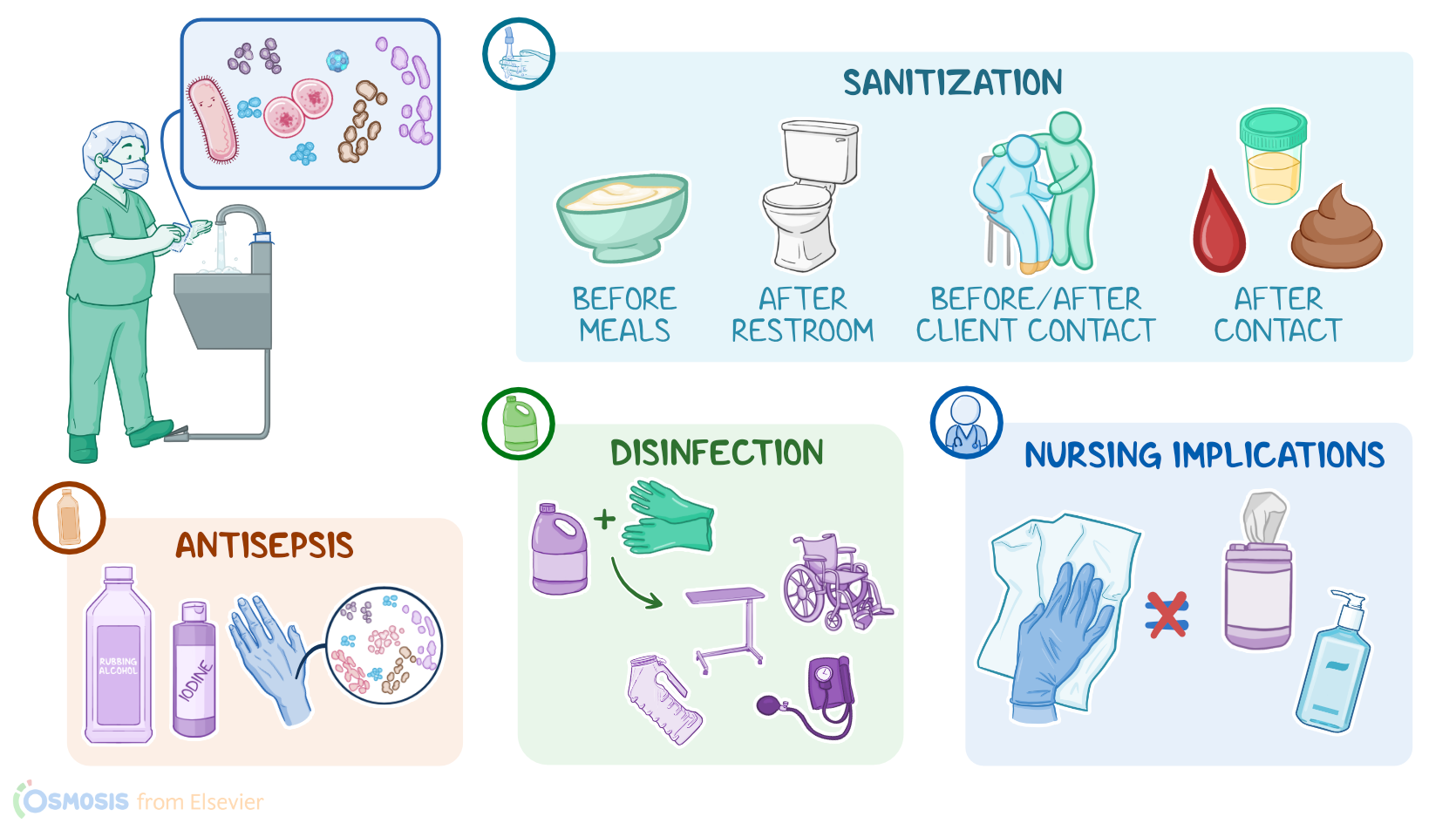
Medical asepsis includes sanitization, antisepsis, and disinfection. Sanitization refers to cleaning practices and techniques that physically remove microorganisms. These include hand washing and cleaning of clients’ personal equipment, clothing, and linens. Now, there are several things that you should know in order to maintain a sanitary environment. The most important one is hand hygiene which includes hand washing and use of hand sanitizer. Always wash your hands before meals, after using the bathroom, and before and after any contact with your clients. Don’t forget to wash your hands after touching your own or your client’s body fluids, such as urine, feces, blood, saliva, vomitus, or genital discharge. Next, when coughing or sneezing, always cover your nose and mouth with a tissue or your elbow. Teach your clients to do the same.
Next up are personal items. Each client should have their own soap, cups, toothbrushes, and towels. Personal equipment should be regularly cleaned to prevent the growth of microorganisms. Also, when cleaning the room and objects, make sure to not stir up the dust. In other words, avoid shaking dirty linens, and use a moistened cloth or mop to wipe dust. When disposing dirty linens to laundry bins, keep them away from your uniform. This way, you will prevent the contamination of your uniform, and subsequently, you will prevent the spread of microorganisms. Also, regularly empty the garbage, because trash is a perfect environment for pathogens to grow. Finally, have good personal hygiene and assist your clients to achieve the same!
Next, we have antisepsis which is the process of killing microorganisms or limiting their growth on the skin and other living tissues. Chemicals used in antisepsis are called antiseptics and the most common ones include rubbing alcohol and iodine. Antiseptics can be used for hand scrubbing; treating cuts, wounds, and burns; and preoperative skin cleaning.
| MEDICAL ASEPSIS | ||
| KEY POINTS | NOTES | |
| DEFINITION |
| |
| SANITIZATION |
| |
| ANTISEPSIS |
| |
| DISINFECTION |
| |
| NURSING IMPLICATIONS |
| |
No notes for this video yet
Try adding a note below