Mental health care settings: Nursing
Introduction0:00–0:58
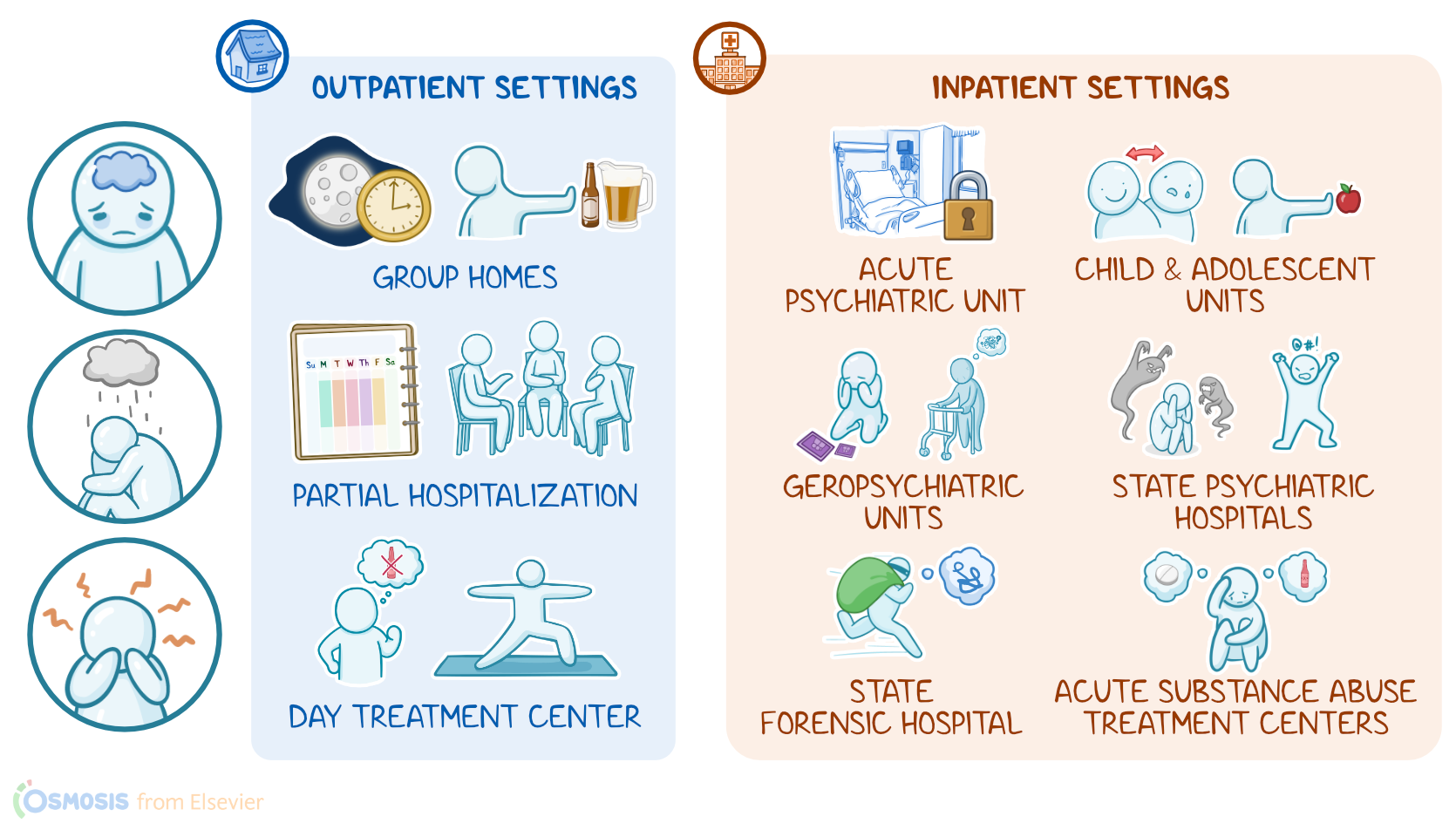
Patients with mental health disorders require treatment in settings specific to their condition and unique needs. These settings include outpatient settings, where treatment is conducted in the community; or inpatient settings, where treatment occurs in a hospital-like facility.
Therapeutic activities provided in these settings include individual and group therapy; psychoeducation, which combines cognitive-behavior therapy, group therapy, and education; and nursing care for medication management and monitoring of existing medical conditions.
Depending on the setting, patients may also partake in activities like rehabilitation services, such as occupational and physical therapy; gardening; yoga; or dance therapy.
These services are provided by a multidisciplinary health care team, including providers, nurses, therapists, social workers, and case managers.
Outpatient Settings0:58–2:29
Outpatient settings include group homes, partial hospitalization, and day treatment centers. Group homes are a structured, home-like living situation that provides 24-hour support for patients who are unable to function independently, such as adults with mental health conditions like schizophrenia or pediatric patients with behavioral or conduct disorders.
In the group home setting, patients develop necessary life skills, like learning to adhere to house rules, including nighttime curfews and abstaining from illegal substances.
Group homes can also serve as residential treatment centers for patients with substance use disorders. Next, partial hospitalization centers are short-term programs that provide ongoing treatment for patients who are transitioning from an inpatient facility.
Patients typically spend four to six hours each day, five days per week in therapy, with the goal of decreasing the likelihood of being readmitted to inpatient treatment.
After completing a partial hospitalization program, patients are often transferred to a lower level of care in a day treatment center, which are community centers focused on stabilization, rehabilitation, and recovery.
Patients attend structured activities for a set number of hours on a prescribed schedule and develop skills to increase their ability to function independently.
Patients with co-occurring conditions, such as schizophrenia and substance use disorder are provided with intensive therapy for schizophrenia along with attending Alcoholics or Narcotics Anonymous meetings.
Inpatient Settings2:29–5:14
Now, inpatient mental health care can occur in a variety of settings. In situations when there’s an acute psychiatric emergency, like when a patient is a danger to themselves or others, or is gravely disabled, the patient can receive care in an acute psychiatric unit for rapid evaluation and stabilization.
Intensive psychiatric care is typically provided on a locked unit, and patients can be admitted voluntarily or involuntarily.
There are also child and adolescent units that offer intensive treatment for patients aged three to seventeen years of age with complex mental health needs like mood, psychotic, or eating disorders.
Treatments are age-appropriate, and include individual, group, and family therapy; as well as time for schoolwork and interaction with peers.
In geropsychiatric units, care is provided to older adult patients with mental health or cognitive disorders, like depression or Alzheimer disease, as well as co-occurring acute or chronic medical conditions.
Special considerations are made to promote age-related safety measures, such as lower patient census, decreased stimuli, and clearly marked locations around the unit.
Fall prevention measures include increased lighting and decreased clutter. Treatment may include group therapy sessions focused on areas such as grief, loss, and reminiscence activities.
There are also state psychiatric hospitals for long-term treatment of patients with cognitive and intellectual disabilities, chronic psychiatric conditions, and forensic patients who are awaiting psychiatric evaluations prior to trial.
Care is provided in a highly restrictive environment to reduce the occurrence of aggression and violence. Treatments include programs to build life skills with the goal of reintegration into the community.
Patients who are confined to a state forensic hospital have been convicted of a criminal offense under the influence of a diagnosable mental illness.
To protect patients, staff, and the public, this care setting is the most restrictive and secure. Typically, there are maximum-security elements like guard-controlled doors, metal detectors, and other maximum-security elements.
Nurses in this setting have specialized training to ensure their own safety while maintaining a therapeutic, yet structured nurse-patient relationship.
Lastly, there are acute substance abuse treatment centers where patients are treated for drug or alcohol detoxification and dependence.
Following pharmacological detoxification measures, therapeutic interventions may include mindfulness and relaxation therapy to manage cravings as well as cognitive restructuring techniques focused on emotional and behavioral factors affecting substance use.
Review5:14–5:33
Alright, as a quick recap...Patients with mental health disorders require treatment in settings specific to their condition and unique needs.
These settings include outpatient settings, where treatment is conducted in the community; or inpatient settings where treatment occurs in a hospital-like facility.
| MENTAL HEALTH CARE SETTINGS | ||
| KEY POINTS | NOTES | |
| DEFINITION |
| |
| OUTPATIENT SETTINGS |
| |
| INPATIENT SETTINGS |
| |
- "Varcarolis’s Canadian psychiatric mental health nursing. (3rd ed.)" Elsevier (2023)
- "Keltner’s psychiatric nursing. (9th ed.)" Elsevier (2023)
No notes for this video yet
Try adding a note below