Palliative and hospice care: Nursing
Introduction0:00–0:57
Nurse Sumara works in an oncology unit at a hospital. She has been caring for a client named Monique during her chemotherapy treatment for stage IV breast cancer.
Monique has been experiencing pain, nausea, fatigue, and decreased appetite due to the treatment, so the oncologist initiates palliative care to better manage her symptoms.
Over the next 30 days the palliative care provides symptom relief for Monique, however, the cancer isn’t responding to treatment and continues to progress.
Monique’s oncologist plans a meeting with Monique, her family, and Nurse Sumara to discuss Monique’s options. The oncologist discusses Monique’s disease progress and then says, “Your options are to continue palliative care and cancer treatment or consider hospice.
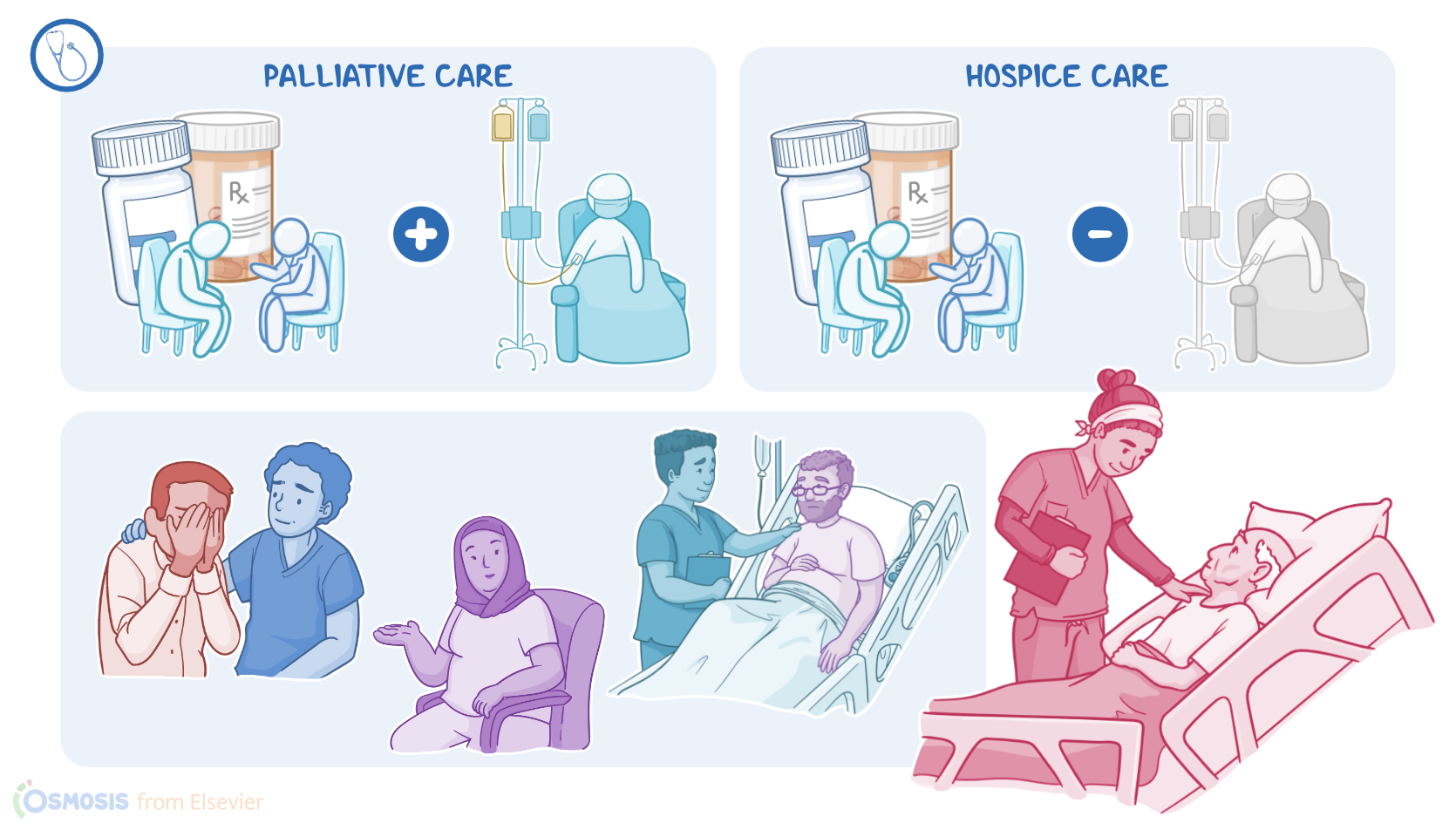
This decision is totally up to you and your healthcare team will support you no matter what you decide.” Palliative care is a type of specialized care that focuses on managing symptoms for those with serious illnesses to reduce suffering and maintain quality of life.
Defining Palliative Care and Hospice Care0:57–2:00
This includes treatment for a wide range of symptoms like pain, depression, constipation, and insomnia. Palliative care is often provided together with curative treatment, like surgery or chemotherapy in Monqiue’s case.
On the other hand, hospice care is also focused on supportive care and symptom management but without treating the actual disease.
Hospice care is usually reserved for clients with six months or less to live who have no options for curative treatment or have chosen not to pursue treatment.
Okay, so both palliative and hospice care are ways of providing holistic care for clients with a serious or life-threatening medical condition with the goal of helping them and their families to achieve the best quality of life.
Palliative and hospice care teams are multidisciplinary, and can include physicians, social workers, case managers, nutritionists, spiritual advisors, and nurses.Nurses who provide care for clients receiving palliative or hospice care aim to reduce distressing symptoms while supporting them and their families emotionally.
Palliative and Hospice Nursing Care2:00–4:36
One palliative and hospice nursing responsibility is to assist clients in managing pain and discomfort through pharmacological measures, such as administering anti-nausea medications, and through non-pharmacological measures, like providing a back massage.
Another responsibility is to protect clients from feeling abandoned and isolated. Nurse Sumara can do this by promptly answering call lights and rounding on clients to make sure they know they aren’t alone.
The nurse should also ensure that the client’s environment is clean and pleasant to promote comfort and relaxation. For example, Nurse Sumara can encourage Monique’s family to bring cherished pictures and items from home to place at the bedside.
Palliative and hospice nurses are not only responsible for supporting clients, but their family members as well. When a client becomes seriously ill or approaches the end of life, family members also suffer.
Therefore, the nurse should provide them with consistent support throughout the experience. The nurse can extend emotional support by using therapeutic communication techniques, such as asking open-ended questions, like How are you feeling?
as opposed to asking closed-ended questions that can be answered with a yes or no, like, “Does this news make you upset?” Having open dialogues encourages clients and their families to discuss their feelings.
Nurses should be aware that silence, anger, and resentment are expected reactions experienced by clients and families. Nurses can address these by providing honest and realistic information about the illness and offer clients and their families privacy if needed.
The nurse can also refer clients and their family members to a spiritual advisor or a non-religious counselor to offer spiritual support.Okay, let’s check back in with Nurse Sumara, Monique, and her family, who have discussed the options for Monique’s care.
Monique says, “I’m ready to begin hospice care. I know that this decision is right for me.” Nurse Sumara responds, “Tell me about what led you to this decision.” Monique responds, “I don’t want to feel this sick anymore.
I want to enjoy what time I have left with my loved ones.” Nurse Sumara then explains to Monique what to expect from hospice care, including an assessment of a specialized hospice nurse and provider, and withdrawal from her chemotherapy treatments.
Nurse Sumara also lets Monique know that a hospice nurse can provide her hospice care at home, so she can stay near her family.
Monique and her family express that they understand what Nurse Samara has taught them and one family member says, “Thank you for everything.” Alright, as a quick recap…both palliative and hospice care are specialized types of holistic care for clients with a serious or life-threatening medical condition.
Review4:36–5:14
Palliative care can be provided concurrently with curative treatment and is appropriate for clients at any time during their illness, whereas hospice care is reserved for clients with six months or less to live not undergoing curative treatment.
Nurses who are caring for clients receiving palliative or hospice care are responsible for managing distressing symptoms, preventing feelings of abandonment and isolation, promoting physical and emotional comfort for clients and families, and providing honest and realistic information.
| PALLIATIVE AND HOSPICE CARE | ||
| KEY POINTS | NOTES | |
| DEFINITIONS |
| |
| PALLIATIVE AND HOSPICE NURSING CARE |
| |
No notes for this video yet
Try adding a note below