Sleep - Overview: Nursing
Introduction0:00–0:22
Sleep is a basic human need that allows for the proper functioning of the body and mind. A lack of sleep can cause patients to develop chronic health conditions, like diabetes, obesity, and depression, and impair daily mental and physical functioning.
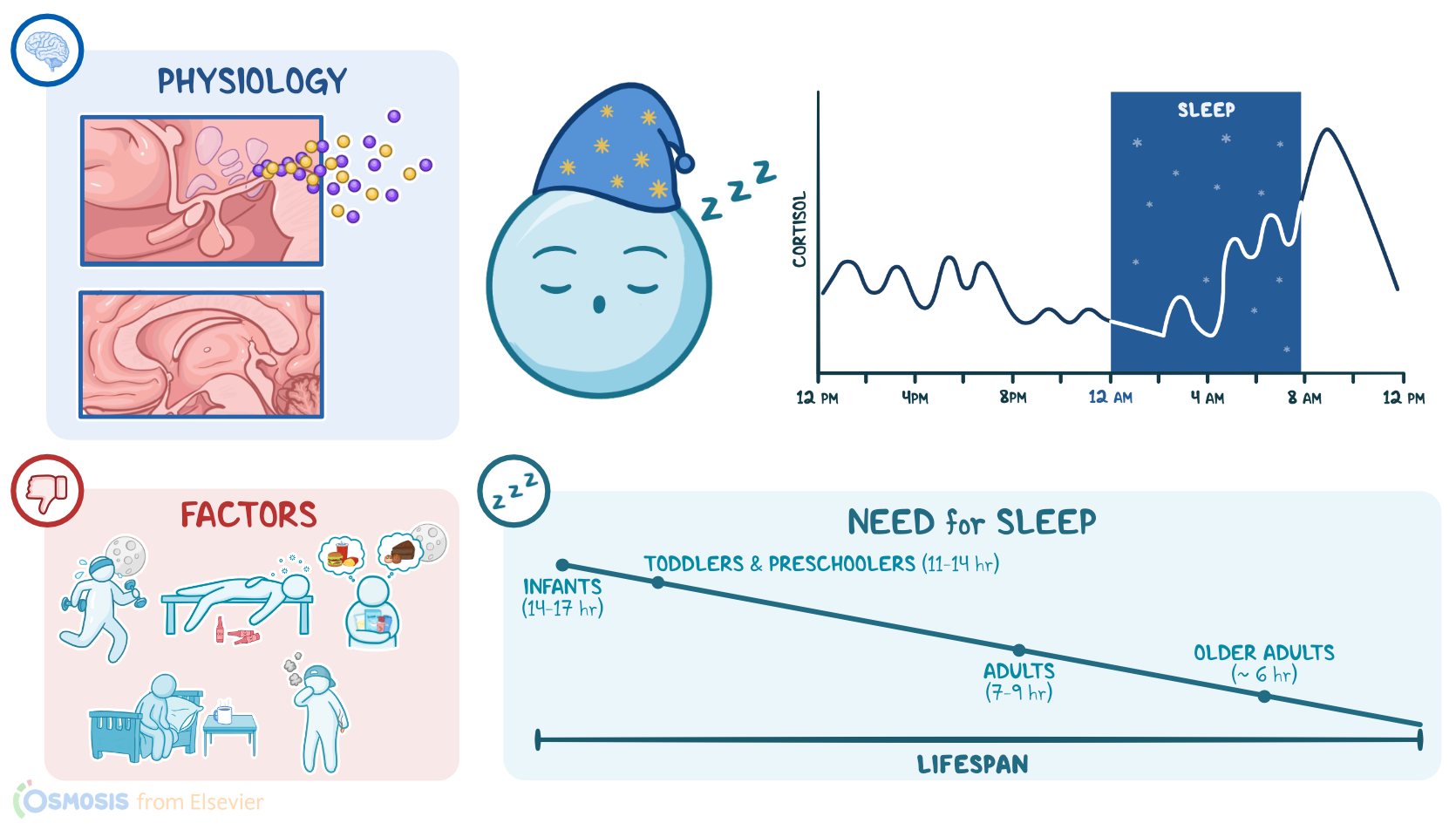
Let’s review the rhythm, cycles, and physiology of sleep.Now, the central nervous system integrates sleep using various parts of the brain, including the hypothalamus, which controls the circadian rhythm, the 24-hour sleep-wake cycle that includes a predictable pattern of physical, mental, and behavioral processes such as variations in body temperature, heart rate, blood pressure, hormone secretion, eating habits, and mood.The hypothalamus controls the circadian rhythm and can be impacted by the amount of environmental light and other factors, such as noise, pain, and illness.
Circadian Rhythm and Sleep Cycles0:22–1:29
Now, there are two main phases of sleep: non-rapid eye movement, or NREM, and rapid eye movement, or REM. These phases typically occur in 90 minutes intervals, with a normal sleep pattern containing 3 to 5 cycles total.
Now, we spend the most time in NREM, which has three stages, called NREM 1, 2, and 3, which progress from the lightest sleep to the deepest sleep, whereas REM only has one stage characterized by lucid dreams and rapid eye movements.Now, several physiological changes occur during sleep, including a decrease in heart rate, blood pressure, body temperature, respiration, and muscle tone.
Physiology of Sleep1:29–2:20
These changes occur because several central nervous system structures, hormones, and neurotransmitters work together to promote and regulate sleep.
Starting with the hypothalamus, this structure controls the circadian rhythm and initiates sleep by secreting the neurotransmitter gamma-aminobutyric acid, or GABA.
It also works with the brain stem to reduce activity in arousal centers and relax the body during sleep. Next, the pineal gland secures the hormone melatonin in response to decreased light to help regulate the sleep cycle.
Lastly, the basal forebrain releases adenosine and acetylcholine to promote REM sleep.Okay, so the quality of sleep can be impacted by numerous factors.
Factors Impacting Sleep2:20–3:54
Regular physical activity can promote sleep, though exercising late in the day can make it more difficult to fall asleep or to stay asleep.
Some dietary factors include eating a large meal right before bedtime, especially spicy foods that can cause heartburn—on the other hand, eating a high-carbohydrate snack before bedtime can promote sleep quality.
Drinking alcohol before bedtime may allow patients to fall asleep easier, but it leads to wakefulness later in the night.
And since caffeine is a stimulant, it can make it more difficult to fall asleep. Smoking impacts sleep because the stimulating effects of nicotine can make it more difficult to fall asleep, and once the person is asleep, they can be more easily aroused.Major life changes can also disrupt sleep patterns, like traveling to an unfamiliar environment or different time zone; becoming a parent or caregiver, which can result in temporary sleep deprivation; and changes in intimate relationships or marital status, which may entail adaptation to another person’s sleep patterns.
Now, certain medications can impact sleep, like beta blockers, which can cause nightmares, or diuretics, which can interrupt sleep due to a frequent need to urinate.
Finally, being hospitalized can interrupt a patient’s sleep cycle due to interruptions from nursing care, medication administration, and environmental changes in light, noise, and temperature.Now, the need for sleep will fluctuate throughout the lifespan.
Lifespan Considerations3:54–4:19
Typically, with aging, the amount of sleep needed decreases. Infants will require 14 to 17 hours of sleep per day, whereas toddlers and preschoolers will need 11 to 14 hours.
On the other hand, adults typically require 7 to 9 hours of sleep per night, whereas older adults sleep approximately 6 hours and typically take longer to fall asleep.Alright, as a quick recap, sleep is a basic human need that allows for proper body and mind functioning.
Review4:19–4:52
The hypothalamus plays a key role in sleep by controlling the circadian rhythm, which is the 24-hour sleep-wake cycle. Other central nervous system structures, hormones, and neurotransmitters promote sleep.
Now, sleep is a cyclical process composed of two stages: NREM and REM. Sleep quality can be impacted by numerous lifestyle and environmental factors, and the need for sleep will fluctuate throughout the
| SLEEP - OVERVIEW | ||
| KEY POINTS | NOTES | |
| DEFINITION |
| |
| CIRCADIAN RHYTHM AND SLEEP CYCLES |
| |
| PHYSIOLOGY OF SLEEP |
| |
| FACTORS IMPACTING SLEEP |
| |
| LIFESPAN CONSIDERATIONS |
| |
- "Fundamentals of nursing (11th ed.)" Elsevier (2023)
- "Fundamentals of nursing (10th ed.)" Elsevier (2021)
No notes for this video yet
Try adding a note below