Surgical asepsis and sterile technique: Nursing skills
Definitions & Key takeaways
Surgical asepsis is a set of techniques used to create and maintain a sterile environment during medical procedures. These techniques include handwashing, using personal protective equipment (PPE), and using sterile instruments and supplies. Sterile technique is a set of practices that create a sterile environment during surgical procedures. It involves the use of sterile gowns, masks, and gloves; use of single-use instruments; and proper cleaning and sterilization of equipment. Sterile technique also requires strict adherence to aseptic principles, including proper handwashing and the use of a "no-touch" technique.
Introduction0:00–0:22
Surgical asepsis, which is also known as sterile technique includes practices that completely kill and eliminate microorganisms.
Sterile technique refers to the practices that you may use as a nurse to reduce the chance of exposing your clients to microorganisms and maintain sterility during certain procedures.
Surgical Asepsis0:22–1:34
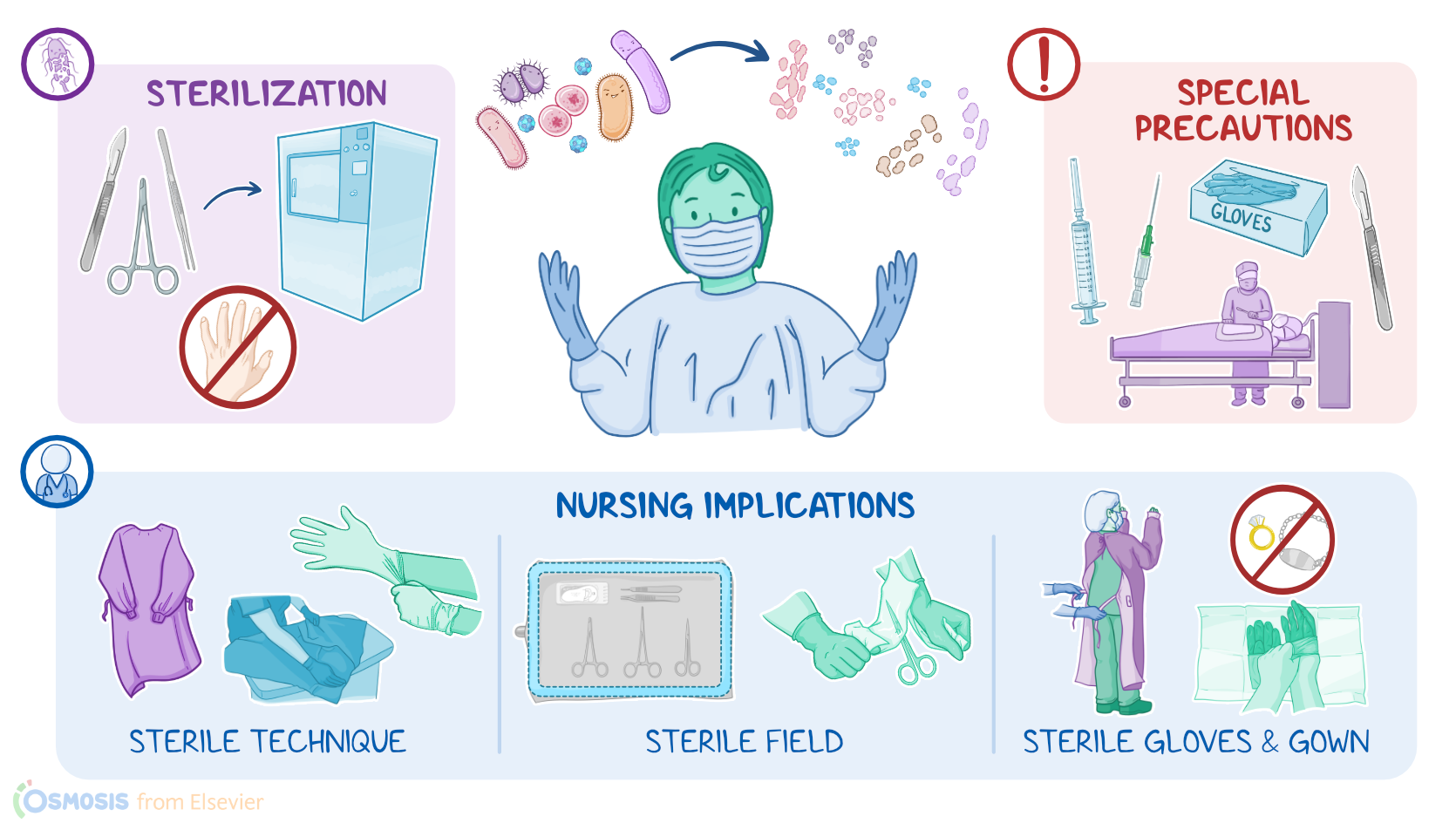
For some procedures like surgery, special precautions need to be taken to avoid exposing your client to microorganisms. This can be done with surgical asepsis.
Examples of surgical asepsis include the use of disposable sterile supplies such as syringes, needles and surgical gloves and the use of reusable sterile equipment such as surgical instruments.
Most commonly surgical asepsis is acquired through a process known as sterilization. You can think of sterilization as the highest level of asepsis because it kills both microorganisms and spores just like disinfection.
Sterilization is not used on people instead, it is used on equipment and instruments that must be totally free of microorganisms.
For example, a commonly used device to sterilize surgical instruments is the autoclave which uses high pressure and temperature to kill microorganisms and their spores.
Finally, it's important to note that before something can be disinfected and sterilized organic materials such as blood feces and urine must be removed using sanitization practices and techniques.
As a nurse, some procedures will require you to use sterile technique which is when you use sterilized supplies, like gloves, gowns and drapes to reduce the chance of exposing your client to organisms that might cause infection.
Nursing Implications1:34–6:38
Examples of procedures that use sterile technique include indwelling, urinary catheter insertion and central line dressing changes.
When preparing for a sterile procedure, you need to set up your sterile field, which is a workspace covered by a sterile drape where sterile items can be safely placed without contamination before setting up your sterile field, wash your hands and put on non sterile gloves.
It's important to remember while setting up. You can't touch sterile items on the field or you will contaminate them.
Next. When placing sterile supplies onto the sterile field, you may touch the outer packaging with your non sterile gloves.
Hold the item above the field and using your dominant hand pull open the packaging away from your body, then gently drop the item onto the field directly from its packaging.
Be careful to avoid the one inch perimeter of the field also be sure to keep the outer packaging from contacting the sterile field.
If any sterile item drops off the field, throw it away and get a new one. If a non sterile item makes contact with your sterile field, collect new supplies and start again.
Using the appropriate technique based on your facility's policy. For example, regular hand washing with soap and water might be appropriate if you are placing an indwelling catheter.
But for a surgical procedure, you may need to use specific antiseptic soaps, scrubbing your hands, nails and arms with a surgical scrub brush, the gown and gloves are dawned after hand washing is complete.
Depending on the gown design. You may need to wait to tie the gown until you have done sterile.
Also remove any items from your hands that could potentially damage the gloves when worn like jewelry. Next select the correct size gloves, so they are not too tight or loose.
In some cases, double gloving or the application of two sets of sterile gloves is recommended. So check with your facilities policies.
Next, examine the packaging to ensure there is no evidence of damage. Open the outer package and place the glove wrapper on a flat work surface with the gloves remaining inside the outer layer of the glove wrapper is not sterile, but the inner layer of the wrapper where the gloves are contained is sterile.
While grabbing the outside layer, unfold the glove packaging, exposing the gloves, examine the gloves to identify the right and left glove.
Each glove will have a folded cuff at the base glove, your dominant hand by using the thumb and first two fingers of your non-dominant hand to grasp the inside surface of the cuff.
Then slide your dominant hand into the glove with your non dominant hand, holding the cuff to help you secure each finger in the correct space.
Then using your gloved dominant hand, slide your fingers into the cuff of the non-dominant glove that's still in the packaging, lift the glove and carefully pull it onto your non dominant hand.
Finally, once both gloves are on interlock the fingers and adjust the gloves. So there are no gaps in the fingertips or large wrinkles that might interfere with the procedure.
Remember that while wearing sterile gloves, keep your hands above waist level to avoid contamination. Once a gloved hand has come in contact with something that is not sterile, it is no longer considered sterile and cannot touch the sterile field without contaminating it.
When the procedure is completed, remove the gloves and dispose of them. All right, it's a quick recap for some procedures like surgery.
Review6:38–7:19
Special precautions need to be taken to avoid exposing the client to microorganisms. This can be done with surgical asepsis.
Examples of surgical asepsis include the use of disposable sterile supplies such as syringes, needles and surgical gloves and the use of reusable sterile equipment such as surgical instruments.
Sterile technique uses sterilized supplies like drapes, gowns and gloves to reduce the chance of exposing your client to bacteria that might cause infection during a procedure.
There are specific rules when using and applying sterile equipment to assure sterility is maintained.
| SURGICAL ASEPSIS AND STERILE TECHNIQUE | ||
| KEY POINTS | NOTES | |
| DEFINITION |
| |
| SURGICAL ASEPSIS |
| |
| NURSING IMPLICATIONS |
| |
No notes for this video yet
Try adding a note below