Smoke inhalation injury: Nursing process (ADPIE)
Video summary
Smoke inhalation injury is a serious medical condition that occurs when the airways or lungs are damaged from inhaling heat, irritant particulates, or toxic chemicals present in smoke during a fire. Symptoms include breathing difficulties, coughing, wheezing, and other respiratory symptoms. The severity of the injury depends on the duration and intensity of the exposure, as well as the type of materials burned.
In addition to respiratory symptoms, smoke inhalation injury can also cause systemic effects, such as carbon monoxide poisoning and chemical toxicity from other toxic gasses, which can lead to organ damage, altered mental status, and even death. Treatment for smoke inhalation injury typically involves securing the airway, administering oxygen, removing any residual smoke or debris from the airway, administering IV fluids and other supportive care as needed.
Revisores de contenido
Janine Jones is a 35-year-old female who was brought to the emergency department, or ED, by ambulance after being trapped in her home during a fire.
Firefighters responded when a neighbor noticed smoke coming from Janine’s home.
Janine appears alert and oriented but she is unsure how long she was stuck in her home.
She presents with coughing, shortness of breath, and a hoarse voice.
She is admitted to the intensive care unit or ICU, with smoke inhalation injury.
Smoke inhalation injuries occur when the airways or lungs are damaged from inhaling heat, irritant particulates, or toxic chemicals present in smoke.
The most common scenario involves being in a house fire or other enclosed space during a fire.
Now, there are some factors that may put an individual at risk for an inhalation injury during a fire.
Non-modifiable risks include age, in particular young children and the elderly, as well as those with physical or mental disabilities.
These factors can make it harder for the individual to stop a fire, or escape from it.
In addition, having an underlying lung disorder increases the risk of harm from smoke inhalation.
On the other hand, modifiable risk factors include being in a building without functioning smoke detectors, or being under the influence of alcohol or drugs during a fire.
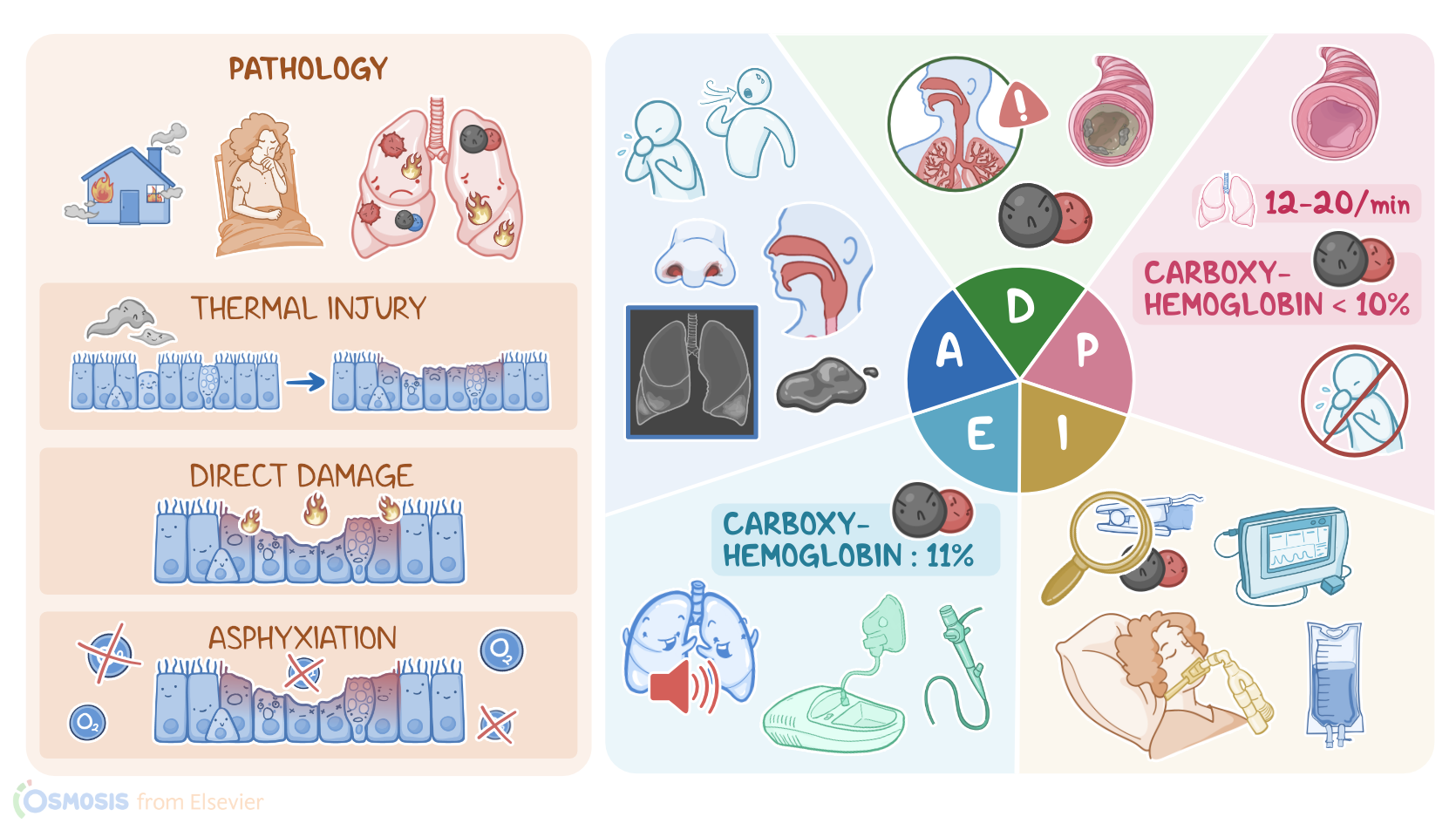
Now, once the smoke is inhaled into the airways, it can cause three main types of airway injury.
The first type is thermal injury, which is when the heat from the smoke burns the epithelium lining the airway.
The second type of injury comes from particulates and chemicals that can irritate and cause direct damage to the airway.
And third, smoke inhalation can cause asphyxiation, where oxygen availability and use by the tissues is impaired.
The signs and symptoms associated with a smoke inhalation injury typically depend on the duration and extent of exposure, and how far the inhaled smoke travels down the airways.
First there’s upper airway injury, which involves direct thermal damage from heat to the mouth, oropharynx, and larynx.
This mainly leads to local erythema, as well as ulceration and sloughing of the airway epithelium.
Other frequent signs of upper airway injury include a hoarse voice due to vocal cord damage, and dark grey or black sputum, referred to as carbonaceous sputum.
| SMOKE INHALATION INJURY | ||
| KEY POINTS | NOTES | |
| PATIENT REPORT |
| |
| PATHOPHYSIOLOGY |
| |
| DIAGNOSIS AND TREATMENT |
| |
| ASSESSMENT |
| |
| NURSING DIAGNOSES |
| |
| PLANNING |
| |
| IMPLEMENTATION |
| |
| EVALUATION |
| |
Aún no hay notas para este video
Intenta agregar una nota a continuación