Osmosis video - Adrenergic antagonists: Presynaptic
00:00 / 00:00
More Videos
12:16
Adrenergic antagonists: Alpha blockers

16:09
Adrenergic antagonists: Beta blockers
11:12
Adrenergic antagonists: Presynaptic
10:35
Adrenergic receptors
11:56
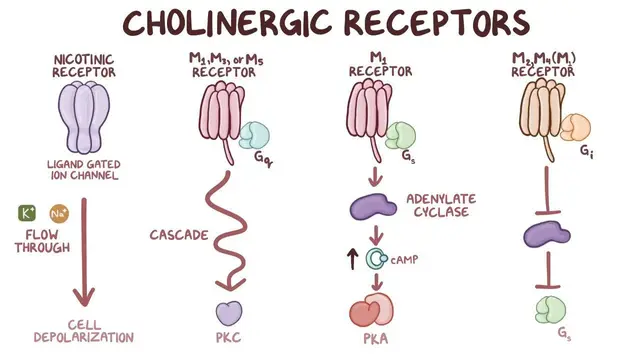
Cholinergic receptors
09:16
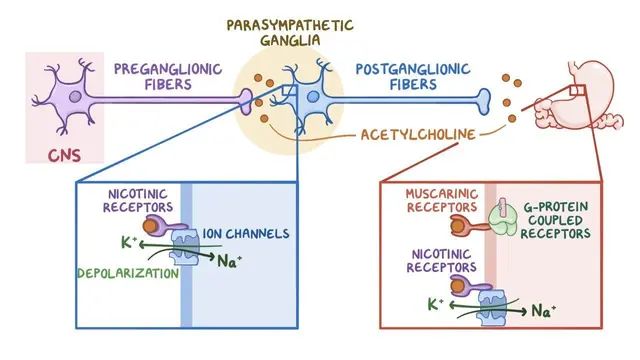
Cholinomimetics: Direct agonists
10:55
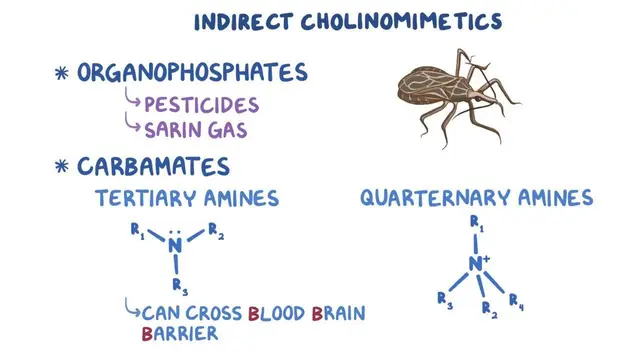
Cholinomimetics: Indirect agonists (anticholinesterases)
08:55
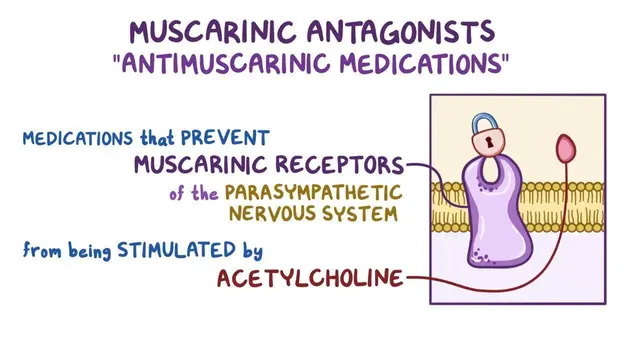
Muscarinic antagonists
09:40
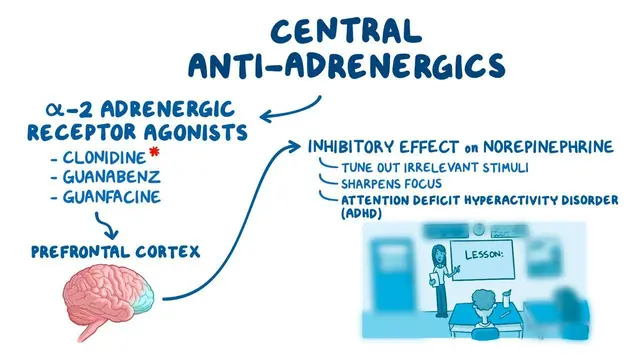
Sympatholytics: Alpha-2 agonists
14:28
Sympathomimetics: Direct agonists
Video Summary of Adrenergic antagonists: Presynaptic
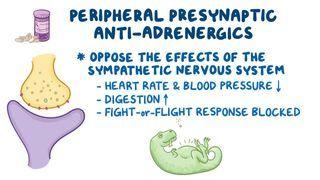
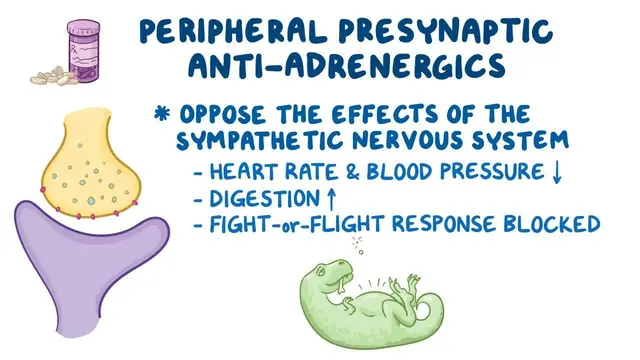
Adrenergic antagonists are a type of drug that blocks the action of certain neurotransmitters, such as adrenaline. They work by preventing the release of stored neurotransmitters from the presynaptic neuron. This reduces the number of available neurotransmitters at the synapse and prevents them from binding to and activating postsynaptic receptors. This ultimately reduces the excitatory response of the neuron and results in a decrease in nerve activity.