Osmosis video - Newborn management: Clinical
00:00 / 00:00
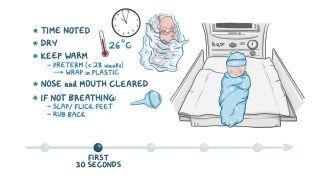
Video Summary of Newborn management: Clinical
Newborn management refers to the care and treatment of newborn babies, typically within the first few weeks of life. It includes a wide range of medical and nursing interventions aimed at ensuring the health and well-being of the newborn. Some of these interventions may include:
Resuscitation: Newborn infants may need resuscitation if they are not breathing or have a weak pulse at birth. This may involve ventilation, chest compressions, and medications. Monitoring vital signs: This includes monitoring the baby's heart rate, respiratory rate, temperature, and blood pressure to ensure that they are within normal ranges. Monitoring for any health problems: This includes checking for signs of infection, jaundice, or other conditions that may require medical attention. Feeding: Newborn infants need to be fed frequently to ensure they receive the nutrients they need. This may involve breastfeeding or the use of infant formula. Immunizations: Newborn infants should receive a series of immunizations to protect them from infectious diseases. Support for the parents: Newborn infants require a lot of care and attention, which can be overwhelming for new parents. It is important to provide support and education to help them adjust to their new role and to ensure the well-being of both the infant and the parents.