Osmosis video - Pediatric allergies: Clinical
Learn deeper with Osmosis
Master this topic faster with videos, questions, and AI.
Used by 8M+ healthcare learners.
No credit card · Cancel anytime
00:00 / 00:00
Video Summary of Pediatric allergies: Clinical
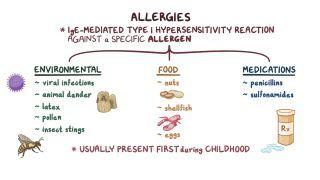
Allergies refer to an IgE-mediated Type I hypersensitivity reaction against a specific allergen. Allergies are due to an overreaction of the immune system to a substance that is typically harmless to most people. Triggers can include animal dander, latex, pollen, and insect stings, or drugs like penicillins and sulfonamides.
Common pediatric allergies include allergic rhinitis , asthma, eczema, and food allergies. Symptoms of allergies can vary depending on the type of allergy and the child's age. For example, a child with food allergies may experience stomach pain, vomiting, or difficulty breathing, whereas a child with eczema may have itchy, red, and scaly skin. Treatment options for allergies include avoiding the allergen, medications, and allergen immunotherapy (allergy shots).