Osmosis video - Pericardial disease: Clinical
00:00 / 00:00
Video Summary of Pericardial disease: Clinical
Pericardial disease refers to any medical condition that affects the pericardium, the thin sac that surrounds the heart. Common pericardial diseases include pericarditis, which refers to when it's inflamed; pericardial effusion referring to a buildup of fluid in the pericardial sac; and cardiac tamponade, which is a life-threatening condition that results from excessive fluid buildup in the pericardium that prevents the heart from working properly.
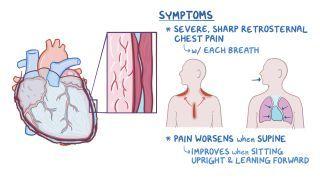
Depending on the specific condition, symptoms of the pericardial disease may include chest pain, shortness of breath, rapid or irregular heartbeat, hypotension, and muffled heart sounds. Treatment may involve medications to reduce inflammation or remove excess fluid, pericardiocentesis, or surgery.