Osmosis video - Pericardial effusion and cardiac tamponade: Nursing process (ADPIE)
00:00 / 00:00
Video Summary of Pericardial effusion and cardiac tamponade: Nursing process (ADPIE)
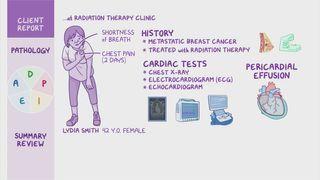
Pericardial effusion is a condition in which there is an abnormal accumulation of fluid in the pericardial sac. This can happen due to a variety of causes, such as infections, autoimmune diseases, cancer, heart attack, and radiation therapy. Symptoms of pericardial effusion include chest pain, shortness of breath, and difficulty breathing when lying down.
Cardiac tamponade is a serious complication of pericardial effusion, in which the accumulated fluid puts pressure on the heart and prevents it from working properly. Cardiac tamponade is characterized by the classic Beck's triad, which is hypotension due to impaired cardiac output, jugular venous distention due to blood backing up, and muffled heart sounds on auscultation. The treatment of both conditions involves pericardiocentesis and addressing the underlying condition.