Osmosis video - Perinatal infections: Clinical
Learn deeper with Osmosis
Master this topic faster with videos, questions, and AI.
Used by 8M+ healthcare learners.
No credit card · Cancel anytime
00:00 / 00:00
Video Summary of Perinatal infections: Clinical
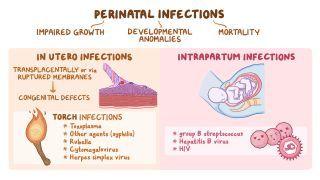
Perinatal infections refer to infections that can be transmitted to the neonate from the mother during pregnancy, during labor, or shortly after birth. The first category is in-utero infections acquired transplacentally or through ruptured membranes, which lead to congenital defects. The most common are represented as TORCH infections: Toxoplasmosis, syphilis, Rubella, Cytomegalovirus, and Herpes simplex virus. The second category belongs to intrapartum infections, which are acquired as the newborn passes through the birth canal. These are mostly caused by group B streptococcus, Hepatitis B virus, and HIV. It is important to screen pregnant women for perinatal infections and to treat any infections that are present before or during pregnancy. This can help reduce the risk of transmission to the baby.