Osmosis video - Pneumonia: Clinical
00:00 / 00:00
Video Summary of Pneumonia: Clinical
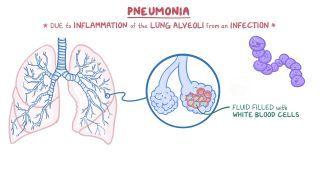
Pneumonia is an infection of the lungs that results in air sacs being filled with fluid. It may be caused by bacteria, viruses, or fungal infections. Pneumonia is a serious condition that requires prompt diagnosis and treatment. It is diagnosed based on symptoms like cough and fever and an abnormal chest x-ray which might show a lobar consolidation or an interstitial infiltrate, and in some cases, there may be cavitation or pleural effusion.
Pneumonia is classified into community-acquired pneumonia, or CAP, and hospital-acquired or ventilator-associated pneumonia, or HAP and VAP. CAP is pneumonia in which the organism was acquired anywhere in the community outside the hospital. HAP and VAP are defined as pneumonia starting more than 48 hours after admission to a hospital or endotracheal intubation, respectively.
Decision-making tools like the CURB-65 are essential to determine whether a CAP patient should be treated outpatient, inpatient, or in the intensive care unit, and the antibiotic choice depends on the setting. Sputum samples for gram stain and culture as well as blood cultures should be obtained for individuals with CAP in the intensive care unit, as well as those with HAP or VAP. Complications of pneumonia include parapneumonic effusion, empyema, and lung abscess. Preventative measures to decrease the risk of acquiring pneumonia include providing pneumococcal and influenza vaccines.