Blood cultures: Nursing

Blood cultures: Nursing

hematology

hematology

Anemia - Aplastic: Nursing
Anemia - Iron-deficiency: Nursing
Arterial blood gas (ABG) - Overview: Nursing
Arterial blood gas (ABG) - Metabolic acidosis: Nursing
Arterial blood gas (ABG) - Metabolic alkalosis: Nursing
Arterial blood gas (ABG) - Respiratory acidosis: Nursing
Arterial blood gas (ABG) - Respiratory alkalosis: Nursing
Blood cultures: Nursing
Cardiac biomarkers - Creatine kinase (CK): Nursing
Cardiac biomarkers - Troponin: Nursing
Coagulation studies - Partial thromboplastin time (PTT): Nursing
Complete blood count (CBC) - Hemoglobin and hematocrit: Nursing
Complete blood count (CBC) - Platelets: Nursing
Complete blood count (CBC) - Red blood cells (RBC): Nursing
Complete blood count (CBC) - White blood cells (WBC) and differential: Nursing
Complete metabolic panel (CMP) - Blood urea nitrogen (BUN) and creatinine (Cr): Nursing
Complete metabolic panel (CMP) - Calcium: Nursing
Complete metabolic panel (CMP) - Chloride: Nursing
Complete metabolic panel (CMP) - Estimated glomerular filtration rate (eGFR): Nursing
Complete metabolic panel (CMP) - Glucose: Nursing
Complete metabolic panel (CMP) - Liver function tests (LFT): Nursing
Complete metabolic panel (CMP) - Potassium: Nursing
Complete metabolic panel (CMP) - Sodium: Nursing
Complete metabolic panel (CMP) - Total protein: Nursing
Disseminated intravascular coagulation (DIC): Nursing
Multiple myeloma: Nursing
Neutropenia: Nursing
Polycythemia: Nursing
Thalassemia: Nursing
Thrombocytopenia: Nursing
Hemophilia: Nursing process (ADPIE)
Leukemia: Nursing process (ADPIE)
Sickle cell disease: Nursing process (ADPIE)
Anticoagulants - Direct thrombin and factor Xa inhibitors: Nursing pharmacology
Anticoagulants - Heparin: Nursing pharmacology
Anticoagulants - Warfarin: Nursing pharmacology
Antihyperlipidemics - Bile acid sequestrants and cholesterol absorption inhibitors: Nursing pharmacology
Antihyperlipidemics - Fibrates: Nursing pharmacology
Antihyperlipidemics - Miscellaneous: Nursing pharmacology
Antihyperlipidemics - Statins: Nursing pharmacology
Antiplatelet agents: Nursing pharmacology
Blood products: Nursing pharmacology
Hematopoietic growth factors: Nursing pharmacology
Hemostatics: Nursing pharmacology
Iron preparations: Nursing pharmacology
Thrombolytics: Nursing pharmacology
Hemolytic disease of the fetus and newborn: Nursing
Hemolytic uremic syndrome: Nursing
Anemia - Macrocytic: Nursing

Notes

BLOOD CULTURES

KEY POINTS
NOTES
PHYSIOLOGY
  • Blood normally sterile
  • Defenses
    • Skin
    • Mucociliary escalator
    • Epithelial cells in urinary tract
    • Immune system cells

PATHOLOGY
  • Defenses compromised
  • Pathogen gains access to blood

INDICATIONS
  • History of condition predisposing to infection
  • Signs or symptoms infection
  • Known infection

MANAGEMENT OF CARE
  • Goals of care
    • Assist in identifying and treating underlying cause
  • Draw blood cultures
  • Administer antimicrobials, IV fluids, and other medications as prescribed
  • Monitor level of consciousness, vital signs, urinary output, capillary refill, and respiratory effort
  • Obtain follow-up blood cultures as indicated

Transcript

Watch video only

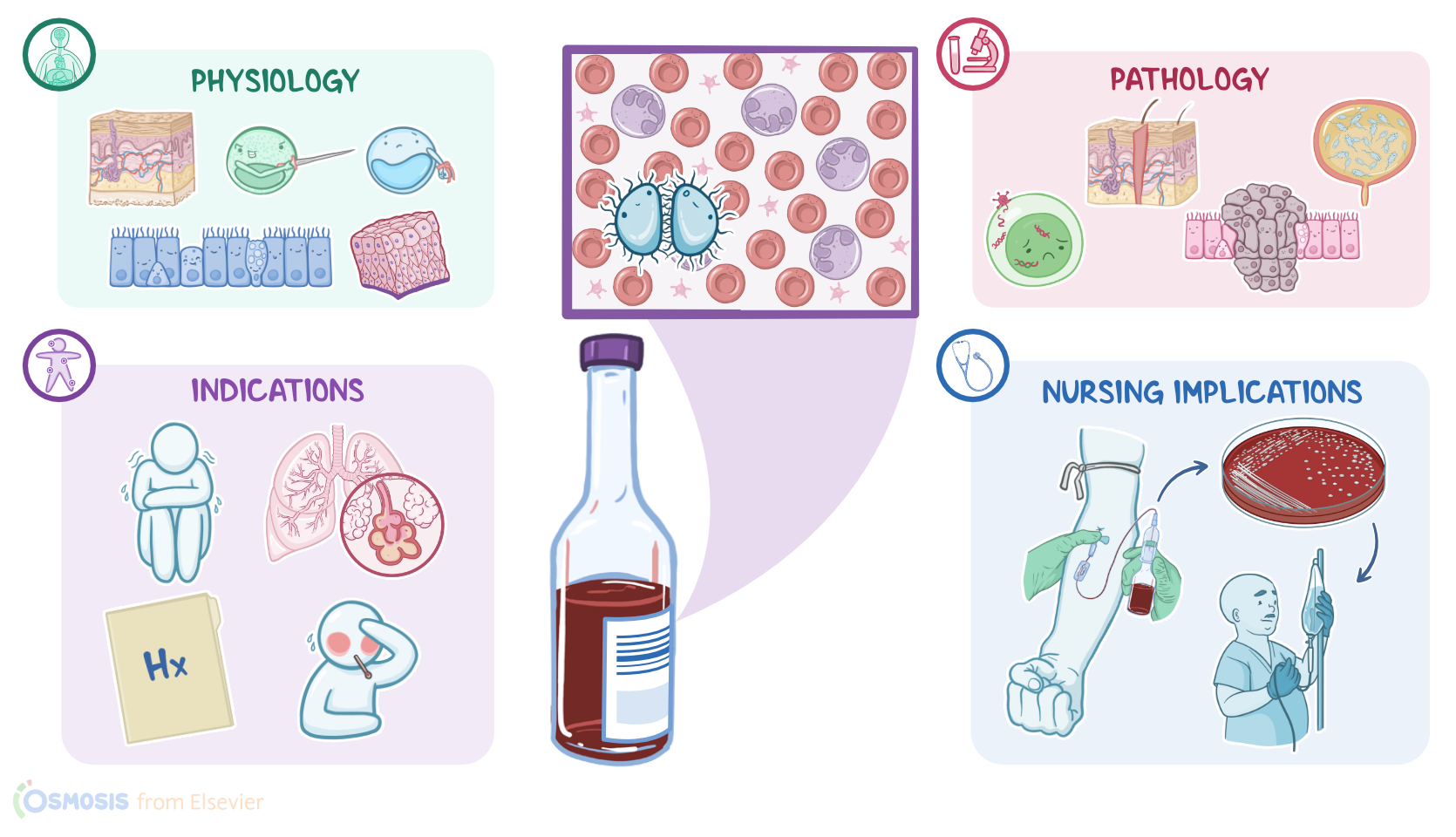
A 70-year-old male client arrives at the emergency department after his wife noticed he developed a fever; fatigue; and a productive cough that have been worsening over the past few days. His medical history is significant for chronic obstructive pulmonary disease, or COPD; and on physical assessment, he has warm, flushed skin, tachypnea, and crackles in the lung bases. The healthcare provider suspects bacteremia secondary to pneumonia, so a blood culture is ordered. Okay, so normally blood is considered sterile, meaning in a healthy state, there are no pathogens floating around. Our bodies have various defenses in place to maintain this healthy state like the skin, which acts as a protective barrier; the mucociliary escalator in the bronchi, which moves mucus and pathogens up and away from the lungs; epithelial cells that line the urinary tract, which are highly impermeable to pathogens; and of course the immune system, which fights pathogens and removes them from the body.

Now, sometimes a pathogen is able to gain access to the blood if our defensive mechanisms are compromised, like with breaks in the skin, inefficient mucociliary clearance, or when urinary tract epithelial cells are outnumbered by pathogens. Pathogens can also enter the blood if a client is immunosuppressed, like in HIV or cancer. All right, so blood culture is obtained to detect the presence of pathogens, like bacteria or fungi, in the blood when there’s a history of conditions that can predispose a person to an infection; when there are signs and symptoms of infection like leukocytosis, fever, or chills; or if a client has a known infection, like pneumonia, cellulitis, or a urinary tract infection. The blood culture results are reported by the lab as the amount of growth after a specific number of days. A positive blood culture is an indication of bacteremia or septicemia.

All right, let’s look at the nursing care you’ll provide for a client with suspected bacteremia. Priorities of nursing care are to assist in identifying and treating the underlying cause. First, prior to administering any antimicrobials, draw blood cultures using strict aseptic technique to reduce contamination of the samples. Obtain venous blood from two different sites using an aerobic and anaerobic media culture at each site. Keep in mind that obtaining samples from two different sites is essential, because if one sample grows bacteria but the other one doesn’t, it’s likely that the bacteria in the first culture is from a contaminant, like bacteria from the skin, and not the infecting organism. However, when both cultures grow the infecting organism, this indicates that the client has bacteremia caused by the organism growing in the culture.