Osmosis video - Proteins
00:00 / 00:00
Video Summary of Proteins
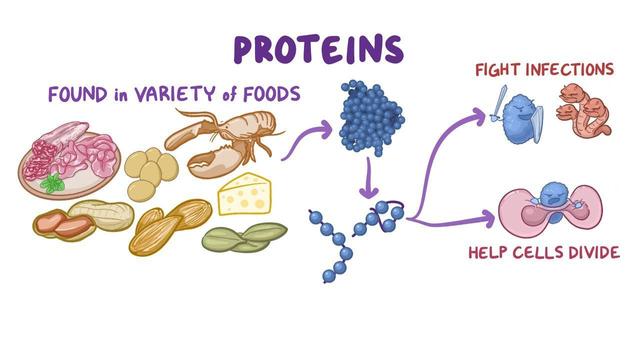
Proteins are an essential part of the human diet. They are found in a variety of foods like eggs, dairy, seafood, legumes, meats, nuts, and seeds. They are complex biomolecules made up of chains of amino acids, the specific sequence of which determines the three-dimensional structure of the protein and its unique functions within the cell. Although there are hundreds of amino acids in nature, humans use only about 20 of them to make basically every type of protein.
Some amino acids are at the same time obtained from food and synthesized by our body. These amino acids are referred to as non-essential. They include alanine, asparagine, aspartic acid, glutamic acid, and serine. Other amino acids are strictly obtained from food because our body can't synthesize them. They include histidine, isoleucine, leucine, lysine, methionine, phenylalanine, threonine, tryptophan, and valine.