Osmosis video - Recurrent pericarditis (NORD)
Learn deeper with Osmosis
Master this topic faster with videos, questions, and AI.
Used by 8M+ healthcare learners.
No credit card · Cancel anytime
00:00 / 00:00
Video Summary of Recurrent pericarditis (NORD)
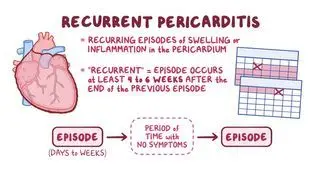
Recurrent pericarditis is a condition characterized by multiple episodes of inflammation of the pericardium, the sac that surrounds the heart. Recurrent pericarditis is often caused by autoimmune diseases such as systemic lupus erythematosus and rheumatoid arthritis; metabolic disorders such as kidney failure inflammatory diseases like familial Mediterranean fever; but anything that can cause pericarditis can also cause recurrent pericarditis.
Symptoms include stabbing chest pain radiating to the neck or the back, shortness of breath, extreme tiredness, tachycardia, and irregular heartbeats. A diagnosis is typically made based on a clinical examination, an electrocardiogram, and blood tests, and it is commonly treated with anti-inflammatory medications to reduce inflammation and pain, and colchicine to prevent recurrences.