Osmosis video - Respiratory system: Infections
00:00 / 00:00
Video Summary of Respiratory system: Infections
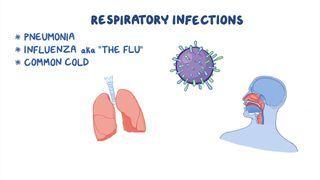
The respiratory system is susceptible to several infections, such as pneumonia; influenza, often referred to as the flu; � and the common cold. Pneumonia is an infection and inflammation of the lungs characterized by fluid buildup in the alveoli, which leads to shortness of breath, chest pain, cough, and fever, as well as possible cyanosis and fatigue. Influenza, or the flu, is a highly contagious respiratory infection that often produces fever, body aches, fatigue, weakness, and a headache, while sometimes giving rise to a cough, sore throat, runny nose, and sneezing. While most people recover quickly from the flu, it can lead to some serious complications, like viral pneumonia. The common cold is a viral infection, usually confined to the upper respiratory tract, causing a cough, stuffy nose, sore throat, and sneezing, generally not posing the risk of serious complications in the way that the flu does. Treatment options vary depending on the specific infection and may include supportive therapy, antibiotics, and antiviral medications. It is also important to practice good hygiene, such as washing your hands regularly and avoiding close contact with people who are sick, to reduce the risk of respiratory infections.