Osmosis video - Skeletal muscle relaxants: Nursing pharmacology
Learn deeper with Osmosis
Master this topic faster with videos, questions, and AI.
Used by 8M+ healthcare learners.
No credit card · Cancel anytime
00:00 / 00:00
Video Summary of Skeletal muscle relaxants: Nursing pharmacology
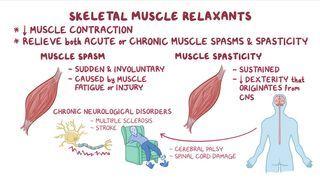
Skeletal muscle relaxants are a class of medications that are used to reduce muscle spasticity or muscle tension. They are classified into two categories: centrally-acting skeletal muscle relaxants, which work by depressing neuron activity in the CNS; and direct-acting skeletal muscle relaxants, which prevent the release of calcium ions from muscle cells. Centrally-acting muscle relaxants include cyclobenzaprine, methocarbamol, metaxalone, and chlorzoxazone; whereas among direct-acting skeletal muscle relaxants, we have dantrolene.
When caring for a client taking a skeletal muscle relaxant, the nursing considerations should focus on the client's assessment, monitoring for side effects, and pain and discomfort from spasticity. Nursing education to clients includes how to safely self-administer their medication and ways to minimize side effects like sedation, anticholinergic effects, constipation, urinary frequency, or hesitancy.