Osmosis video - Skin anatomy and physiology
00:00 / 00:00

Video Summary of Skin anatomy and physiology
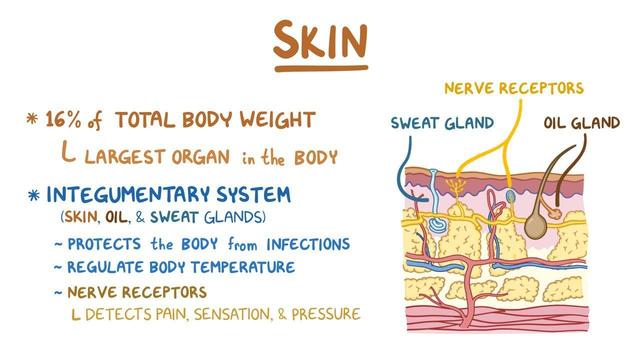
The skin or the integumentary system is the largest organ of the body that has many important functions in physiology. It protects the body from infections, helps in thermoregulation, and contains nerve receptors that detect pain, sensation, and pressure.
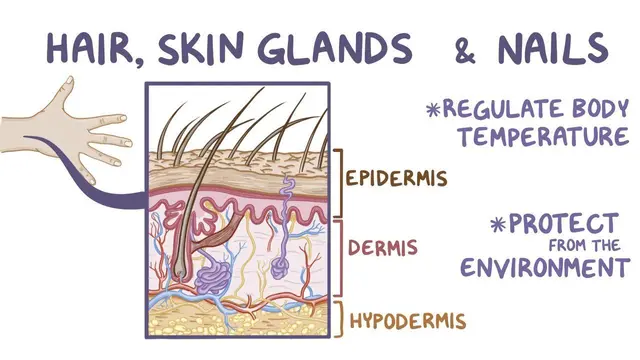
The integumentary system is divided into three major components including the epidermis, dermis, and hypodermis. The epidermis is the most superficial layer and it's responsible for protection from pathogens, and the environment, for vitamin D production, and for giving the skin its color. The dermis lies below the epidermis and controls temperature regulation and helps with sensation. The hypodermis lies below the dermis and provides a point of attachment for the skin to the deeper muscles.
The skin also contains several accessory structures, including hair, and nails. Hair provides protection and insulation, while nails provide support and protection for the tips of the fingers and toes.