Osmosis video - Skin cancer - Basal cell carcinoma, squamous cell carcinoma, and melanoma: Nursing
00:00 / 00:00
Video Summary of Skin cancer - Basal cell carcinoma, squamous cell carcinoma, and melanoma: Nursing
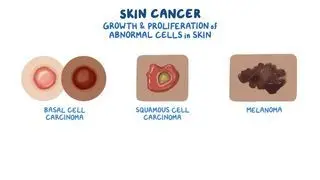
Skin cancer is a type of cancer that develops in the cells of the skin. Three main types of skin cancer are basal cell carcinoma (the most common), squamous cell carcinoma (the second most common), and the least common but most deadly, melanoma. The most important risk factor is excessive UV exposure from the sun or tanning beds, while other risk factors include light skin tone, premalignant conditions, exposure to carcinogens like arsenic or coal tar, and immunosuppression.
Diagnosis of skin cancer is made with a tissue biopsy and treatments can include physically removing cells with a high risk of developing into skin cancer. Tumor cells are also commonly removed and treated with radiation, chemotherapy, or immunotherapy. Nursing goals include early detection of suspicious lesions and providing supportive care during treatment. Client and family education emphasizes self-care, skin cancer prevention, and self-monitoring, and when to seek medical attention.