Osmosis video - Thrombolytics: Nursing pharmacology
00:00 / 00:00
Video Summary of Thrombolytics: Nursing pharmacology
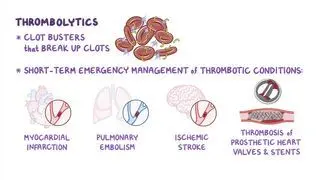
Thrombolytics, also known as clot-busting drugs, are a class of medications that are used to dissolve blood clots. These drugs work by converting plasminogen to plasmin, an enzyme that breaks down fibrin, a protein that forms the backbone of blood clots. By breaking down fibrin, thrombolytics can dissolve blood clots and restore blood flow to the affected area.
Thrombolytics include drugs like alteplase, reteplase, and tenecteplase, typically given for the acute management of pathological blood clots like in embolic or thrombotic strokes. The main side effect of thrombolytics is undue bleeding from other sites, including injection sites, gastrointestinal bleeding, and hemorrhagic stroke. This is why they are contraindicated in hemorrhagic strokes and head trauma.
Nursing considerations when administering thrombolytics include conducting a thorough baseline assessment, monitoring for side effects, and evaluating the therapeutic response. Client teaching is centered around minimizing bleeding and bruising, as well as recognizing signs and symptoms of bleeding or additional clot formation.