Osmosis video - Treatment for Helicobacter pylori: Nursing pharmacology
Learn deeper with Osmosis
Master this topic faster with videos, questions, and AI.
Used by 8M+ healthcare learners.
No credit card · Cancel anytime
00:00 / 00:00
Video Summary of Treatment for Helicobacter pylori: Nursing pharmacology
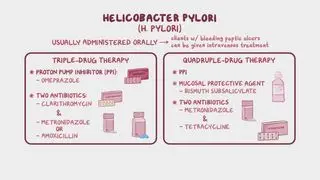
Helicobacter pylori, or H. pylori for short, is a bacterium that can cause inflammation of the stomach lining; and can result in peptic ulcers. The recommended treatment for H. pylori typically involves using a triple-drug therapy regimen, including a proton pump inhibitor or PPI like omeprazole, and two antibiotics, which include clarithromycin plus either metronidazole or amoxicillin.
If triple-therapy fails, clients can be given a quadruple-therapy regimen, which again includes a proton pump inhibitor, as well as a mucosal protective agent like bismuth subsalicylate, and the antibiotics metronidazole and tetracycline.
When caring for a client prescribed treatment for H. pylori, nursing considerations consist of obtaining baseline assessment and the client's recent diagnostic information, as well as monitoring for side effects or therapeutic outcomes. Client- teaching includes proper administration and length of treatment, as well as potential side effects, recommended dietary changes, and when to contact their healthcare provider.