Osmosis video - Urinary stones in dogs
00:00 / 00:00
Video Summary of Urinary stones in dogs
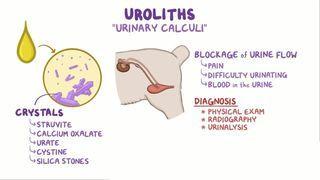
Urinary stones, also known as uroliths or bladder stones, are a common problem in dogs. They are hard, rock-like formations that can develop anywhere in the urinary tract, including the kidneys, ureters, bladder, or urethra. Urinary stones can vary in size, shape, and composition, and their presence can cause a range of symptoms and complications.
The formation of urinary stones in dogs is influenced by a variety of factors, including breed, age, diet, and urinary tract infections. The symptoms of urinary stones in dogs can vary depending on the location and size of the stones and includes difficulty urinating, blood in the urine, urinating more frequently or in inappropriate places, and abdominal pain or discomfort. Treatment options are surgery or lithotripsy. Recurrence is often a problem, but a diet low in oxalate, protein, and sodium may help prevent new stones from forming.