Osmosis video - West Nile Virus Infection
00:00 / 00:00
Video Summary of West Nile Virus Infection
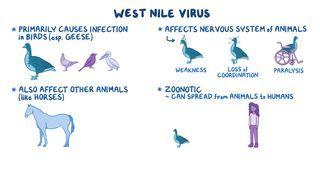
West Nile virus is a type of single-stranded RNA virus belonging to the flavivirus genus that is transmitted by the Culex mosquito. It is spread by mosquitoes from bird reservoirs to other species, such as horses and humans, which are dead-end hosts.
Infected animals, particularly horses, typically display symptoms such as low-grade fever, weakness, muscle twitching, difficulty swallowing, seizures, and sometimes death. Birds may display symptoms such as lying down, lack of coordination, twisted neck, arching of the back, and paralysis of the legs and wings. Survivors of the infection may suffer chronic disabilities.
Human infections are usually mild, but elderly or immunocompromised individuals may develop meningitis or encephalitis. Diagnosis involves viral isolation, PCR, and IgM antibody detection in the blood. Currently only symptomatic treatment is provided for infected people or animals and prevention involves mosquito control and vaccination of susceptible animals. There is currently no vaccine available for humans.