
Medicine (MD)
Every tool you need to study smarter in medical school
Best for medical students who want to build a strong understanding of the preclinical sciences, Osmosis pairs short, illustrated concept videos and spaced-repetition questions with flashcards and personalized study schedules. A core resource for MD students who learn visually and want structure during the first two years of medical school.
Every lecture is packed. Every note feels important. And the expectation to master it all can feel overwhelming. Osmosis is built to help you keep up — and now with Osmosis AI, you get personalized guidance that helps you focus on what matters most, strengthen weak areas of knowledge, and study smarter every step of the way.

The study toolkit built for medical students
Med school is hard enough without juggling five tabs
Osmosis puts your medical student resources in one place: bite-sized video lessons, Qbank practice questions and quizzes that show you what you still need to study, and an adaptive schedule that plans around your progress. Our study tools for medical students work together, so you spend less time organizing and more time learning. Built for day-to-day coursework, not just board exam prep, these online resources for medical students keep up with you from day one of med school through your clerkships. Among the best study resources for medical students, these are the tools you’ll actually use.
Your proven cure for information overload
Focus on what matters most without drowning in the rest. So you can study smarter. Not harder.


Break it down with visuals
Short, illustrated videos make tough concepts finally click

Lock it in with practice
Quizzes and board-style questions test your understanding

Your new AI study partner
Clear answers & explanations based on trusted Elsevier content
Introducing Osmosis AI, a conversational study companion built directly into Osmosis to support you throughout your medical training. Now available to all Osmosis.org subscribers.
With you from day one to patient one
Osmosis helps you ace your exams. Crush your clerkships. And feel prepared to treat real patients.
PRECLINICAL
Master the basics without the burnout
The first two years hit you with anatomy, biochem, and pathology all at once. Build a strong foundation with clear explanations that make the toughest concepts click.
Haven’t started med school yet? Whether you’re incoming or still exploring pre-med, getting ahead now means less catch-up once classes begin. The right med school study tools help you start ahead instead of playing catch-up.

1,700+ basic sciences videos organized by subject or organ system
High-yield notes with quick, printable summaries of key points

USMLE® STEP 1
Face your first big exam with confidence
Step 1 can feel overwhelming, with so much material and so much at stake. Cut through the noise and focus on the most-tested content.
Step 1 review videos based on the official USMLE outline
2,700+ Step 1-style practice questions for stronger comprehension

CLERKSHIPS + SHELF EXAMS
Turn knowledge into patient care
Rotations test more than recall. They demand quick thinking with patients. Bridge the gap from classroom to clinic with resources built for the wards.
600+ clinical sciences videos aligned to core clerkships
Decision-making trees with step-by-step flowcharts for diagnosis and management

USMLE® STEP 2 CK
Prove you’re ready for residency
By Step 2, everything you’ve learned needs to come together. Integrate your knowledge — and show up ready with total confidence.
Step 2 review videos focused on high-yield topics
Additional 2,900+ USMLE® Step 2-style practice questions that reinforce your knowledge.

Tools to keep you on track
Because in med school? Falling behind isn’t an option.
Stay one step ahead for any exam or deadline.
Study Schedule
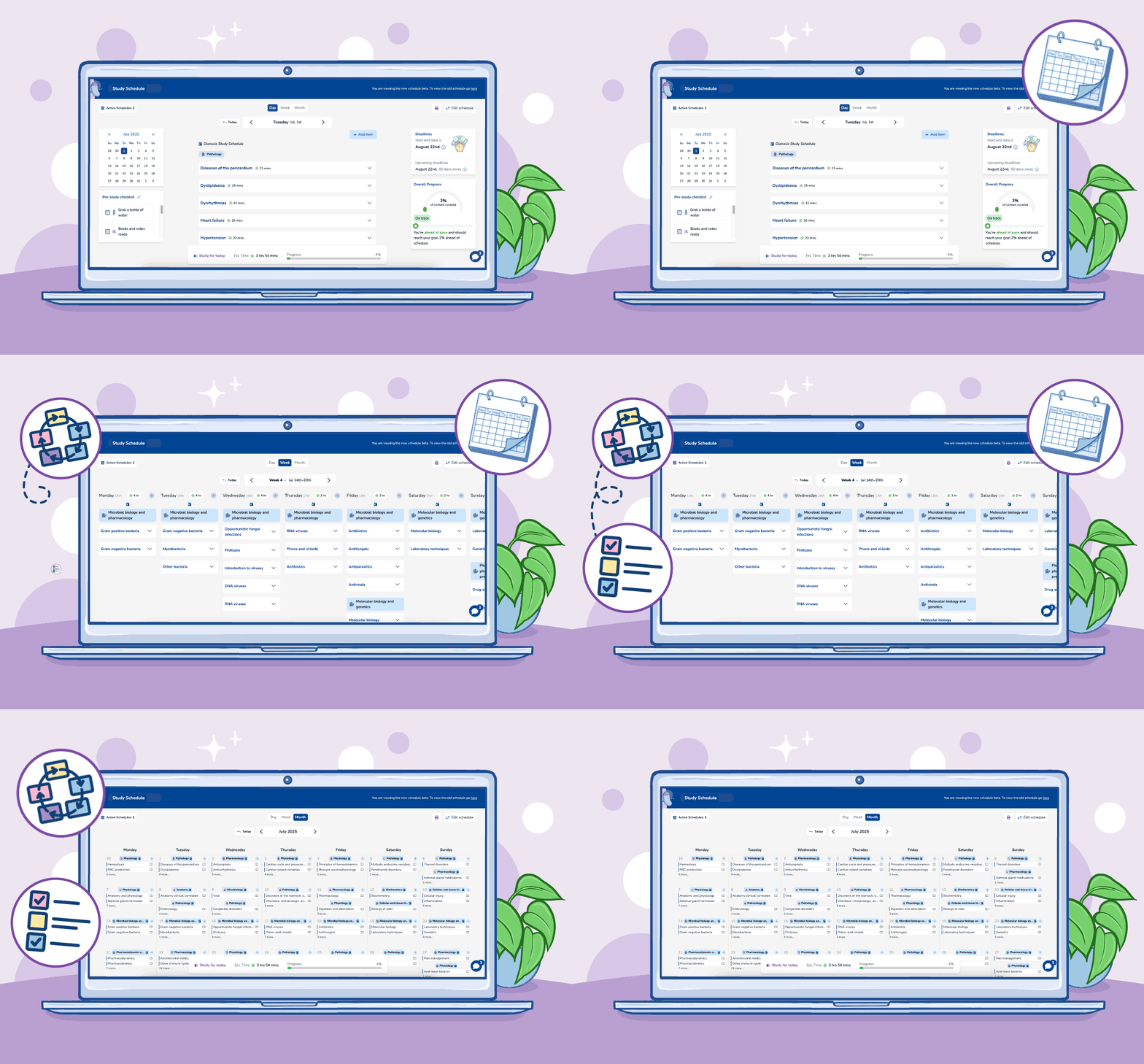
Your roadmap through med school
Get a personalized schedule that adapts as you go. So you always know what’s next.

Mobile App
Turn downtime into study time
Make every spare minute count. Squeeze in a quick review between classes, on your shift break, or during your commute with the Osmosis study app.

Loved by future doctors
Understand concepts better with Osmosis
92%
of Osmosis learners say it’s helped them study more efficiently.
“
I use Osmosis for my medical studies, especially when I have questions about a topic. Watching their videos is part of my study routine because they explain complex concepts in a simple way. Additionally, their ECG videos have been extremely helpful. I have recommended them to all my friends.

Yerty Vera
MD student
FAQs about med school study tools
What study tools do I need for medical school?
The best med school study tools combine video lessons, flashcards powered by spaced-repetition, and practice questions in one place. Osmosis.org offers all three, with concise videos, built-in flashcards, and extensive question banks that track your progress. We suggest pairing it with a reference text and a notetaking app for complete coverage.
When should I start using medical school study tools?
We suggest you start using medical school study tools during your first term of school, ideally even before classes begin. Using flashcards and starting a regular practice of answering practice questions right away builds consistent habits and lets spaced repetition work over months, which makes Step 1 or COMLEX preparation far less overwhelming. Integrate question banks gradually as you cover each organ system.
Is Osmosis good for medical school and USMLE prep?
The Osmosis platform supports medical school coursework and USMLE® preparation with systems-based videos, high-yield notes, board-style questions, flashcards, and spaced repetition integration that reinforces clinical reasoning and long-term retention.
Is Osmosis enough to prep for Step 1?
Yes. Osmosis provides comprehensive content review and board-style questions for USMLE® Step 1. Many students use Osmosis as a core learning resource for Step 1 and add a dedicated question bank during intensive exam preparation.
How should medical students use Osmosis during pre-clinical years?
Medical students can use the Osmosis platform during pre-clinical years to preview lecture topics, clarify pathophysiology, review high-yield notes, complete quizzes, and reinforce learning with spaced repetition-supported flashcards.
Can Osmosis be used instead or in addition to other healthcare learning platforms?
Osmosis provides an extensive learning experience using videos, structured review features, and integrated quizzes. Whether it replaces other study tools depends on your personal preference and study style.
How do students use Osmosis during clinical rotations?
Students use the Osmosis platform during clinical rotations for rapid topic review, diagnostic algorithms, high-yield summaries, and targeted question practice before patient encounters or shelf exams.
Everything you need to master med school
Clear videos. Smarter quizzes. Memory-boosting flashcards. All designed to help you thrive in class — and your career.