
Aichmophobia · What Is It, Causes, Diagnosis, and More

Published: Aug 06, 2025
Author: Georgina Tiarks
Editor: Alyssa Haag
Editor: Emily Miao, PharmD
Illustrator: Jessica Reynolds, MS
Copyeditor: David G. Walker
7-day free trial

Go deeper with Osmosis

Osmosis is a learning platform with videos, questions, and AI tools to help you master topics like this.

4.8 · 12,000+ reviews
Watch quick, visual videos
Practice with Qbank-style questions
Use AI to explain, quiz, and review
Study anytime with the mobile app
Start free trial

No credit card · Cancel anytime

What is aichmophobia?

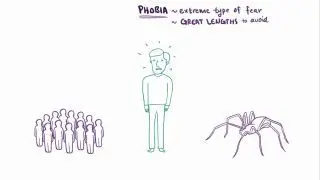
Aichmophobia is an irrational fear of sharp objects, which may include pins, knives, needles, scissors, and sharp corners. A phobia can be defined as a persistent and excessive fear of certain objects or situations. An individual with aichmophobia may experience extreme fear and anxiety when encountering a pointed object. This may result in the individual visually and physically avoiding such objects. Like aichmophobia, which is a generalized fear of sharp items, belonephobia is a fear of needles, or needle phobia. These specific phobias are characterized as mental health disorders and are medically reviewed in the Diagnostic and Statistical Manual of Mental Disorders, 5th Edition (DSM-V).

Learn deeper with Osmosis

Master this topic faster with videos, questions, and AI.

Used by 8M+ healthcare learners.

Start free trial

No credit card · Cancel anytime

How do you pronounce aichmophobia?

Aichmophobia is pronounced ayk-muh-fo-bee-ah.

What causes aichmophobia?

Aichmophobia has biopsychosocial causes, which integrates biology, psychology, and the social environment. This means that the cause is typically a combination of a physiologic response (e.g., elevated heart rate), a psychological response (e.g., fear), and a negative environmental exposure (e.g., poor social support). Extreme fears, or phobias, may commonly occur after a previous traumatic incident that incited a negative response to a specific stimulus.

What are the signs and symptoms of aichmophobia?

The signs and symptoms of aichmophobia include palpitations, irritability, shortness of breath, anxiety, sweating, and dizziness when exposed to a sharp object. Individuals may also excessively think about and attempt to avoid exposure to the feared stimulus, which may cause distress.  In more severe circumstances, a vasovagal response (i.e., a decrease in heart rate and blood pressure) can result in the individual fainting. Individuals may also have a panic attack preceding exposure.

How is aichmophobia diagnosed?

Aichmophobia may be diagnosed by a healthcare professional based on both the physiological response (e.g., elevated heart rate) as well as a psychological evaluation. The DSM-V outlines the diagnostic criteria for phobias, which includes marked fear involving a stimulus, fear out of proportion to the stimulus, avoidance of the stimulus, and impaired day-to-day functioning for a duration longer than 6 months. In addition, this behavior cannot be explained by another condition.

How do you overcome aichmophobia?

Aichmophobia can be overcome with the assistance of a healthcare professional, such as a psychiatrist or psychotherapist. A healthcare professional may use exposure therapy or cognitive behavioral therapy during sessions. Exposure therapy encourages continuous exposure to the feared stimulus, such as a hypodermic needle, until the individual has a lessened response to the object. In comparison, cognitive behavioral therapy is a type of talk therapy that can help individuals identify why they feel fearful and how to overcome their current response.

In addition to psychotherapy, there are adjustments that can be made in the environment. This may include administering anesthetic cream to numb the area prior to medical procedures or emotional support from a parent or friend. Finally, medications, such as selective serotonin reuptake inhibitors (SSRIs), may be warranted in some circumstances.

What are the most important facts to know about aichmophobia?

Aichmophobia is a fear or phobia of sharp objects, such as needles, pins, knives, or scissors. The cause of aichmophobia may include a combination of biological and psychological response to a stimulus and a negative, unsupportive environment. Specific phobias, of which include aichmophobia, may also occur after a previous traumatic incident involving the stimulus. The signs and symptoms of phobias commonly include elevated heart rate; anxiety; sweating; dizziness; and, in more severe circumstances, fainting in the presence of the stimulus. Diagnosis of specific phobias includes a clinical evaluation with a healthcare professional. Once diagnosed, cognitive behavioral therapy or exposure therapy may be employed to help the individual overcome their fear of sharp objects.  

Key Takeaways

Definition 

Aichmophobia is an irrational fear of sharp objects, which may include pins, knives, needles, scissors, and sharp corners, resulting in the individual visually and physically avoiding such objects. 

Causes 

- Physiologic response (e.g., elevated heart rate 

- Psychological response (e.g., fear)  

- Negative environmental exposure (e.g., poor social support) 

- Previous traumatic incident 

Signs and Symptoms 

When exposed to the trigger:  

     - Palpitations 

     - Irritability 

     - Shortness of breath  

     - Anxiety 

     - Sweating 

     - Dizziness 

     - Distress  

     - Vasovagal response 

     - Panic attack preceding exposure 

Diagnosis 

- Assessment of the physiological response to stimulus 

- Psychological evaluation 

- Diagnostic criteria for phobias met (DSM-V) 

- Behavior not explained by another condition 

Treatment 

- Exposure therapy (e.g., hypodermic needle)  

- Cognitive behavioral therapy  

- If medical procedures involving sharp objects: use of anesthetic cream, emotional support  

- Medications (SSRIs 

Students say Osmosis is 100% worth it

Because Osmosis saves them time. Lowers stress. And actually helps them remember when it counts.

I used Osmosis to prepare for my first medical school licensing exam! Super helpful and interactive for people who may not do great with just pages of text info!

Cecilia Ruiz

Cecilia Ruiz

MD student

Sayan Misra

I have used Osmosis for about four years. Best thing I have ever used for my medical studies.

Sayan Misra

Sayan Misra

Med student

Osmosis videos are superior because they define simple concepts, tell a story with a clear progression, and provide context.

Jay Pate

Jay Pate

Dental student

References


McLenon, J., & Rogers, M.A.M. (2018). The fear of needles: A systematic review and meta-analysis. Journal of Advanced Nursing, 75(1), 30–42. DOI: 10.1111/jan.13818


Orenius, T., LicPsych, Säilä, H., Mikola, K., & Ristolainen, L. (2018). Fear of injections and needle phobia among children and adolescents: An overview of psychological, behavioral, and contextual factors. SAGE Open Nursing, 4 (1-8). DOI: 10.1177/2377960818759442


RTI International. (2016, June). Impact of the DSM-IV to DSM-5 changes on the national survey on drug use and health. In Substance Abuse and Mental Health Services Administration. Retrieved from https://www.ncbi.nlm.nih.gov/books/NBK519704/table/ch3.t11/


Yim, L. (2006). Belonephobia—A fear of needles. Australian Family Physician, 35(8), 623–624.