
Circadian Rhythm

What Is It, How It Works, Why It’s Important, and More

Author: Lily Guo, MD
Editor: Alyssa Haag, MD
Editor: Ian Mannarino, MD, MBA
Editor: Kelsey LaFayette, DNP, ARNP, FNP-C
Editor: Maria Giulia Boemi, MD
Illustrator: Jessica Reynolds, MS
Copyeditor: Stacy M. Johnson, LMSW
Modified: Sep 02, 2025

What is a circadian rhythm?

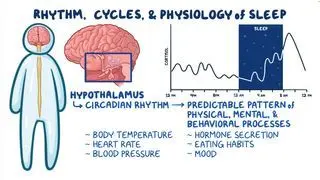
A circadian rhythm is a natural process that regulates physiological and behavioral changes. The term circadian comes from the Latin phrase “circa diem,” which means “around a day.” The circadian rhythm is 24 hours in the human body and is commonly referred to as the body’s biological clock.  

One of the most essential and well-known circadian rhythms is the sleep-wake cycle. Humans' sleep-wake cycle responds to environmental cues of light and darkness and synchronizes cellular activities with the solar day. It does this by stimulating the suprachiasmatic nucleus, a small group of nerves in the hypothalamus which is an autonomic control center of the brain, to release hormones such as serotonin, when the retina in the eye is exposed to sunlight.  

An infographic detailing the background and importance of the circadian rhythm.

Why are circadian rhythms important?

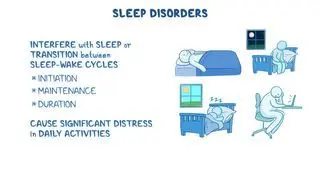
Circadian rhythms are essential because they actively drive wakefulness. Humans have a natural homeostatic sleep drive that accumulates during wakefulness and promotes sleep initiation. After falling asleep, this sleep drive rapidly diminishes. When functioning correctly, the circadian system decreases alertness during the night, especially in the latter half of the night, helping to maintain sleep until it’s time to awaken. Alterations in the circadian timing system and desynchrony with desired sleep-wake times can result in sleep-wake rhythm disorders and other chronic health conditions such as obesity, diabetes, bipolar disorder, depression, and seasonal affective disorder. 

Additionally, circadian rhythms regulate physiological systems, including daily rhythms in core body temperature, melatonin secretion, cortisol, and appetite. For example, saliva volume is greater during the day than at night to aid in digestion. Additionally, gastric emptying rates are longer in the evening than in the morning, and colonic activity, which propels food through the digestive system, is minimal during sleep. Bile acids are also under circadian regulation to synchronize with feeding and fasting periods. Circadian regulation also plays a significant role in liver metabolism. On top of that, maintenance of plasma glucose and regulation of lipids, including triglycerides, cholesterol, and free fatty acids, follow circadian rhythms.  

How do circadian rhythms work?

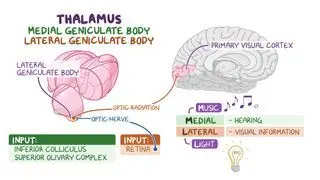
Circadian rhythms work under the control of the suprachiasmatic nucleus, a region in the brain's hypothalamus that controls the production of melatonin, a sleep-promoting hormone. The suprachiasmatic nucleus receives information about incoming light from the retina via the optic nerve, which then relays information from the eye to various locations in the brain, including the pineal gland, a small endocrine gland in the middle of the brain 

In the presence of light, axons from retinal ganglion cells deliver signals to the optic nerve that activate the suprachiasmatic nucleus to release an inhibitory neurotransmitter, gamma-amino-butyric acid (GABA). GABA inhibits the paraventricular nucleus of the hypothalamus, ultimately inhibiting the pineal gland, and preventing melatonin production.   

In contrast, as night approaches and there’s less light, retinal ganglion cells inhibit the suprachiasmatic nucleus, which leads to activation of the paraventricular nucleus and the pineal gland produces more melatonin, thereby promoting sleep.  

Typically, light exposure at the end of the typical sleep period moves the circadian rhythm earlier and helps to wake up an individual. Conversely, light in the evening and first half of the usual sleep period postpones the circadian rhythm, thereby keeping the individual awake. Furthermore, specific genes are involved in the production of circadian rhythms, including PERIODCRYPTOCHROMECLOCK, and BMAL1, which are expressed in the suprachiasmatic nucleus during the day and activate feelings of wakefulness and alertness 

Can circadian rhythms be disrupted?

Circadian rhythms can be disrupted by an intrinsic malfunction in the circadian timing system. Intrinsic disorders include delayed sleep-wake phase disorder, advanced sleep-wake phase disorder, non-24-hour sleep-wake rhythm disorder, and irregular sleep-wake rhythm disorder  

The underlying cause of delayed sleep-wake phase disorder is unknown; however, it’s characterized by delayed bedtimes and wake times compared to conventional or desired times. This results in chronic sleep insufficiency and daytime impairment. It most often begins in adolescence and is accompanied by depression 

Advanced sleep-wake phase disorder is genetically inherited in an autosomal dominant, highly penetrant pattern where only one copy of the gene has to be passed down for the next generation to be affected. It occurs with increased age and results in the weakening of circadian rhythms and environmental cues 

Non-24-hour sleep-wake rhythm disorder typically affects those who are blind. Without light cues, the circadian system fails to maintain a stable alignment and functions on a circadian period longer than 24 hours 

Lastly, irregular sleep-wake rhythm disorder is commonly seen in those with dementia, with a loss of modulation from the circadian system on sleep and wakefulness 

Circadian rhythms can also be disrupted by extrinsic factors, such as air travel (i.e., jet lag) or shift work, which require individuals to be awake at times that are out of sync with their intrinsic rhythms. Additionally, retinal circadian photoreceptors are maximally sensitive to blue light emitted from devices such as tablets and cell phones. Depending on individual traits, including age, gender, and genetic background, some individuals may be more susceptible to sleep disruption by blue light.  

Can you reset a disrupted circadian rhythm?

A disrupted circadian rhythm can be reset by various methods based on the underlying cause. Intrinsic disorders can generally be treated with behavioral modifications, including advancing bedtimes and rise times to a schedule that aligns with one’s social and occupational requirements; avoiding poor sleep habits; minimizing or eliminating caffeine, nicotine, and alcohol; and avoiding daytime naps. Additionally, one may refrain from stimulating activity, such as working or watching television, for at least 2 hours before the desired sleep onset time. One can also avoid blue light-emitting devices for several hours before bedtime. If refractory to behavioral changes, melatonin and light therapy can be used to help realign the circadian rhythm.   

Treatment for secondary circadian rhythm sleep disorderssuch as jet lag, involves aligning the individual’s internal circadian phase with the new light-dark cycle in the destination time zone. This adjustment can occur naturally without treatment, or strategic use of light and melatonin can help with the process. Light therapy can be in the form of natural outdoor daylight or a lightbox. Melatonin can be taken on the evening of arrival and continues for up to 5 days. For jet lag and shift work disorder, caffeine and short naps less than 30 minutes at least 8 hours before bedtime may also promote alertness without disrupting nighttime sleep. Lastly, if necessary, medications such as benzodiazepines (e.g., temazepam, midazolam, and triazolam) and non-benzodiazepine benzodiazepine receptor agonists (e.g., zolpidem and zopiclone) can be prescribed by a healthcare professional.  

What are the most important facts to know about the circadian rhythm?

The circadian rhythm is a natural process regulating sleeping patterns and other physiological processes. In the human body, it’s regulated by light exposure. Light enters via the retina in the eye, and signals are sent to the suprachiasmatic nucleus, a small group of nerves in the hypothalamus. When the circadian rhythm is dysfunctional, sleep disorders, including delayed sleep phase disorder, advanced sleep phase disorder, non-24-hour sleep-wake rhythm disorder, and irregular sleep-wake rhythm disorder, can result. The circadian rhythm can also be disrupted by external factors, such as jet lag and shift work, where one must sleep during the day. One can use behavioral modifications to reset the circadian rhythm, including sleeping and waking earlier; minimizing caffeine, nicotine, and alcohol; and avoiding naps. Light therapy, melatonin, and certain prescription medications can help treat disorders of the circadian rhythm. 

Key Takeaways

Definition 

A natural process that regulates physiological and behavioral changes, commonly known as the body’s “biological clock”. The sleep-wake cycle is one of the most essential circadian rhythms 

Importance 

- Sleep-wake regulation 

- Disruption → sleep disorders, chronic health conditions  

- Physiological systems regulation:  

     - Core body temperature 

     - Melatonin secretion  

     - Cortisol secretion  

     - Appetite and digestion 

     - Maintenance of plasma glucose  

     - Regulation of lipids  

Mechanism  

- Suprachiasmatic nucleus (SCN) 

- Location: hypothalamus 

- Controls melatonin production  

- Information about incoming light via optic nerve  

- Light → retinal input → SCN releases GABA → inhibits paraventricular nucleus → paraventricular nucleus fails to stimulate pineal gland → melatonin suppressed 

- Darkness → retinal ganglion cells reduce SCN activity → paraventricular nucleus activated → pineal gland stimulated → melatonin produced 

- Genes involved: PERIOD, CRYPTOCHROME, CLOCK, and BMAL1 

Disruption  

- Intrinsic disorders of circadian timing system  

- Delayed sleep-wake phase disorder  

- Advanced sleep-wake phase disorder 

- Non-24-hour sleep-wake rhythm disorder 

- Irregular sleep-wake rhythm disorder 

- Extrinsic causes of disruption:  

- Air travel (jet lag)  

- Shift work  

- Blue light (tablets, cell phones)  

Circadian Rhythm Reset 

- Disrupted circadian rhythm can be reset  

- Intrinsic disorders:  

     - Behavioral modifications  

     - Avoid poor sleep habits  

     - Minimize or eliminate caffeine, nicotine, alcohol 

     - Avoid daytime naps  

     - Refrain from stimulating activity at least 2 hours before the desired sleep onset time  

     - Avoid blue light-emitting devices for several hours before bedtime  

     - Melatonin and light therapy  

- Secondary circadian rhythm disorders:  

     - Jet lag→ align with new light-dark cycle (naturally or using light or melatonin)  

     - Medications (benzodiazepines, non-benzodiazepine benzodiazepine receptor agonists)  

References


Chellappa SL. Individual differences in light sensitivity affect sleep and circadian rhythms. Sleep. 2021;44. 


Codoñer-Franch P, Gombert M. Circadian rhythms in the pathogenesis of gastrointestinal diseases. World J Gastroenterol. 2018;24(38):4297-4303. doi:10.3748/wjg.v24.i38.4297. 


Emens JS, Burgess HJ. Effect of light and melatonin and other melatonin receptor agonists on human circadian physiology. Sleep Med Clin. 2015;10:435. 


Kryger MH, Roth T, Dement WC. Principles and Practice of Sleep Medicine. 6th ed. Elsevier; 2017. 


Liang X, Bushman FD, FitzGerald GA. Rhythmicity of the intestinal microbiota is regulated by gender and the host circadian clock. Proc Natl Acad Sci USA. 2015;112:10479-10484. 


Morgenthaler TI, Lee-Chiong T, Alessi C, et al. Practice parameters for the clinical evaluation and treatment of circadian rhythm sleep disorders: An American Academy of Sleep Medicine report. Sleep. 2007;30:1445. 


van Maanen A, Meijer AM, van Oort FJ. The effects of light therapy on sleep problems: A systematic review and meta-analysis. Sleep Med Rev. 2016;29:52-62. doi:10.1016/j.smrv.2015.08.009.