
Clasp-Knife Response · What Is It, Causes, Assessment and More

Published: Mar 04, 2025
Author: Georgina Tiarks
Editor: Alyssa Haag
Editor: Emily Miao, PharmD
Editor: Kelsey LaFayette, DNP, RN
Illustrator: Jessica Reynolds, MS
Copyeditor: Sadia Zaman, MBBS, BSc
7-day free trial

Go deeper with Osmosis

Osmosis is a learning platform with videos, questions, and AI tools to help you master topics like this.

4.8 · 12,000+ reviews
Watch quick, visual videos
Practice with Qbank-style questions
Use AI to explain, quiz, and review
Study anytime with the mobile app
Start free trial

No credit card · Cancel anytime

What is a clasp-knife response?

The clasp-knife response describes an initial resistance when attempting passive movement (i.e., movement performed by another person) of the extremities, which is followed by a rapid decrease in resistance. The name “clasp-knife” comes from the resemblance between the motion of suddenly closing a clasp-knife after sufficient pressure is applied and the passive movement of a limb. It commonly presents due to damage to the upper central nervous system. 

Learn deeper with Osmosis

Master this topic faster with videos, questions, and AI.

Used by 8M+ healthcare learners.

Start free trial

No credit card · Cancel anytime

What causes a clasp-knife response?

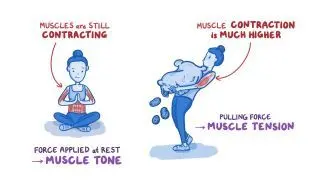
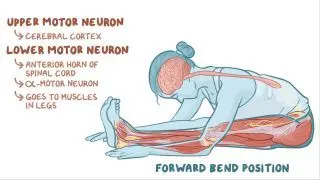
The clasp-knife response indicates an upper motor neuron lesion or damage. The upper motor neurons originate in the cerebral cortex (i.e., the outermost portion of the brain) and travel down toward the spinal cord. The lower motor neurons are subsequently located in the spinal column and after being innervated by the upper motor neurons, they send signals to the effector muscle. The upper motor neuron lesion or damage thus prevents muscle inhibition, which results in increased muscle tone

Originally, it was thought that the golgi tendon organs (GTOs) played a role in the clasp-knife reflex. GTOs are mechanoreceptors used to sense tension within skeletal muscle. When the tension becomes elevated, the golgi tendon reflex, also known as the inverse stretch reflex, produces an inhibitory action to protect the muscle from injury. In the clasp-knife reflex, it has been postulated that the GTO increases resistance until sufficient force is applied to overcome it. However, newer studies suggest that the golgi tendon organ may not be involved, and stretch sensory receptors may actually play an essential role. 

How is the clasp-knife response assessed?

The clasp-knife response is assessed during a neurological exam by a healthcare provider. The provider will be able to visualize the reflex while passively attempting to flex a joint. After a few degrees of joint movement in the beginning, there will be excessive resistance to movement. However, after enough pressure has been applied, resistance will suddenly decrease, and the limb will move rapidly in the intended direction. More rapid movement of the joint will increase the degree of resistance while simultaneously decreasing its time of onset.

What are the most important facts to know about the clasp-knife response?

The clasp-knife response describes an initial resistance when attempting passive movement of the extremities, followed by a rapid decrease in resistance. It is often assessed during neurology examinations by healthcare providers and indicates upper motor neuron damage. This clasp-knife response is usually greatest in the flexors of the upper extremity and extensors of the lower extremity. While several mechanisms have been suggested, the cause of clasp-knife reflex is still largely unknown. 
Students say Osmosis is 100% worth it

Because Osmosis saves them time. Lowers stress. And actually helps them remember when it counts.

I used Osmosis to prepare for my first medical school licensing exam! Super helpful and interactive for people who may not do great with just pages of text info!

Cecilia Ruiz

Cecilia Ruiz

MD student

Sayan Misra

I have used Osmosis for about four years. Best thing I have ever used for my medical studies.

Sayan Misra

Sayan Misra

Med student

Osmosis videos are superior because they define simple concepts, tell a story with a clear progression, and provide context.

Jay Pate

Jay Pate

Dental student

References


Cleland, C. L., Hayward, L., & Rymer, W. Z. (1990). Neural mechanisms underlying the clasp-knife reflex in the cat. II. Stretch-sensitive muscular-free nerve endings. Journal of Neurophysiology, 64(4): 1319–1330. DOI: 10.1152/jn.1990.64.4.1319


Cleland, C. L., & Rymer, W. Z. (1993). Functional properties of spinal interneurons activated by muscular free nerve endings and their potential contributions to the clasp-knife reflex. Journal of Neurophysiology, 69(4): 1181–1191. DOI: 10.1152/jn.1993.69.4.1181


En-Academic. (2010). Clasp-knife response. In Academic Dictionaries and Encyclopedias. Retrieved November 17, 2021, from https://en-academic.com/dic.nsf/enwiki/6029722 


Physiopedia. (2022). Golgi Tendon Organ. In Physiopedia. Retrieved November 17, 2021, from https://www.physio-pedia.com/Golgi_Tendon_Organ 


Roberson, E.D. (2017). Treatment of Central Nervous System Degenerative Disorders. In Brunton L. L., Hilal-Dandan, R., & Knollmann, B. C. (Eds.). Goodman & Gilman’s: The Pharmacological Basis of Therapeutics (13th ed.). McGraw-Hill. 


Suneja, M., Szot, J. F., LeBlond, R. F., & Brown, D. D. (2020). The Nervous System. In DeGowin’s Diagnostic Examination (11th ed.). McGraw-Hill.