
Illness Anxiety Disorder (Hypochondria) · What Is It, Treatment, and More

Published: Mar 04, 2025
Author: Ali Syed, PharmD
Editor: Ahaana Singh
Editor: Lisa Miklush, PhD, RN, CNS
Illustrator: Jillian Dunbar
Copyeditor: Joy Mapes
7-day free trial

Go deeper with Osmosis

Osmosis is a learning platform with videos, questions, and AI tools to help you master topics like this.

4.8 · 12,000+ reviews
Watch quick, visual videos
Practice with Qbank-style questions
Use AI to explain, quiz, and review
Study anytime with the mobile app
Start free trial

No credit card · Cancel anytime

What is hypochondria?

Hypochondria, now officially termed illness anxiety disorder, is a chronic psychiatric disorder characterized by a persistent fear of having or developing a serious medical condition. In general, individuals with illness anxiety disorder display a dysfunctional degree of concern regarding their health, which is also known as health anxiety. This fear usually persists even after physical examination and laboratory test results show no indication of a medical condition. Often, individuals with illness anxiety disorder may misinterpret typical physical sensations, bodily functions, and mild physical symptoms as evidence of severe medical illness. Individuals with long-term illness anxiety disorder may experience negative impacts on their mental health, relationships, and careers.

Learn deeper with Osmosis

Master this topic faster with videos, questions, and AI.

Used by 8M+ healthcare learners.

Start free trial

No credit card · Cancel anytime

What causes illness anxiety disorder?

The exact cause of illness anxiety disorder is unknown; the disorder may be a result of multiple factors. Understanding these factors may help optimize the prevention and treatment of illness anxiety disorder. 

Illness anxiety disorder most commonly begins during early adulthood and appears to occur equally among people who identify as men or women. Individuals with other psychiatric disorders, such as depression or generalized anxiety disorder, may be at an increased risk of developing illness anxiety disorder.  Additionally, individuals raised in a family with pre-existing health anxieties or who spend a considerable amount of time researching health-related topics may also be at increased risk of illness anxiety disorder. 

Moreover, illness anxiety disorder may present in individuals who have experienced a serious illness or trauma in the past, either personally or through a relationship with a loved one. Certain triggers, such as a loved one becoming ill or dying, may worsen symptoms of illness anxiety disorder.

What are the signs and symptoms of illness anxiety disorder?

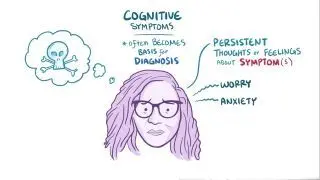
Illness anxiety disorder is a chronic condition that presents with signs and symptoms that can vary in severity throughout one’s lifetime. The most consistent element is a high degree of anxiety due to a preoccupation with having or developing a serious medical illness despite having no significant symptoms of the illness. Individuals with illness anxiety disorder typically do not experience physical symptoms, but in cases in which they do, symptoms are usually mild.

Additional signs and symptoms of illness anxiety disorder include exaggerating symptoms, ruminating about normal bodily functions, repeatedly seeking reassurance of their health concerns from family and friends, being easily alarmed by medical information, and having persistent fears despite medical advice to the contrary. The anxiety may present either as investing too much in health-related behaviors (e.g., repeatedly examining themselves for signs of illness, constantly researching diseases, seeking medical care) or avoiding even necessary health care. In some cases, individuals may avoid people or places due to the fear of contracting an illness. Individuals with illness anxiety disorder may also experience impaired social or occupational functioning, particularly if they have pre-existing depression or anxiety. 

How is illness anxiety disorder diagnosed?

Since the exact cause is unknown, illness anxiety disorder is usually diagnosed by ruling out other conditions. In order to make a formal diagnosis, healthcare providers refer to the criteria set by the American Psychiatric Association’s Diagnostic and Statistical Manual of Mental Disorders, 5th edition (DSM-5).

Diagnosis is based on the individual's signs and symptoms and a review of their medical, social, psychological, and family history. Physical examination and laboratory tests may be required to confirm the individual does not have a relevant, physical medical condition. Diagnosis must also rule out the presence of another psychiatric disorder that could cause health anxiety, such as various forms of depression, schizophrenia, or somatic symptom disorder.

A formal diagnosis of illness anxiety disorder may be made if the individual meets diagnostic criteria for 6 months or longer. A health provider may also refer individuals to a mental health specialist, such as a clinical therapist or psychiatrist, for further care.

How is illness anxiety disorder treated?

The treatment of illness anxiety disorder usually depends on the severity of the condition and the medical history of the individual. Illness anxiety disorder treatments are primarily focused on helping individuals cope with their health anxiety, which may involve lifestyle modifications, psychotherapy, and medications. 

Lifestyle modifications that may be recommended include relaxation techniques, such as meditation or deep breathing, as well as avoidance of excessive health-focused research or discussion about diseases.

Cognitive behavioral therapy (CBT) is a common psychotherapy approach for illness anxiety disorder. In CBT, a certified mental health professional works with the individual to identify situations that could stimulate their health anxiety and develop more positive ways to respond  mentally, emotionally, and behaviorally.

Depending on the individual’s situation and past treatments, certain medications may be prescribed to manage symptoms of illness anxiety disorder. Selective serotonin reuptake inhibitors (SSRIs), like sertraline, and serotonin-norepinephrine reuptake inhibitors (SNRIs), like  venlafaxine, are two types of antidepressant medications that may help relieve health anxiety.

What are the most important facts to know about illness anxiety disorder?

Illness anxiety disorder is a psychiatric disorder characterized by a persistent fear of having or developing a serious, undiagnosed medical condition, despite lack of illness. Since the exact cause of illness anxiety disorder is unknown, a formal diagnosis is usually based on ruling out relevant, physical medical conditions and different psychiatric disorders in accordance with the DSM-5. Recognizing specific triggers may help optimize diagnosis and treatment strategies. Treatment options may include lifestyle modifications, psychotherapy (e.g., CBT), and in some cases, medications. In general, overcoming illness anxiety disorder is not a simple process and requires patience, persistence, and dedication from the affected individual.  
Students say Osmosis is 100% worth it

Because Osmosis saves them time. Lowers stress. And actually helps them remember when it counts.

I used Osmosis to prepare for my first medical school licensing exam! Super helpful and interactive for people who may not do great with just pages of text info!

Cecilia Ruiz

Cecilia Ruiz

MD student

Sayan Misra

I have used Osmosis for about four years. Best thing I have ever used for my medical studies.

Sayan Misra

Sayan Misra

Med student

Osmosis videos are superior because they define simple concepts, tell a story with a clear progression, and provide context.

Jay Pate

Jay Pate

Dental student

References


American Psychiatric Association. (2013). Diagnostic and statistical manual of mental disorders (5th ed.). Arlington, VA: American Psychiatric Publishing.


Cleveland Clinic. (2021, February 2). Illness anxiety disorder (hypochondria, hypochondriasis). In Cleveland Clinic: Health library. Retrieved March 7, 2021, from


https://my.clevelandclinic.org/health/diseases/9886-illness-anxiety-disorder-hypochondria-hypochondriasis


Dimsdale, J. (2020). Illness anxiety disorder. In Merck manual: Professional edition. Retrieved March 9, 2021, from 


https://www.merckmanuals.com/professional/psychiatric-disorders/somatic-symptom-and-related-disorders/illness-anxiety-disorder


French, J., & Hameed, S. (2021, February 7). Illness anxiety disorder. In StatPearls [Internet]. Retrieved from https://www.ncbi.nlm.nih.gov/books/NBK554399/ 


Harvard Health Publishing. (2019). Illness anxiety disorder. Retrieved March 8, 2021, from


https://www.health.harvard.edu/a_to_z/illness-anxiety-disorder-a-to-z


Scarella, T., Boland, R., & Barsky, A. (2019). Illness anxiety disorder: Psychopathology, epidemiology, clinical characteristics, and treatment. Psychosomatic Medicine, 81(5): 398-407. DOI: 10.1097/PSY.0000000000000691 


Substance Abuse and Mental Health Services Administration (SAMHSA). (2016). Impact of the DSM-IV to DSM-5 changes on the national survey on drug use and health [internet]. Retrieved from https://www.ncbi.nlm.nih.gov/books/NBK519697/