
Author: Lily Guo, MD
Editor: Alyssa Haag, MD
Editor: Ian Mannarino, MD, MBA
Editor: Kelsey LaFayette, DNP, ARNP, FNP-C
Editor: Anna Hernández, MD
Illustrator: Jessica Reynolds, MS
Copyeditor: Sadia Zaman, MBBS, BSc
Modified: Dec 11, 2025
What is a persistent vegetative state?
A persistent vegetative state (PVS), also known as post-coma unresponsiveness (PCU), is a neurological disorder in which an individual with severe brain damage appears to be awake but shows no evidence of awareness of their surroundings. While cranial-nerve and spinal reflexes may be preserved, there are no true cognitive functions, or responses to visual, auditory, tactile, or painful stimuli. An individual in a vegetative state may open their eyes, experience regular sleep-wake cycles, and exhibit basic reflexes, like blinking in response to loud noises or withdrawing their hand when it's squeezed. They also have a regulated heartbeat and can breathe without assistance. However, individuals in a persistent vegetative state will not be able to follow an object with their eyes, respond to voices, or show emotions.
The vegetative state is considered persistent when it lasts longer than 4 weeks. A permanent vegetative state describes a vegetative state that has been present for 3 months if caused by a non-traumatic brain injury, or more than 12 months if caused by a traumatic brain injury.
What causes a persistent vegetative state?
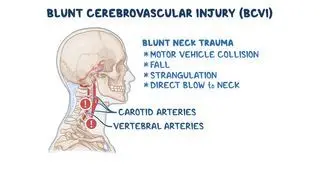
There are many conditions that can result in a persistent vegetative state, including acute traumatic brain injuries from falls, car accidents, or assaults. PVS can also occur as a result of non-traumatic brain injuries, including a stroke; cardiac arrest; severe brain infections, such as meningitis and encephalitis; drug overdose or poisoning; near-death drowning; or a ruptured aneurysm.
Lastly, degenerative disorders (e.g., Alzheimer and Parkinson disease), metabolic brain disorders (e.g., Wernicke encephalopathy), and severe congenital malformations of the nervous system can all cause an individual to enter a persistent vegetative state.
How is a persistent vegetative state diagnosed?
A persistent vegetative state is diagnosed through a combination of clinical observation, neurological examination, and imaging studies. A clinician may assess the individual’s level of consciousness over time and look for signs of wakefulness, such as eye opening and sleep-wake cycles.
A complete neurological examination may be performed to test responses to stimuli, evaluate brainstem reflexes, and rule out conditions that could mimic PVS, such as locked-in syndrome or minimally conscious state. The level of consciousness can be assessed by checking the Glasgow Coma Scale (GCS), which measures eye-opening, verbal, and motor response to stimuli on a scale from 3 to 15, with 3 representing a comatose state and 15 being normal.
Imaging tests like CT or MRI scans can help identify structural brain damage, while EEG may be used to assess brain activity. Ultimately, diagnosis of PVS is typically made after at least 1 month of continuous unawareness.
Do individuals typically recover from a persistent vegetative state?
Recovery from a persistent vegetative state is unlikely but not impossible, and it largely depends on the cause of the brain injury, the duration of the PVS, and the age and overall health of the person.
The longer someone remains in a PVS, the lower the chances of meaningful recovery. After 3 months in PVS from a non-traumatic cause or 12 months from a traumatic cause, recovery is considered extremely unlikely, and the condition may be classified as a permanent vegetative state.
Additionally, recovery doesn't always mean a full return to prior cognitive functioning; even if someone does regain consciousness, they may still experience severe physical or cognitive disabilities.