
Tinnitus

What Is It, Causes, Treatment, and More

Author: Anna Hernández, MD
Editor: Alyssa Haag
Editor: Emily Miao, PharmD
Editor: Kelsey LaFayette, DNP, ARNP, FNP-C
Illustrator: Jessica Reynolds, MS
Copyeditor: Stacy M. Johnson, LMSW
Modified: Jan 06, 2025

What is tinnitus?

Tinnitus is the experience of hearing a sound without an external acoustic source.  The sound heard may vary based on the individual but can include ringing, humming, and hissing. Tinnitus is generally subjective, meaning the affected individual can only hear it. However, there is also objective tinnitus, meaning it can be heard by an examiner, generally with the help of a stethoscope. Objective tinnitus usually happens when an individual hears their heartbeat inside the ear—called pulsatile tinnitus—or when blood flow is heard inside the ear, typically due to a turbulent blood flow
Ringing in the ears.

What causes tinnitus?

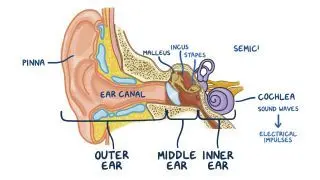
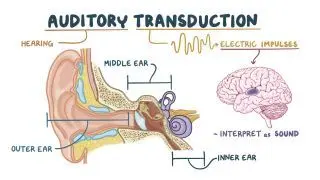
Tinnitus can be classified as either primary or secondary depending on whether an underlying cause can be identified or not. The exact cause of primary tinnitus is unclear. However, most cases are associated with sensorineural hearing loss, which happens when a lesion disrupts the transmission of a neural impulse from the inner ear to the brain. Hearing loss causes less external sound stimuli to reach the brain, and in response, the brain undergoes neuroplastic changes to how it processes different sound frequencies. Common disorders associated with sensorineural hearing loss include presbycusis, age-related hearing loss, and noise-related hearing loss, where exposure to loud or chronic noise damages the sensory hair cells of the inner ear.

On the other hand, causes of secondary tinnitus include impacted earwax; ototoxic medications, such as aminoglycosides, antimalarials, or chemotherapeutics; inner or middle ear infections; head or neck injuries; as well as other disorders affecting the inner ear, like Meniere disease, which is a disorder of the balance mechanism in the inner ear. Less commonly, secondary tinnitus may be caused by more severe conditions, like inner ear tumors, such as a vestibular schwannoma; or disorders affecting blood vessels, like arteriovenous malformations or vascular tumors

What are the signs and symptoms of tinnitus?

Tinnitus is a symptom rather than a condition, and although it is generally not associated with a severe health condition, it can significantly impact the quality of life. Most people describe tinnitus as a high-pitched ringing in the ears, while others describe it as humming, hissing, buzzing, roaring, or a cicada-like sound. The sound can be perceived in one or both ears and may be experienced as coming from inside the head or from a distance. It may be constant, intermittent, steady, or pulsating. Temporary, spontaneous tinnitus, lasting seconds to minutes, is a nearly universal sensation that often occurs after exposure to extremely loud noise (e.g., after attending a music concert). When tinnitus lasts more than six months, it is known as chronic tinnitus. 

Although tinnitus is rarely a sign of a severe health problem, it can be extremely bothersome and severely impact daily life. People with tinnitus may report impaired sleep, difficulty concentrating, decreased enjoyment of social activities, and difficulty hearing others speak. 

How is tinnitus diagnosed?

Tinnitus is diagnosed based on the individual’s symptoms. A clinical history focusing on the nature of the sound, onset, duration, and associated symptoms is essential to distinguish between benign and dangerous causes and determine potential treatment options. In particular, associated neurological symptoms, asymmetric or unilateral tinnitus; asymmetrical hearing loss; and pulsatile tinnitus may raise suspicion of an underlying disorder. In cases where an underlying cause is suspected, additional tests may involve an audiologic or hearing exam, imaging studies, such as a CT scan or MRI of the brain, and vascular studies (e.g., CT angiography). 

The impact of tinnitus on daily life, including sleep disturbances, mood disorders, and cognitive function, should be explicitly asked to assess the necessity of treating people with tinnitus.

How is tinnitus treated?

Treatment of tinnitus focuses on managing any underlying cause and identifying any alleviating or aggravating factors. While there is no cure for primary tinnitus, it often becomes less noticeable and more manageable over time. Specific treatments may help reduce the severity of symptoms and improve quality of life. For example, cognitive behavioral therapy (CBT) is a type of talk therapy that helps individuals mitigate the impact of tinnitus by developing alternative coping strategies. Other therapies may also be helpful, such as masking the sound through acoustic stimulation, hearing aids, or sound generators. Finally, individuals may also reduce tinnitus's impact by treating depression, anxiety, insomnia, and pain with medications or psychotherapy.

What are the most important facts to know about tinnitus?

Tinnitus is the sensation of sound in the ear in the absence of an external source. Common causes of tinnitus include exposure to loud noise, impacted earwax, inner or middle ear infections, neurological or vascular disorders, and side effects of medications. When an individual presents with tinnitus, the main goal is to identify any dangerous causes, any treatable causes, as well as the impact of tinnitus on daily life. Common causes of tinnitus include exposure to loud noise; impacted earwax; inner or middle ear infections; neurological or vascular disorders; and side effects of medications. Treatment is focused on managing any underlying cause when possible. Treatment options for people with chronic tinnitus with no underlying cause include masking devices, hearing aids, and psychological therapy

References


Bauer C. A. (2018). Tinnitus. The New England journal of medicine, 378(13), 1224–1231. https://doi.org/10.1056/NEJMcp1506631


Baguley, D., McFerran, D., & Hall, D. (2013). Tinnitus. The Lancet, 382(9904), 1600–1607. doi:10.1016/s0140-6736(13)60142-7 


McFerran, D. J., Stockdale, D., Holme, R., Large, C. H., & Baguley, D. M. (2019). Why Is There No Cure for Tinnitus?. Frontiers in neuroscience, 13, 802. https://doi.org/10.3389/fnins.2019.00802


Swain, S. K., Nayak, S., Ravan, J. R., & Sahu, M. C. (2016). Tinnitus and its current treatment–Still an enigma in medicine. Journal of the Formosan Medical Association, 115(3), 139–144. doi:10.1016/j.jfma.2015.11.011