Bronchopulmonary dysplasia (BPD): Nursing
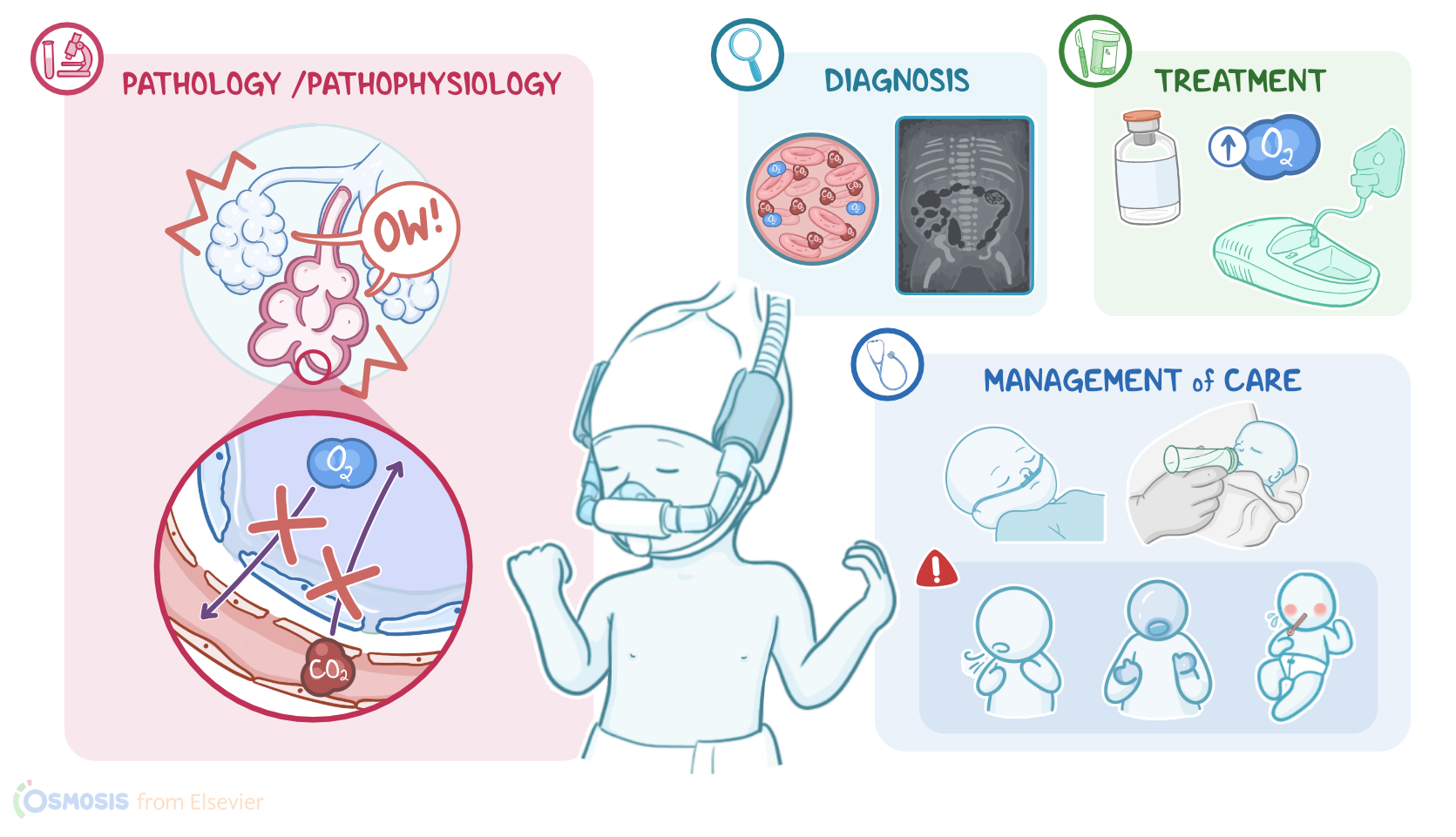
Bronchopulmonary dysplasia, or BPD, also known as neonatal chronic lung disease, is an iatrogenic respiratory disease most commonly affecting preterm newborns that results from lung injury and disrupted lung development.
Now, let’s quickly review the respiratory tract, which can be divided into two regions: the upper respiratory tract and lower respiratory tract. The upper respiratory tract includes the nose, nasal cavity, the oral cavity, pharynx, epiglottis, larynx, and the upper part of the trachea; while the lower respiratory tract includes the lower part of the trachea, and the lungs containing the bronchi. These are lined by pseudostratified ciliated columnar epithelium. This contains goblet cells, which produce mucus to trap small foreign particles; as well as columnar cells, which have cilia, or tiny little hair-like projections that move mucus and foreign particles up the respiratory tract. The bronchi gradually branch into bronchioles, which give rise to the alveolar ducts, and finally the alveoli. Alveoli are tiny air-filled sacs that are surrounded by tiny blood vessels, called capillaries.
If we zoom in even more, we can see a tiny space between the alveolar wall and the capillary wall, called the interstitial space. And that’s where most gas exchange occurs, so as we breathe, the inhaled oxygen moves through the alveolar membrane, the interstitial space, and the capillary membrane to reach the blood, while the carbon dioxide moves from the capillaries through the interstitial space and into the alveolar sacs to be exhaled. Now, the alveoli are lined by alveolar epithelial cells, called pneumocytes. The vast majority are type I pneumocytes, which allow oxygen and carbon dioxide to pass through them. There are also type II pneumocytes scattered around which produce surfactant, an oily secretion that coats the alveoli and prevents their collapse.
| BRONCHOPULMONARY DYSPLASIA (BPD) | ||
| KEY POINTS | NOTES | |
| DEFINITION |
| |
| PHYSIOLOGY |
| |
| CAUSES AND RISK FACTORS |
| |
| PATHOPHYSIOLOGY |
| |
| SIGNS AND SYMPTOMS |
| |
| DIAGNOSIS |
| |
| TREATMENT |
| |
| MANAGEMENT OF CARE |
| |
| PATIENT AND FAMILY TEACHING |
| |
No notes for this video yet
Try adding a note below