Case study - Attention-deficit hyperactivity disorder (ADHD): Nursing
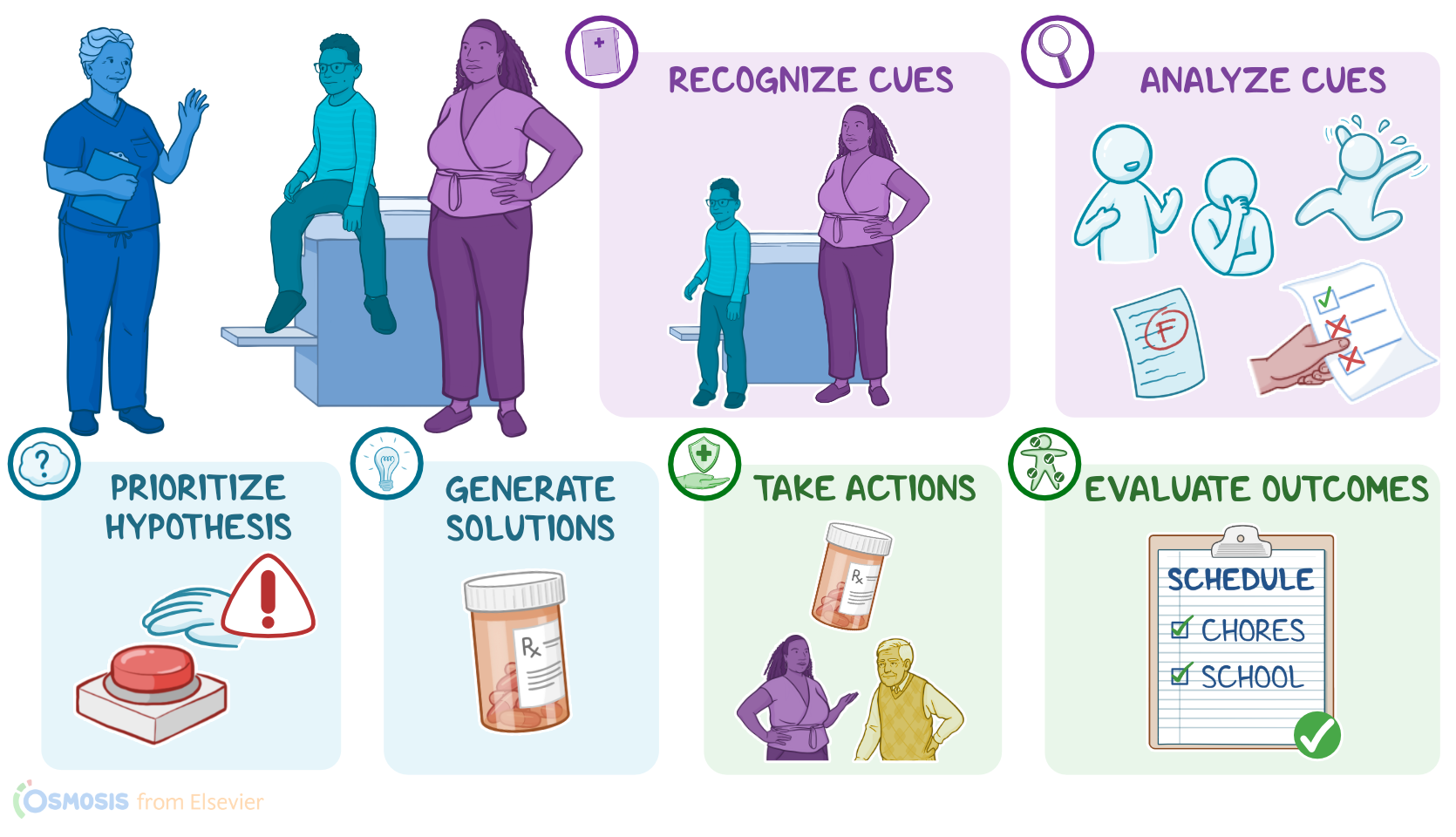
Nurse Sienna works in a family practice clinic and is caring for Paul, an 11-year-old who was brought in by his caregiver, Erin, for poor school performance over the past year. After settling Paul in his room, Nurse Sienna goes through the steps of the Clinical Judgment Measurement Model to make clinical decisions about Paul’s care by recognizing and analyzing cues, prioritizing hypotheses, generating solutions, taking action, and evaluating outcomes.
First, Nurse Sienna recognizes important cues, including Paul’s vital signs which are temperature 98.6 F or 37 C, heart rate 88 beats per minute, respiratory rate 14 breaths per minute, and blood pressure 105/66 mmHg. She notices that Paul is restless and regularly stands up to look at and touch objects in the examination room.
Nurse Sienna gathers more information from Erin and Paul.
Nurse Sienna: Hi Paul, how are you doing today?
Paul: Okay, I guess. I don’t know why I have to be here.
Erin: Paul’s been having trouble in school. His grades have been getting worse over the past few months. He's also been turning in his assignments late or not at all, and when he does turn them in, they’re incomplete.
Paul: (shrugs) It's hard to pay attention.
Erin also reports that Paul’s teachers say he often disrupts class by standing up and blurting out answers to questions instead of raising his hand; and that he has difficulty following rules and waiting for his turn during group activities. When asked about the home environment, Erin reports that when Paul is asked to perform a household chore, he either forgets to do the chore or doesn't finish it once he starts it.
Nurse Sienna then analyzes these cues. She reviews Paul’s electronic health record, or EHR, and notes that he’s been to the clinic twice in the past year for similar behavioral difficulties and tested negative for underlying vision, hearing, or cognitive disorders. Nurse Sienna confers with the health care provider, who diagnoses Paul with attention-deficit/hyperactivity disorder, or ADHD. Nurse Sienna knows that ADHD is likely a group of disorders thought to be caused by abnormalities in the function of the central nervous system, which regulates concentration, attention, focus, and impulse control. As a result, patients can experience inattention, hyperactivity, and impulsivity, which may lead to disrupted learning, school performance, and difficulty completing tasks. Nurse Sienna recognizes that Paul needs effective management of his ADHD symptoms. Now, using the information she’s gathered, Nurse Sienna develops a priority hypothesis of ineffective impulse control.
Then, Nurse Sienna generates solutions to address Paul’s impulse control, and she establishes the expected outcome that after intervening, Paul will demonstrate improved ability to focus on tasks at school and at home by his follow-up appointment.
| CASE STUDY - ATTENTION-DEFICIT HYPERACTIVITY DISORDER (ADHD) | ||
| KEY POINTS | NOTES | |
| INTRODUCTION |
| |
| RECOGNIZING AND ANALYZING CUES |
| |
| PRIORITIZING HYPOTHESES, GENERATING SOLUTIONS, AND TAKING ACTIONS |
| |
| EVALUATING OUTCOMES |
| |
- "Varcarolis’s Canadian psychiatric mental health nursing. " Elsevier (2023)
- "Keltner’s psychiatric nursing." Elsevier (2023)
No notes for this video yet
Try adding a note below