Complete metabolic panel (CMP) - Sodium: Nursing
Ms. Blanco is an older adult client who has been lethargic for the past few hours and arrives at the emergency department via ambulance. During the previous three days, she had recurrent episodes of diarrhea due to gastroenteritis. Her family reports that during this time they encouraged Ms. Blanco to drink lots of water to keep hydrated. On physical assessment, Ms. Blanco has dry mucous membranes, sunken eyes, tachypnea, and tachycardia. Based on these findings, a complete metabolic panel, or CMP, is ordered to check her electrolyte levels, including sodium. Now, sodium is a positively charged ion, or cation, which is abbreviated as Na+. It is the major cation in the body, and most of it is located outside the cells in the extracellular fluid. It is the major factor in the fluid's osmolality, which is the concentration of dissolved particles, including sodium and other electrolytes. Sodium is also a major determinant of how fluid is distributed around the body, and it helps maintain enough circulating volume for adequate tissue perfusion.
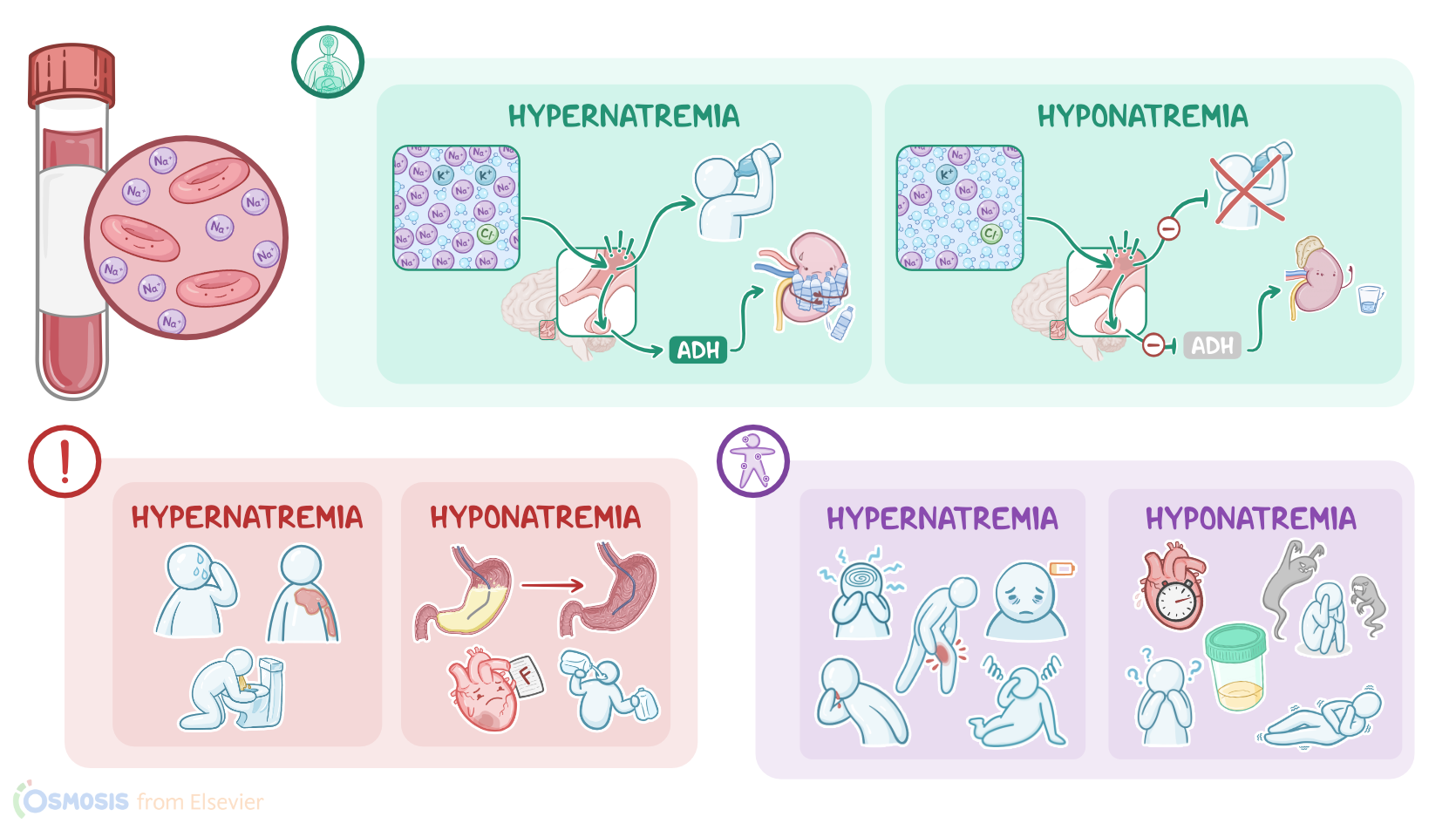
In addition, sodium is essential for the conduction of nerve impulses and muscle contraction. Together with chloride and bicarbonate, sodium helps to maintain acid-base balance. Sodium is introduced into the body through a person’s diet, especially when foods high in sodium are consumed, such as canned soup, tomato juice, processed meats, canned tuna, salted crackers, and cheese. Once ingested, sodium is absorbed in the blood by the gastrointestinal tract, and travels through the bloodstream. Then, most of the sodium is excreted through the kidneys, but a lesser amount is excreted through sweat and feces. Now, maintaining a normal sodium concentration is essential to keep our bodies functioning normally. When there’s hypernatremia, or a high sodium level, the serum osmolality also increases. The increased osmolality is detected by the osmoreceptors in the thirst center of the hypothalamus. In response, it stimulates the pituitary to release ADH, or antidiuretic hormone, into the blood. ADH then travels to the kidneys to increase water reabsorption back into the blood, so less water is lost in the urine.
| SODIUM | ||
| KEY POINTS | NOTES | |
| PHYSIOLOGY |
| |
| HYPERNATREMIA |
| |
| HYPONATREMIA |
| |
| INDICATIONS |
| |
| NURSING IMPLICATIONS |
| |
No notes for this video yet
Try adding a note below