Geriatric considerations - Integumentary: Nursing
Introduction0:00–0:22
Geriatrics is the branch of medicine that deals with the physiology and psychology of aging as well as the diagnosis and treatment of diseases affecting older clients.
Now, aging affects various organ systems. One of which is the skin also known as the integumentary system.
All right. Now, let's start by reviewing the physiology of the integumentary system, which is the outer barrier that protects the body from excessive water loss as well as any external threat like trauma or pathogens.
Physiology0:22–3:06
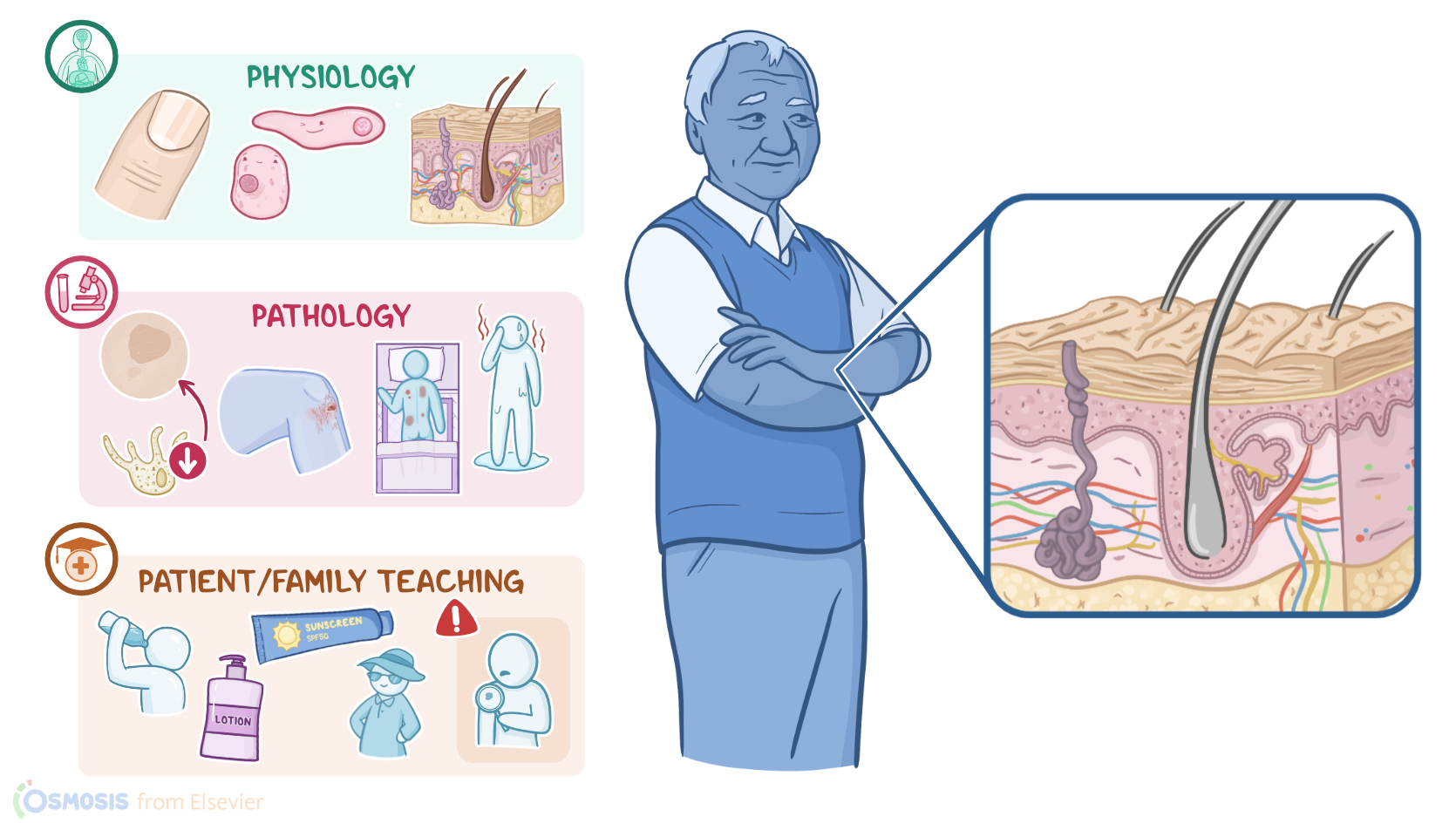
The skin is divided into three main layers. The hypodermis, the dermis and epidermis.
The hypodermis also known as the subcutaneous layer of the skin is made of fat and connective tissue that anchors the skin to the underlying muscle and acts as a cushion that protects underlying tissues from trauma.
Above the hypodermis is the dermis containing collagen and elastin fibers, nerve endings, sweat and sebaceous glands as well as blood and lymphatic vessels just above the dermis is the epidermis, which has multiple cell layers that are composed of developing cells called keratinocytes, which are flat pancake shaped cells that are named for the keratin protein that they're filled with.
Keratinocytes start their life at the basal layer also called the stratum basale, which is made up of a single layer of stem cells that continually divide and produce new keratinocytes.
This layer also contains the melanocytes which produce a pigment called melanin that gives each individual their skin color and it acts as a natural sunscreen.
Now, as keratinocytes mature, they migrate into the next layers of the epidermis, called the stratum spinosum and then into the stratum granulosum keratinocytes in this layer begin the process of keratinization which is the process where the keratinocytes flatten out and die.
And in the process, they begin to create the epidermal skin barrier. Keratinization leads to development of the stratum lucidum layer which is made up of translucent dead keratinocytes.
The stratum lucidum layer is only found in thick skin like on the palms of the hand and soles of the feet because those are the areas that need extra protection.
Finally, there's the stratum corneum or the uppermost and thickest layer of the epidermis. As new keratinocytes push up into the stratum corneum.
Older dead cells are sloughed off forming skin flakes. Now, the skin also houses appendages which include hair, sebaceous and sweat glands and nails.
Each hair consists of a hair follicle which lies in the dermis and a hair shaft which spans the epidermis reaching the surface of the skin.
Sebaceous glands lie in the dermis and release sebum into the hair follicles, sweat glands also lie in the dermis and release sweat that may flow to the hair follicle or directly into the skin surface.
Finally, nails are extensions of the epidermis that protect and enhance sensations of the tips of the fingers and toes. Ok.
Let's look at some of the effects of aging on the integumentary system. First, subcutaneous fat is lost from the hypodermis during the aging process.
Pathology3:06–5:59
This decreased padding increases the risk for hypothermia because there's less insulation, decreased subcutaneous tissue also increases risk of pressure injuries on certain pressure points around the body like the buttocks and hips.
Moreover, the absorption of topical medication administered to a geriatric client can change due to decreasing subcutaneous tissue in the dermis.
There's decreased thickness along with degeneration of elastin fibers, stiffening of collagen fibers and decreased vascularity.
These changes result in increased wrinkling and sagging of the skin. Increased fragility and permeability of capillaries can be noted which results in easy bruising.
The number and function of sweat glands decreases. So there's less body odor but also a reduced ability for the body to cool by evaporative heat loss.
Increasing the risk of heat stroke, decreased sebaceous gland activity leads to drier flaking skin and nerve endings also decrease in number, resulting in diminished awareness of sensations including pain, touch pressure and temperature.
In addition, nails grow more slowly with age and they become thicker and more brittle age related thinning of the epidermis, results in decreased barrier protection, decreased ability of the skin to repair itself when damaged damage occurs more easily too and due to a decreased adherence between the epidermis and dermis.
Skin tears can easily occur when moving a geriatric client or pulling them up in bed. Other changes include a decrease in the number of melanocytes resulting in less protection from the UV rays as well as in progressive graying of the hair.
The melanocytes also tend to accumulate in enlarged and sun exposed areas which can lead to the formation of solar lent genes also called age spots or liver spots.
Cherry angioma also called senile angioma, which are small, smooth red papules and seborrheic keratoses which are scaly growths with either smooth or regular borders that can vary in color from tan to brown to black.
Finally, geriatric clients may have a condition called dermato porosis, which is a type of chronic skin fragility caused by atrophy of the skin and is characterized by subcutaneous bleeding, senile, purpura or purplish ecchymoses and delayed wound healing.
Now, let's move on to client and family teaching to begin, teach your client about protecting their skin from the sun by wearing protective clothing, hats with wide brims and sunglasses when outdoors, encourage them to stay out of the sun when its rays are strongest, which is usually between 10 a.m.
General client & family teaching5:59–7:26
and 4 p.m. Also recommend that they apply sunscreen with an SPF of 30 or greater whenever they are outside.
Even if it appears cloudy, also teach them that their ability to lower their body temperature through sweating, diminishes with age.
So remind them to avoid heat exposure over long periods of time, especially in conditions of high humidity. Next, teach your client to use a high quality skin moisturizer to help maintain their skin integrity.
Teach them to avoid using any harsh chemicals that may dry out the skin and to drink plenty of fluids to ensure their skin is well hydrated.
Also talk to them about how a wellbalanced diet can help keep their skin healthy. Finally, teach your client to perform monthly skin checks and to keep track of skin changes in moles, skin tags or lesions and recommend that they have their skin professionally examined every year.
Then instruct them to notify their healthcare provider immediately for any changes in shape, size or color of an existing skin lesion, the appearance of a new lesion as well as any bruising that occurs without injury.
All right. As a quick recap, the skin is the outermost layer of the body.
Review7:26–8:57
That is the first line of defense against external threats. Protecting the body from trauma pathogens and water loss.
The skin is divided into three layers, the hypodermis, the dermis and the epidermis. Age related changes in the skin include loss of subcutaneous fat, degeneration of elastin fibers stiffening of collagen fibers and decreased vascularity.
These changes may result in increased wrinkling of the skin. Easy bruising, increased risk for hypothermia, increased risk of skin tears and pressure injuries and changes in the absorption of topical medications.
The number and function of sweat glands decreases. So there's less body odor but also a reduced ability for the body to cool by evaporative heat loss.
Increasing the risk of heat stroke, decreased sebaceous gland activity leads to drier flaking skin. And as nerve endings decrease in number awareness of sensations including pain, touch, pressure and temperature diminishes.
In addition, nails grow more slowly with age and they become thicker and more brittle and hair progressively turns gray as melanocytes become less active client and family teaching centers around skin monitoring care and protection and when to contact their healthcare provider.
| GERIATRIC CONSIDERATIONS - INTEGUMENTARY | ||
| KEY POINTS | NOTES | |
| DEFINITION |
| |
| PHYSIOLOGY |
| |
| PATHOPHYSIOLOGY |
| |
| PATIENT AND FAMILY TEACHING |
| |
No notes for this video yet
Try adding a note below