Grief and loss: Nursing
Grief is the natural emotional response to loss that occurs when something or someone that is loved is taken away. Mourning is the process during which a person adapts to loss and experiences grief; and bereavement includes grief and mourning and involves the time period in which a person adjusts to their life after loss. All right, although grieving is typically associated with the loss of a loved one, grief can happen after other meaningful losses, such as the loss of a partner to divorce, the loss of their childhood home, or the loss of one’s health, a job, or a lifelong dream. While it is true that each person grieves in their own unique way, there are a series of stages that are experienced while coping with loss, and these include denial, anger, bargaining, depression, and acceptance.
Right after experiencing a loss, clients may have a hard time accepting what has happened. Denial protects the client from feeling too many emotions at a time, and gives them a little time to adjust to the new reality. Once a client realizes the loss of a loved one, the reality of the situation begins to set in, bringing up more confusion, frustration, and pain. At this stage, clients might argue that what has happened is unfair, or try to place the blame on others. It’s also common to feel angry towards the one who has died for leaving too early, or angry at themselves for the things they did or didn’t do before their death. Next, bargaining occurs as an attempt to regain control. It’s common to go over and over the things that happened in the past and ask a lot of “what if” questions, wishing they could go back in time and change things in the hope they could have turned out differently.
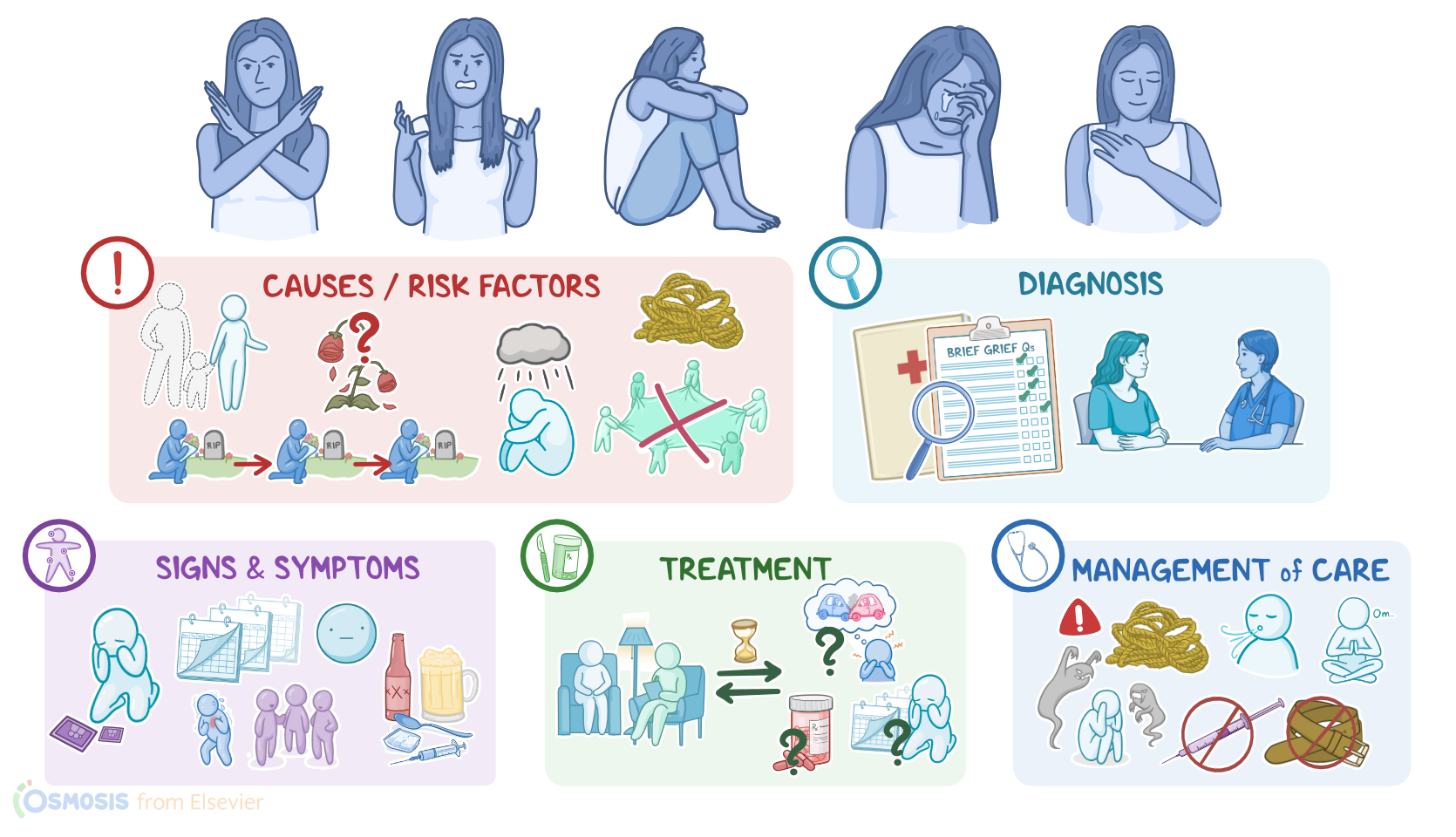
After a while, the grieving client comes to terms with the certainty of death, and a sense of profound sadness and emptiness takes over. Often, the pain of loss can feel overwhelming, and depression may feel as if it will last forever. It is important to understand that this is not a sign of a mental health condition, but rather a natural response to grief. Gradually, typically within weeks or months, most clients find that the pain eases, and they are able to accept the reality of what has happened and begin to reorganize their life. Now, from a pathology standpoint, prolonged grief disorder is when a client has difficulty moving forward after a loss, and that affects their ability to carry on with their lives. Some clients may experience a grieving period that lasts longer than usual, while others experience exaggerated grief with intrusive thoughts, self-destructive behaviors, or suicidal ideation.
Some clients may also experience delayed grief, where they go through the mourning period long after the loss of a loved one.Risk factors for experiencing prolonged grief disorder include the loss of a child or spouse; loss by violent means, such as homicide or suicide; having experienced multiple losses; a history of a mental health condition; lack of social support; as well as financial, or legal issues. Other factors that can increase the likelihood of prolonged grief disorder include impaired family functioning prior to the death, high caregiver burden, as well as difficult or troubling circumstances of death, such as overly aggressive medical interventions, or uncertainty about the cause of death. Now, the clinical manifestations of prolonged grief disorder include intense feelings of sorrow and emotional pain lasting longer than 6 to 12 months, as well as intense and prolonged longing for the deceased and difficulty accepting their death.
While grieving, all kinds of difficult and unexpected emotions can be experienced, ranging from shock or anger to disbelief, guilt, loneliness, and profound sadness. Often, the pain of loss can feel overwhelming, and interfere with physical health, making it difficult to sleep, eat, or think clearly. Some people can also experience a sense of detachment, numbness, or feelings of meaninglessness upon their own life. These symptoms are so devastating that they interfere with everyday activities and can affect the person’s school work, or social relationships. In some cases, clients are unaware that grief is interfering with their daily life, and they develop physical symptoms associated with the suppression of grief, such as palpitations, chest pain, headache, and gastrointestinal problems.
Sometimes, there might be associated self-destructive behaviors, such as use of tobacco, alcohol, or other drugs; as well as suicidal thoughts or self-harming behavior. The diagnosis of prolonged grief disorder starts with the client’s medical history. There are several screening questionnaires that can help identify clients at risk for prolonged grief disorder, such as the “Brief Grief Questionnaire” or the “Inventory of Complicated Grief”. Ultimately, though, the diagnosis is made through a mental health evaluation assessing the clinical manifestations of the grieving clients. All clients with prolonged grief disorder should be asked specifically about suicidal thoughts or behavior, especially if they have a history of a mental health condition.
Treatment of prolonged grief disorder is based on psychological therapy, which focuses on accepting death and restoring the ability of living in a world without the loved one. Clients who do not respond well to psychological therapy should be reevaluated to determine if they are experiencing a prolonged grief disorder, or have another mental health condition, such as major depression, anxiety disorders, post-traumatic stress disorder, called PTSD for short, or substance use disorders. In this case, antidepressants can be used as well. Let’s look at care you’ll provide for a client experiencing grief and loss. Your primary goal is to provide support during the grieving process.
| GRIEF AND LOSS | ||
| KEY POINTS | NOTES | |
| DEFINITION |
| |
| PHYSIOLOGY |
| |
| CAUSES AND RISK FACTORS |
| |
| PATHOPHYSIOLOGY |
| |
| SIGNS AND SYMPTOMS |
| |
| DIAGNOSIS |
| |
| TREATMENT |
| |
| MANAGEMENT OF CARE |
| |
| PATIENT AND FAMILY TEACHING |
| |
No notes for this video yet
Try adding a note below