Integrative and alternative therapies: Nursing
Introduction0:00–1:08
Nurse Ken works in an outpatient oncology office and is caring for a client named Naveen who recently underwent a partial colectomy to treat stage 3 colon cancer.
Naveen tells Nurse Ken, “I’ve been taking my prescribed medications, but I’ve been using my own remedies too.” Nurse Ken responds, “Naveen, I want to gather some more information to ensure I understand the treatments you’re using.” Naveen goes on to explain that he’s been taking his antibiotics as prescribed; however, he’s using acupuncture and meditation to address his pain instead of taking his prescribed pain medication.
Nurse Ken says, “I’m glad to hear you’re taking such a proactive approach to your health. Let’s work together to safely incorporate these into your plan of care.” Nurse Ken will use what he knows about integrative and alternative therapies to provide support and empower Naveen in making health care decisions.
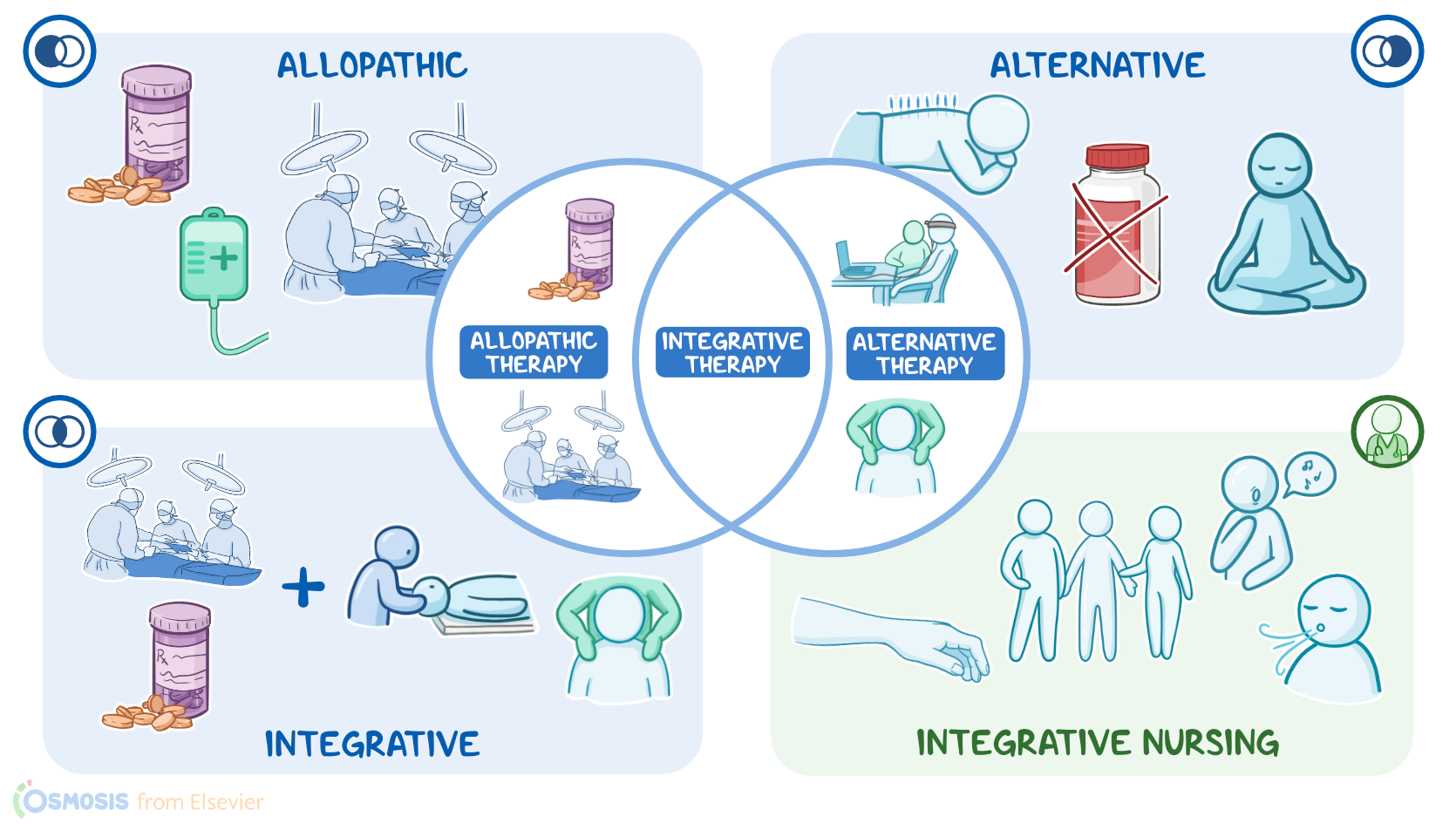
Okay, so allopathic therapy, also called biomedicine, is what we know as conventional Western medicine, such as the use of medications, chemotherapy, and surgical procedures like Naveen’s partial colectomy procedure and prescribed antibiotics.
Defining Types of Therapy1:08–2:11
Then there’s integrative therapy, also known as complementary therapy, which is when an allopathic treatment is combined with a non-conventional treatment, such as massage therapy, chiropractic medicine, or biofeedback.
Naveen is using integrative therapy by taking his antibiotics while also using a probiotic supplement to complement his conventional treatment.
Next is alternative therapy, which is where non-conventional therapies completely replace a conventional allopathic treatment.
For example, Naveen is using acupuncture and meditation instead of his pain medication so this is considered alternative therapy.
Now that we know more about integrative and alternative therapies, it’s time to see why they’re used.Although allopathic medicine is effective in treating diseases, it’s not always effective in treating the distressing symptoms that occur as a result of the disease or its treatments.
Significance of Integrative Health Care2:11–2:49
Because of this, clients can seek out integrative and alternative treatments to reduce symptoms and improve their quality of life.
Integrative and alternative therapies can be used for the therapeutic benefits of improving sleep and mood, as well as decreasing pain, anxiety, and nausea.
For example, Kava is used by clients for its anxiolytic properties, and magnet therapy to help alleviate pain in clients with musculoskeletal disorders.
Now, the foundations of nursing practice are rooted in integrative care, meaning that nurses treat clients as a whole rather than simply focusing on their disease.
The Nurse Role in Integrative Health Care2:49–5:45
Integrative nursing is a term used to describe the process of providing holistic person-centered care geared towards improving the health and well-being of clients and their families.
Most nurses use integrative interventions that are in the nursing scope of practice already, such as therapeutic touch, guided breathing, and music therapy.
Now, there are several responsibilities nurses have in regard to integrative health care, including assessment, education, and evaluation.
First, nurses can assess the use of and the need for integrative and alternative therapies for each client individually.
For example, clients may not view certain herbal supplements as medications, but they may interact with prescribed medications.
A common example is ginkgo biloba, a herbal supplement sometimes used for dementia, that can increase the risk of bleeding in clients who are also taking anticoagulants.
Nurses can also recommend certain therapies for clients, such as massage for a client experiencing chronic back pain. Next, nurses provide education to clients about integrative and alternative therapies so that they can make informed health care decisions about their use, including information about the safety precautions and limitations associated with different therapies.
As an example, clients with heart valve disease should be cautious when using acupuncture as it can increase the risk for infection.
Lastly, nurses are responsible for evaluating client responses to integrative and alternative therapies, including whether the treatment is helping the client or if they develop any adverse side effects.
For example, evaluating the effect of chiropractic therapy on a client’s pain. or checking for skin breakdown in a client who’s undergoing cupping therapy.
Nurse Ken requests that the pharmacist examine the probiotic supplement that Naveen is taking to ensure it’s safe and won’t interfere with his other prescribed medications, and recommends that Naveen speaks to the pharmacist about taking daily vitamins and supplements since he is eliminating dairy and gluten from his diet.
He also encourages Naveen to continue meditating for pain management, but informs Naveen that if he experiences severe pain, he should call the office.
Lastly, Nurse Ken tells Naveen that it will be unsafe to continue acupuncture once he starts chemotherapy, because the medication can reduce his ability to fight infection and form blood clots.
Naveen says, “Thank you for allowing me to take my health into my own hands. I'll be back at the office for my next appointment in two weeks.”Alright, as a quick recap… Allopathic therapy, also called biomedicine, is what we know as conventional western medicine.
Summary5:45–6:42
Then there’s integrative therapy, also known as complementary therapy, which is when an allopathic treatment is combined with a non-conventional treatment.
Next is alternative therapy, which is where non-conventional therapies completely replace a conventional allopathic treatment.
Although allopathic medicine is effective in treating diseases, it’s not always effective in treating the distressing symptoms that occur as a result.
Because of this, clients seek out integrative and alternative treatments to improve their quality of life and reduce symptom burden.
Integrative nursing is a term used to describe the process of providing holistic person-centered care geared towards improving the health and well-being of clients and their families.
There are several responsibilities nurses have in regard to integrative health care, including assessment, education, and evaluation.
| INTEGRATIVE AND ALTERNATIVE THERAPIES | ||
| KEY POINTS | NOTES | |
| TYPES OF THERAPY |
| |
| SIGNIFICANCE OF INTEGRATIVE HEALTH CARE |
| |
| NURSING IMPLICATIONS |
| |
No notes for this video yet
Try adding a note below