Pediatric interventions - Overview: Nursing
Content Reviewers
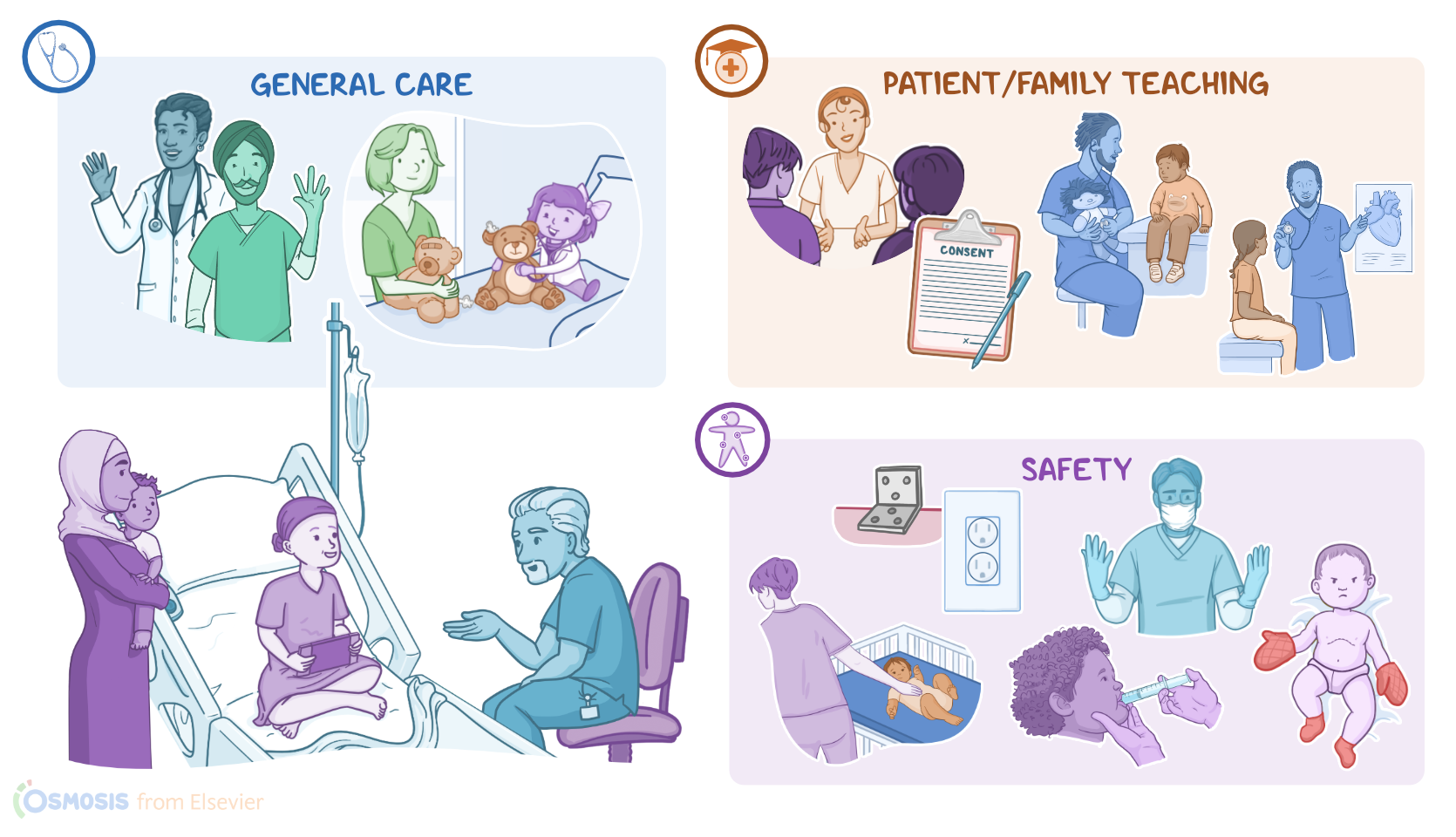
Pediatric patients who are hospitalized require individualized care based on their developmental level. As the nurse caring for a hospitalized child, you’ll prepare them and their caregivers for procedures while promoting their comfort and safety.
When providing care, begin by establishing rapport and trust with the child and their caregivers. You can do this by using therapeutic communication skills, like speaking in a calm tone, listening actively, and practicing therapeutic body language, like sitting down and leaning forward toward your patient.
When explaining the plan of care, remember to avoid words that can cause confusion or fear. So, instead of using medical jargon like “edema,” you can describe a swollen body part as being “puffy.” Likewise, instead of “shot” when talking about an injection, you can use less threatening language like “medicine under the skin.”
You can also ensure your patient and caregivers are familiar with other members of the health care team and their role in the child’s care. Lastly, be sure to collaborate with the child life specialist, who can provide therapeutic play activities that can decrease fear and anxiety in children and their families.
Now, before your patient undergoes a procedure, you’ll need to ensure that informed consent is obtained from their caregiver, by verifying that the health care provider has explained the condition, proposed treatment plan, treatment alternatives, as well as potential risks and benefits of the procedure. As the nurse, you’ll witness the signatures on the consent form and reinforce the information provided by the health care provider. Also be sure to include the child in the discussion, and obtain their assent, as appropriate.
During teaching, you may use a doll or stuffed animal to show a younger child where electrodes are placed or where their surgical dressing will be; whereas, with an adolescent, you can provide them with detailed information, since they’re typically eager to receive health teaching.
| PEDIATRIC INTERVENTIONS - OVERVIEW | ||
| KEY POINTS | NOTES | |
| DEFINITION |
| |
| GENERAL CARE |
| |
| SAFETY |
| |
- "Wong’s essentials of pediatrics. (11th ed.)" Elsevier (2022)
- "Wong’s nursing care for infants and children. (11th ed.)" Elsevier (2019)
No notes for this video yet
Try adding a note below