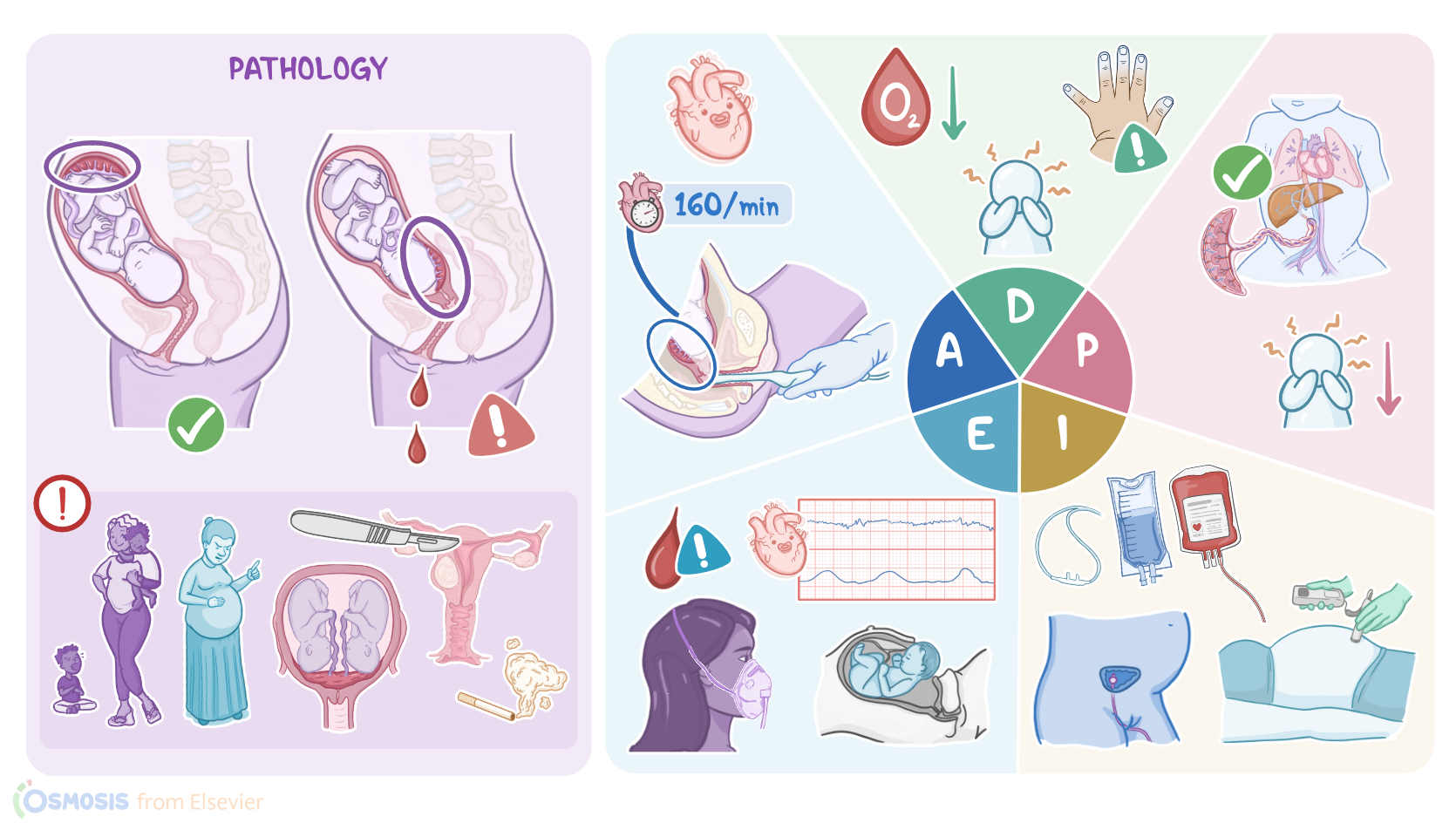
Placenta previa: Nursing process (ADPIE)

Last updated: January 26, 2022

Placenta previa: Nursing process (ADPIE)

Watch later

Watch later

Nutrition - Parenteral: Nursing skills
Mobility - Ambulation: Nursing skills
Atopic dermatitis: Nursing process (ADPIE)
Epistaxis: Nursing process (ADPIE)
Frostbite: Nursing process (ADPIE)
Peptic ulcer disease (PUD): Nursing process (ADPIE)
Pressure injury: Nursing process (ADPIE)
Debridement agents: Nursing pharmacology
Keratolytics: Nursing pharmacology
Medications for acne vulgaris: Nursing pharmacology
Hygiene - Bathing: Nursing skills
Hygiene - Gastric and intestinal tube care: Nursing skills
Hygiene - Oral care: Nursing skills
Hygiene - Ostomy care: Nursing skills
Hygiene - Perineal care: Nursing skills
Hygiene - Urinary catheter care: Nursing skills
Acne: Nursing
Animal and snake bites: Nursing
Burn injury: Nursing
Herpes simplex virus (HSV): Nursing
Herpes zoster: Nursing
Impetigo: Nursing
Insect stings and bites: Nursing
Pediculosis and scabies: Nursing
Preoperative care: Nursing
Postoperative care: Nursing
Psoriasis: Nursing
Skin cancer - Basal cell carcinoma, squamous cell carcinoma, and melanoma: Nursing
Urticaria: Nursing
Eye injury: Nursing process (ADPIE)
Glaucoma: Nursing process (ADPIE)
Trigeminal neuralgia: Nursing process (ADPIE)
Antiglaucoma medications: Nursing pharmacology
Ophthalmic anti-inflammatories and anti-infectives: Nursing pharmacology
Mydriatics and cycloplegics: Nursing pharmacology
Amblyopia: Nursing
Cataracts: Nursing
Detached retina: Nursing
Hearing impairment and otosclerosis: Nursing
Legal blindness: Nursing
Macular degeneration: Nursing
Meniere disease: Nursing
Strabismus: Nursing
Analgesics for obstetrics: Nursing pharmacology
Analgesics: Nursing pharmacology
Eye anesthetics: Nursing pharmacology
Pain management during labor: Nursing
Physiology of pain: Nursing
Fractures: Nursing process (ADPIE)
Musculoskeletal injuries: Nursing process (ADPIE)
Skeletal muscle relaxants: Nursing pharmacology
Acetylcholinesterase inhibitors for myasthenia gravis: Nursing pharmacology
Clubfoot: Nursing
Brachial plexus injury: Nursing
Scoliosis: Nursing
Immobility - Positioning and alignment: Nursing skills
Mobility - Assistive devices: Nursing skills
Amputation: Nursing
Amyotrophic lateral sclerosis (ALS): Nursing
Bell palsy: Nursing
Cerebral palsy: Nursing
Guillain-Barré syndrome: Nursing
Herniated intervertebral disc: Nursing
Hip fractures: Nursing
Muscular dystrophies - Duchenne and Becker: Nursing
Myasthenia gravis: Nursing
Osteoarthritis: Nursing
Osteoporosis: Nursing
Paget disease of bone: Nursing
Spinal cord injury (SCI): Nursing
Appendicitis: Nursing process (ADPIE)
Cirrhosis: Nursing process (ADPIE)
Gout: Nursing process (ADPIE)
Pancreatitis: Nursing process (ADPIE)
Rheumatoid arthritis (RA): Nursing process (ADPIE)
Juvenile idiopathic arthritis: Nursing
Glucocorticoids and mineralocorticoids: Nursing pharmacology
Biologic agents: Nursing pharmacology
Corticosteroids - Topical: Nursing pharmacology
Buerger disease: Nursing
Carpal tunnel syndrome: Nursing
Complete metabolic panel (CMP) - Liver function tests (LFT): Nursing
Encephalitis: Nursing
Endocarditis: Nursing
Epididymitis: Nursing
Folliculitis, carbuncles, and furuncles: Nursing
Glomerulonephritis: Nursing
Hepatitis: Nursing
Inflammatory process: Nursing
Kawasaki disease: Nursing
Myocarditis: Nursing
Pericarditis: Nursing
Pharyngitis: Nursing
Raynaud phenomenon: Nursing
Candidiasis: Nursing process (ADPIE)
Chickenpox (Varicella): Nursing process (ADPIE)
Conjunctivitis: Nursing process (ADPIE)
Gonorrhea and chlamydia: Nursing process (ADPIE)
Lyme disease: Nursing process (ADPIE)
Meningitis: Nursing process (ADPIE)
Methicillin-resistant Staphylococcus aureus (MRSA): Nursing process (ADPIE)
Pelvic inflammatory disease (PID): Nursing process (ADPIE)
Tonsillitis: Nursing process (ADPIE)
Urinary tract infections (UTIs): Nursing process (ADPIE)
Anthelmintics: Nursing pharmacology
Antibiotics - Aminoglycosides: Nursing pharmacology
Antibiotics - Antimycobacterials: Nursing pharmacology
Antibiotics - Beta lactam and beta lactamase inhibitor combinations: Nursing pharmacology
Antibiotics - Carbapenems and monobactams: Nursing pharmacology
Antibiotics - Cephalosporins: Nursing pharmacology
Antibiotics - Cyclic lipopeptides: Nursing pharmacology
Antibiotics - Fluoroquinolones: Nursing pharmacology
Antibiotics - Glycopeptides: Nursing pharmacology
Antibiotics - Lincosamides: Nursing pharmacology
Antibiotics - Macrolides: Nursing pharmacology
Antibiotics - Metronidazole: Nursing pharmacology
Antibiotics - Oxazolidinones: Nursing pharmacology
Antibiotics - Penicillins: Nursing pharmacology
Antibiotics - Polymyxins: Nursing pharmacology
Antibiotics - Tetracyclines and glycylcyclines: Nursing pharmacology
Antibiotics - Trimethoprim and sulfonamides: Nursing pharmacology
Antimalarials: Nursing pharmacology
Antiprotozoals: Nursing pharmacology
Antiretrovirals for HIV/AIDS - CCR5 antagonists, fusion inhibitors, and attachment inhibitors: Nursing pharmacology
Antiretrovirals for HIV/AIDS - Integrase strand transfer inhibitors: Nursing pharmacology
Antiretrovirals for HIV/AIDS - NRTIs and NNRTIs: Nursing pharmacology
Antiretrovirals for HIV/AIDS - Protease inhibitors: Nursing pharmacology
Antivirals for hepatitis B and C: Nursing pharmacology
Antivirals for herpesviruses: Nursing pharmacology
Antivirals for influenza: Nursing pharmacology
Chloramphenicol: Nursing pharmacology
Medications for respiratory syncytial virus (RSV): Nursing pharmacology
Neonatal eye prophylaxis: Nursing pharmacology
Antibiotics - Topical: Nursing pharmacology
Antifungals - Topical: Nursing pharmacology
Treatment for Helicobacter pylori: Nursing pharmacology
Diphtheria: Nursing
Erythema infectiosum (Fifth disease): Nursing
Hepatitis B virus (HBV) infection in pregnancy: Nursing
Infectious mononucleosis: Nursing
Mumps (Parotitis): Nursing
Necrotizing enterocolitis: Nursing
Neonatal sepsis: Nursing
Otitis media: Nursing
Pertussis: Nursing
Poliomyelitis: Nursing
Postpartum infections: Nursing
Roseola (Exanthem subitum): Nursing
Rubella (German measles): Nursing
Rubeola (Measles): Nursing
Smallpox: Nursing
Zika virus: Nursing
Infection prevention and control - Precautions and personal protective equipment (PPE): Nursing skills
Medical asepsis: Nursing skills
Surgical asepsis and sterile technique: Nursing skills
Anthrax: Nursing
Aspergillosis: Nursing
Blood cultures: Nursing
COVID-19: Nursing
Cutaneous fungal infections: Nursing
Erysipelas and cellulitis: Nursing
Genital warts: Nursing
Influenza: Nursing
Osteomyelitis: Nursing
Pyelonephritis: Nursing
Rocky Mountain spotted fever (RMSF): Nursing
Syphilis: Nursing
Toxic shock syndrome (TSS): Nursing
Tuberculosis (TB): Nursing
Anaphylaxis: Nursing process (ADPIE)
Antirejection immunosuppressants: Nursing pharmacology
Antihistamines: Nursing pharmacology
Immunoglobulins: Nursing pharmacology
Immunosuppressants for autoimmune diseases: Nursing pharmacology
Rho(D) immune globulin: Nursing pharmacology
Vaccines: Nursing pharmacology
Hemolytic disease of the fetus and newborn: Nursing
Autoimmunity: Nursing
Immune response - Adaptive: Nursing
Human immunodeficiency virus (HIV) and acquired immunodeficiency syndrome (AIDS): Nursing
Immune response - Innate: Nursing
Immunodeficiency disorders - Primary: Nursing
Scleroderma: Nursing
Immunodeficiency disorders - Secondary: Nursing
Sjögren syndrome: Nursing
Systemic lupus erythematosus (SLE): Nursing
Hypersensitivity reactions - Type I: Nursing
Hypersensitivity reactions - Type II: Nursing
Hypersensitivity reactions - Type III: Nursing
Hypersensitivity reactions - Type IV: Nursing
Neutropenia: Nursing
Shock - Anaphylactic: Nursing
Palliative and hospice care: Nursing
Anxiety disorders: Nursing process (ADPIE)
Anxiolytics and sedative-hypnotics: Nursing pharmacology
Postmortem care and considerations: Nursing
Grief and loss: Nursing
Suicide: Nursing
Sudden infant death syndrome (SIDS): Nursing
Antidepressants - Tricyclic antidepressants (TCAs) and monoamine oxidase inhibitors (MAOIs): Nursing pharmacology
Mood stabilizers: Nursing pharmacology
Child maltreatment: Nursing
Pediatric psychosocial needs during illness and hospitalization: Nursing
Evidence-based practice (EBP): Nursing
Informatics: Nursing
Crisis intervention: Nursing
Defense mechanisms: Nursing
Delirium: Nursing
Dementia: Nursing
Dependent adult abuse: Nursing
Obsessive-compulsive disorder (OCD): Nursing
Posttraumatic stress disorder (PTSD): Nursing
Schizophrenia: Nursing
Substance use disorder - Alcohol and tobacco: Nursing
Substance use disorder - Medications and illicit drugs: Nursing
Therapeutic communication: Nursing
Workplace violence: Nursing
Autism spectrum disorder (ASD): Nursing
Perinatal depression: Nursing
Psychosocial changes - Pregnancy: Nursing
Psychosocial changes - Postpartum: Nursing
Eating disorders: Nursing process (ADPIE)
Incident reports: Nursing
Quality and safety: Nursing
The research process: Nursing
Developing a research problem and hypothesis: Nursing
Research designs: Nursing
Research - Conducting a literature review: Nursing
Research - Sampling: Nursing
Research - Levels of measurement: Nursing
Research - Critical appraisal: Nursing
Research - Data analysis: Nursing
Research - Data collection: Nursing
Research - Dissemination: Nursing
Research - Ethics: Nursing
Quality management: Nursing
Core measures: Nursing
Healthcare costs: Nursing
Legal issues: Nursing
Delegation and supervision: Nursing
Disaster management: Nursing
Interprofessional teamwork: Nursing
Managing change: Nursing
Managing conflict: Nursing
Arrhythmias - Asystole: Nursing
Arrhythmias - Atrial fibrillation (Afib): Nursing
Arrhythmias - Atrial flutter (Aflutter): Nursing
Arrhythmias - Heart blocks: Nursing
Arrhythmias - Premature atrial contractions (PACs): Nursing
Arrhythmias - Premature ventricular contractions (PVCs): Nursing
Arrhythmias - Sinus tachycardia and sinus bradycardia: Nursing
Arrhythmias - Supraventricular tachycardia (SVT): Nursing
Arrhythmias - Ventricular fibrillation (Vfib): Nursing
Arrhythmias - Ventricular tachycardia (Vtach): Nursing
Arterial embolism: Nursing
Electrocardiogram (ECG) - Normal sinus rhythm (NSR): Nursing
Cardiac biomarkers - Creatine kinase (CK): Nursing
Cardiac biomarkers - Troponin: Nursing
Coagulation studies - Partial thromboplastin time (PTT): Nursing
Cardiomyopathy: Nursing
Congenital heart defects - Acyanotic: Nursing
Congenital heart defects - Cyanotic: Nursing
Heart defects that decrease pulmonary blood flow - Nursing considerations & client education: Nursing
Shock - Cardiogenic: Nursing
Shock - Hypovolemic: Nursing
Shock - Neurogenic: Nursing
Shock - Obstructive: Nursing
Shock - Septic: Nursing
Valvular heart disease: Nursing
Alpha-1 adrenergic blockers: Nursing pharmacology
Alpha-2 adrenergic agonists: Nursing pharmacology
Angiotensin II receptor blockers (ARBs): Nursing pharmacology
Angiotensin-converting enzyme (ACE) inhibitors: Nursing pharmacology
Antiarrhythmics: Nursing pharmacology
Anticoagulants - Direct thrombin and factor Xa inhibitors: Nursing pharmacology
Anticoagulants - Heparin: Nursing pharmacology
Anticoagulants - Warfarin: Nursing pharmacology
Antihyperlipidemics - Bile acid sequestrants and cholesterol absorption inhibitors: Nursing pharmacology
Antihyperlipidemics - Fibrates: Nursing pharmacology
Antihyperlipidemics - Miscellaneous: Nursing pharmacology
Antihyperlipidemics - Statins: Nursing pharmacology
Antiplatelet agents: Nursing pharmacology
Beta-adrenergic blockers: Nursing pharmacology
Blood products: Nursing pharmacology
Calcium-channel blockers: Nursing pharmacology
Cardiac glycosides: Nursing pharmacology
Direct-acting vasodilators: Nursing pharmacology
Diuretics - Osmotic and carbonic anhydrase inhibitors: Nursing pharmacology
Diuretics - Thiazide, thiazide-like, loop, and potassium-sparing diuretics: Nursing pharmacology
Hematopoietic growth factors: Nursing pharmacology
Iron preparations: Nursing pharmacology
Nitrates: Nursing pharmacology
Sympathomimetic medications: Nursing pharmacology
Thrombolytics: Nursing pharmacology
Aortic aneurysm: Nursing process (ADPIE)
Coronary artery disease (CAD) and angina pectoris: Nursing process (ADPIE)
Hypertension: Nursing process (ADPIE)
Left-sided heart failure: Nursing process (ADPIE)
Myocardial infarction (MI): Nursing process (ADPIE)
Pericardial effusion and cardiac tamponade: Nursing process (ADPIE)
Peripheral arterial disease (PAD): Nursing process (ADPIE)
Peripheral venous disease (PVD): Nursing process (ADPIE)
Rheumatic heart disease: Nursing process (ADPIE)
Venous thromboembolism (VTE): Nursing process (ADPIE)
Administering an enema: Clinical skills notes
Bladder and bowel training: Clinical skills notes
Collecting a stool specimen: Clinical skills notes
Monitoring fluid intake and output: Clinical skills notes
Nutrition - Enteral: Nursing skills
Nutrition - Oral: Nursing skills
Oropharyngeal suctioning: Clinical skills notes
Routine ostomy care: Clinical skills notes
Biliary atresia: Nursing
Cholecystitis: Nursing
Cholelithiasis: Nursing
Colorectal cancer: Nursing
Diarrhea: Nursing
Diverticular disease: Nursing
Esophageal cancer: Nursing
Gastric cancer: Nursing
Inflammatory bowel disease - Crohn disease and ulcerative colitis: Nursing
Intestinal obstruction: Nursing
Irritable bowel syndrome (IBS): Nursing
Jaundice: Nursing
Laryngeal cancer: Nursing
Liver cancer: Nursing
Pancreatic cancer: Nursing
Prostate cancer: Nursing
Testicular cancer: Nursing
Esophageal atresia and tracheoesophageal fistula: Nursing
Geriatric considerations - Gastrointestinal: Nursing
Hirschsprung disease: Nursing
Hyperemesis gravidarum: Nursing
Nutrition - Newborn: Nursing
Omphalocele and gastroschisis: Nursing
Antacids: Nursing pharmacology
Antidiarrheals: Nursing pharmacology
Antiemetics: Nursing pharmacology
Antispasmodics (GI): Nursing pharmacology
Gallstone-dissolving agents: Nursing pharmacology
Gastric mucosal protective agents: Nursing pharmacology
Histamine H2 antagonists: Nursing pharmacology
Laxatives: Nursing pharmacology
Medications for hepatic encephalopathy: Nursing pharmacology
Pancreatic enzyme replacements: Nursing pharmacology
Proton pump inhibitors (PPIs): Nursing pharmacology
Weight loss medications: Nursing pharmacology
Celiac disease: Nursing process (ADPIE)
Gastroesophageal reflux disease (GERD): Nursing process (ADPIE)
Hiatal hernia: Nursing process (ADPIE)
Hyperbilirubinemia: Nursing process (ADPIE)
Pyloric stenosis: Nursing process (ADPIE)
Acute respiratory distress syndrome (ARDS): Nursing
Atelectasis: Nursing
Chest tube care: Nursing
Cystic fibrosis: Nursing
Flail chest: Nursing
Lung cancer: Nursing
Pleural effusion: Nursing
Pleurisy: Nursing
Pneumothorax and hemothorax: Nursing
Pulmonary contusion: Nursing
Pulmonary edema: Nursing
Rib fracture: Nursing
Rupture of diaphragm: Nursing
Sarcoidosis: Nursing
Care of an intubated client: Nursing skills
Chest physiotherapy: Clinical skills notes
Incentive spirometry: Clinical skills notes
Measuring peak expiratory flow rate: Clinical skills notes
Measuring respiration: Clinical skills notes
Oxygenation - Oxygen therapy: Nursing skills
Pulse oximetry: Clinical skills notes
Tracheostomy suctioning: Clinical skills notes
Physical assessment - Thorax and lungs: Nursing
Vital signs - Oxygen saturation (SpO2): Nursing skills
Vital signs - Respirations: Nursing skills
Congenital diaphragmatic hernia: Nursing
Geriatric considerations - Respiratory: Nursing
Meconium aspiration syndrome: Nursing
Neonatal respiratory distress syndrome (NRDS): Nursing
Bronchodilators: Nursing pharmacology
Corticosteroids - Inhaled: Nursing pharmacology
Mast cell stabilizers - Inhaled: Nursing pharmacology
Leukotriene modifiers: Nursing pharmacology
Medications to control airway secretions: Nursing pharmacology
Oxygen therapy: Nursing pharmacology
Respiratory stimulants: Nursing pharmacology
Asthma: Nursing process (ADPIE)
Bacterial pneumonia: Nursing process (ADPIE)
Bronchiolitis and respiratory syncytial virus (RSV): Nursing process (ADPIE)
Carbon monoxide poisoning: Nursing process (ADPIE)
Chronic obstructive pulmonary disease (COPD): Nursing process (ADPIE)
Epiglottitis: Nursing process (ADPIE)
Foreign body aspiration and upper airway obstruction: Nursing process (ADPIE)
Laryngotracheobronchitis (LTB) and croup: Nursing process (ADPIE)
Smoke inhalation injury: Nursing process (ADPIE)
Contraception - Barrier methods: Nursing
Contraception - Hormonal methods: Nursing
Contraception - Natural methods: Nursing
Contraception - Permanent methods: Nursing
Endometriosis: Nursing
Infertility: Nursing
Antepartum assessment - Fetus: Nursing
Assessment of gestational age: Nursing
Common discomforts of pregnancy: Nursing
Ectopic pregnancy: Nursing
Fetal circulation: Nursing
Fetal development: Nursing
Gestational trophoblastic disease: Nursing
Group B streptococcus (GBS) infection in pregnancy: Nursing
Large for gestational age (LGA) infant: Nursing
Multiple gestation: Nursing
Physiologic changes - Pregnancy: Nursing
Preeclampsia and eclampsia: Nursing
Prenatal care: Nursing
Spontaneous abortion: Nursing
Placenta previa: Nursing process (ADPIE)
Placental abruption: Nursing process (ADPIE)
Birth-related procedures: Nursing
Cesarean birth: Nursing
Components of the birth process: Nursing
Intrapartum assessment - Fetal heart rate patterns: Nursing
Intrapartum assessment - Uterine activity: Nursing
Premature rupture of membranes (PROM): Nursing
Preterm labor: Nursing
Shoulder dystocia: Nursing
Stages of labor: Nursing
Ergot alkaloids: Nursing pharmacology
Oxytocin: Nursing pharmacology
Prostaglandins: Nursing pharmacology
Tocolytics: Nursing pharmacology
Prolapsed umbilical cord: Nursing process (ADPIE)
Assessment - Postpartum: Nursing
Physiologic changes - Postpartum: Nursing
Physiology of lactation: Nursing
Postpartum hemorrhage: Nursing
Bronchopulmonary dysplasia (BPD): Nursing
Circumcision: Nursing
Craniosynostosis: Nursing
Neonatal abstinence syndrome: Nursing
Neural tube defects: Nursing
Neurological assessment - Neonate: Nursing
Newborn adaptation to extrauterine life: Nursing
Persistent pulmonary hypertension of the newborn (PPHN): Nursing
Physical assessment - Neonate: Nursing
Phenylketonuria (PKU): Nursing
Postterm infant: Nursing
Preterm infant: Nursing
Small for gestational age (SGA) infant: Nursing
Thermoregulation - Neonate: Nursing
Lung surfactants and antenatal corticosteroids: Nursing pharmacology
Phytonadione (Vitamin K1): Nursing pharmacology
Cleft lip and palate: Nursing
Poisoning: Nursing process (ADPIE)
Bladder exstrophy: Nursing
Cryptorchidism: Nursing
Enuresis: Nursing
Hypospadias and epispadias: Nursing
Hemolytic uremic syndrome: Nursing
Sickle cell disease: Nursing process (ADPIE)
Fever: Nursing
Failure to thrive (FTT): Nursing
Growth and development theories: Nursing
Growth and development - Adolescent: Nursing
Growth and development - Early and middle adulthood: Nursing
Growth and development - Infant: Nursing
Growth and development - Preschool-age: Nursing
Growth and development - School-age: Nursing
Growth and development - Toddler: Nursing
Developmental dysplasia of the hip: Nursing
Head injury: Nursing
Hydrocephalus: Nursing process (ADPIE)
Reye syndrome: Nursing process (ADPIE)
Pharmacodynamics: Nursing pharmacology
Pharmacokinetics - Absorption: Nursing pharmacology
Pharmacokinetics - Distribution: Nursing pharmacology
Pharmacokinetics - Metabolism: Nursing pharmacology
Pharmacokinetics - Elimination: Nursing pharmacology
Insulin: Nursing pharmacology
Medications affecting the parathyroid glands: Nursing pharmacology
Medications for antidiuretic hormone (ADH) disorders: Nursing pharmacology
Medications for thyroid disorders: Nursing pharmacology
Medications for growth hormone disorders: Nursing pharmacology
Oral antidiabetic medications - Alpha-glucosidase inhibitors: Nursing pharmacology
Oral antidiabetic medications - Biguanides and thiazolidinediones: Nursing pharmacology
Oral antidiabetic medications - DPP-4 inhibitors: Nursing pharmacology
Oral antidiabetic medications - Sulfonylureas and meglitinides: Nursing pharmacology
Oral antidiabetic medications - Sodium-glucose co-transporter-2 (SGLT-2) inhibitors: Nursing pharmacology
Antispasmodics (GU): Nursing pharmacology
Cholinergic therapy (GU): Nursing pharmacology
Disease-modifying therapy for multiple sclerosis: Nursing pharmacology
Immunomodulators: Nursing pharmacology
Antiepileptics: Nursing pharmacology
Medications for Alzheimer disease: Nursing pharmacology
Medications for migraines: Nursing pharmacology
Alkylating agents: Nursing pharmacology
Angiogenesis inhibitors: Nursing pharmacology
Antimetabolites: Nursing pharmacology
Antitumor antibiotics: Nursing pharmacology
Hormones and hormone modulators for cancer: Nursing pharmacology
Other antineoplastics: Nursing pharmacology
Plant extracts for chemotherapy: Nursing pharmacology
Platinum-based agents: Nursing pharmacology
Antidepressants - SSRIs and SNRIs: Nursing pharmacology
Antipsychotics: Nursing pharmacology
Stimulant medications for attention-deficit hyperactivity disorder (ADHD): Nursing pharmacology
ECG basics
ECG rate and rhythm
ECG intervals
ECG axis
Stroke volume, ejection fraction, and cardiac output
Cardiac contractility
Cardiac preload
Cardiac afterload
Baroreceptors
Chemoreceptors
Renin-angiotensin-aldosterone system
Normal heart sounds
Abnormal heart sounds
Ventilation
Hydration
Body fluid compartments
Movement of water between body compartments
Sodium homeostasis
Potassium homeostasis
Phosphate, calcium and magnesium homeostasis
Osmoregulation
Antidiuretic hormone
Adrenal insufficiency (Addison disease): Nursing
Cushing syndrome and Cushing disease: Nursing
Hyperparathyroidism: Nursing
Hyperpituitarism: Nursing
Hypoparathyroidism: Nursing
Hypopituitarism: Nursing
Infant of a diabetic mother (IDM): Nursing
Pregestational conditions: Nursing
Diabetes insipidus: Nursing process (ADPIE)
Diabetes mellitus (DM): Nursing process (ADPIE)
Diabetic ketoacidosis (DKA): Nursing process (ADPIE)
Hyperosmolar hyperglycemic state (HHS): Nursing process (ADPIE)
Hyperthyroidism: Nursing process (ADPIE)
Hypothyroidism: Nursing process (ADPIE)
Syndrome of inappropriate antidiuretic hormone (SIADH): Nursing process (ADPIE)
Complete blood count (CBC) - White blood cells (WBC) and differential: Nursing
Multiple sclerosis (MS): Nursing
Bladder tumors: Nursing
Chronic kidney disease (CKD): Nursing
Complete metabolic panel (CMP) - Blood urea nitrogen (BUN) and creatinine (Cr): Nursing
Complete metabolic panel (CMP) - Estimated glomerular filtration rate (eGFR): Nursing
Dialysis care: Nursing
Nephrotic syndrome: Nursing
Polycystic kidney disease (PKD): Nursing
Renal and urinary calculi: Nursing
Renal cancer: Nursing
Urinary retention: Nursing
Benign prostatic hyperplasia (BPH): Nursing process (ADPIE)
Acute kidney injury (AKI): Nursing process (ADPIE)
Urinary incontinence - Stress: Nursing process (ADPIE)
Acute compartment syndrome: Nursing process (ADPIE)
Retinoblastoma: Nursing
Hemostatics: Nursing pharmacology

Notes

PLACENTA PREVIA

KEY POINTS
NOTES
PATIENT REPORT
  • Pregnant (34 weeks) 30-year-old 
  • Painless vaginal bleeding
  • History of caesarean births
  • G5 T4 P0 A0 L4
  • No uterine contractions detected
  • Fetal heart rate (FHR) 150/min

PATHOPHYSIOLOGY
  • Placenta
    • Temporary organ in pregnancy 
    • Connects mother and fetus 
    • Provides oxygen and nutrients 
    • Removes fetal waste 
    • Normally implants in upper uterus 
    • Placenta previa
      • Implants in lower uterus 
      • Covers part or all of cervical os 
  • Risk factors 
    • Pregnancy-related factors 
      • Multiple gestation 
      • Large or multiple placentas 
      • Uterine abnormalities 
        • Uterine fibroids 
      • Surgical history 
        • Previous cesarean birth 
        • Myomectomy 
        • Multiple dilation and curettage procedures 
    • Individual risk factors 
      • Smoking 
      • Older maternal age 
      • Multiparity 
  • Signs and symptoms 
    • Sudden onset of bright red vaginal bleeding 
    • Painless bleeding after 20 weeks gestation 
    • Bleeding may increase during labor 
    • Soft, non-painful uterus 
    • FHR may be normal initially 
      • Prolonged bleeding may cause fetal hypoxia and anemia 
  • Complications 
    • Maternal 
      • Hemorrhage 
      • Shock 
      • Death 
    • Fetal 
      • Intrauterine growth restriction 
      • Asphyxia 
      • Preterm delivery 
      • Death

DIAGNOSIS AND TREATMENT
  • Diagnosis 
    • History
    • Physical assessment
    • Imaging
  • Treatment
    • Supportive care and monitoring
    • Bed rest
    • Blood products
    • IV fluids
    • Caesarean birth in severe cases

ASSESSMENT
  • FHR 160/min
  • Variability and accelerations present 
  • Uterus soft and non-tender 
  • Vaginal bleeding active, bright red 
  • Vital signs 
    • Temperature: 98.6°F (37°C) 
    • Heart rate: 78/min
    • Respiratory rate: 16/min
    • Blood pressure: 120/74 mmHg 
    • SpO2: 97% room air 
    • Pain: 0/10 
  • Transvaginal ultrasound   
    • 3.5 cm placental tissue over internal cervical os 
    • Partial placenta previa

NURSING DIAGNOSES
  • Risk for ineffective tissue perfusion related to blood loss
  • Risk for ineffective fetal tissue perfusion and oxygenation related to maternal blood loss
  • Maternal anxiety related to threat to self and fetus

PLANNING
  • Up until delivery
    • Patient's hemodynamic status will be stable
    • Patient will experience decreased blood loss
    • There will be adequate perfusion to the fetus
    • There will be normal FHR patterns
    • Patient will report that anxiety is manageable

IMPLEMENTATION
  • Review midwife orders 
  • Draw blood for type and crossmatch 
    • Complete blood count 
    • Clotting studies 
    • Electrolytes 
  • Administer IV fluids 
  • Place absorbable pad on bed
  • Insert indwelling urinary catheter 
  • Administer oxygen at 2 L/min
  • Monitor intake and output
  • Monitor FHR patterns
  • Provide information and reassurance
  • Encourage family involvement in care
  • Patient education offered

EVALUATION
  • Patient's sister contacted patient's husband 
  • Patient less anxious but still worried 
  • Continued active blood loss 
  • Heart rate 88/min
  • Respiratory rate 18/min
  • Blood pressure 110/60mmHg
  • Oxygen saturation: 92% 2L NC
  • Pain 0/10 
  • FHR 170/min sustained 
  • Late decelerations present 
  • Immediate interventions 
    • Increased oxygen to 8 liters via mask 
    • Notified midwife 
    • Escorted patient to operating suite 
    • Gave report to operative team 
  • Delivery  
    • Husband arrived in time for birth 
    • Patient delivered baby girl 
    • Apgar scores 8 and 9 
    • Birth weight 2495 grams 
  • Neonatal team monitors baby 
  • Obstetric team supports patient

Transcript

Watch video only

30-year-old Sofia Ortiz, G5 T4 P0 A0 L4, is brought to the emergency department, or ED, by her sister with painless vaginal bleeding at 34 weeks of gestation.

She says that during the last 4 weeks she has experienced intermittent spotting and that she came to the ED because the bleeding has suddenly become bright red and much heavier.

Sofia has had routine prenatal care for all of her pregnancies, and each of her babies were delivered by cesarean section.

She has no known allergies, an uncomplicated medical history, and her only medications are prenatal vitamins.

A focused assessment reveals active vaginal bleeding, an absence of uterine contractions and a baseline fetal heart rate, or FHR, of 150 beats per minute.

Sofia is transferred to the labor and delivery unit for monitoring. The placenta is a temporary organ that develops in the uterus during pregnancy, and it represents a lifeline connecti on between mother and fetus.

It provides oxygen and nutrients to a growing fetus, and also removes waste products from its blood.

Normally, the placenta implants in the upper uterus. Placenta previa occurs when the placenta implants in the lower part of the uterus and partially or completely covers the opening of the cervix, referred to as the cervical os.

Now, the exact reason why placenta previa occurs is still unknown, but there are some factors that can increase the risk for it.

The first risk factor is multiple gestation, in which the uterus must accommodate either more than one fetus with a larger placenta, or more than one placenta, each containing one fetus, which increases the risk of implantation near or over the cervical os.

Additionally, abnormalities of the uterus, such as uterine fibroids, can prevent the normal implantation of an embryo.

Also, previous uterine surgical interventions can cause uterine scarring and make the uterine lining less hospitable for implantation, which encourages implantation further down in the uterus.

The most important of these include previous cesarean birth and myomectomy, which is a surgical procedure used to remove uterine fibroids.

Other important procedures include multiple dilation and curettage procedures, which are performed to open the cervix and clear the uterine lining after a spontaneous or therapeutic abortion, or to remove abnormal uterine tissue.

Finally, individual risk factors include smoking, older maternal age, and multiparity, which refers to a history of two or more previous pregnancies.

Typical signs of placenta previa include sudden onset of bright red vaginal bleeding that is painless, and typically occurs after 20 weeks of gestation.

The amount of bleeding can vary, and it can increase during labor because of uterine contractions and cervical dilation.

Physical examination of clients with placenta previa reveals a soft, non-painful uterus.

The fetal heart rate, or FHR, can be normal initially, but as bleeding continues over time, decreased blood flow to the placenta may result in signs of fetal hypoxia and anemia.

Complications on the maternal end include hemorrhage, shock, and death.

On the fetal end, placenta previa can lead to serious complications such as intrauterine growth restriction, asphyxia, preterm delivery, and death.

Placenta previa is usually diagnosed with transvaginal or abdominal ultrasound, which typically reveals an abnormally positioned placenta.

A digital examination of the vagina is contraindicated if placenta previa is suspected because it can potentiate the bleeding. Instead, examination should be performed using a speculum.

In some clients, placenta previa is not recognized until cervical changes during labor cause bleeding.

For treatment, clients with placenta previa usually require hospitalization and close monitoring.