Premature rupture of membranes (PROM): Nursing
Premature rupture of membranes, or PROM for short, is the rupture of the fetal membranes before the onset of labor. In most cases, this occurs near term, but when membranes rupture before 37 weeks of gestation it is referred to as preterm premature rupture of membranes, or PPROM.
Alright, let’s review some anatomy and physiology. The fetal membranes, also called the chorioamniotic membranes, include the chorion and the amnion. During fetal development, the two membranes fuse together forming the amniotic sac, which is filled with amniotic fluid in which the fetus is suspended. The chorion also forms the fetal part of the placenta, helping in the exchange of nutrients, waste products and gasses between the fetus and the mother. Now, when the amniotic sac ruptures, it releases the amniotic fluid, which is why a lot of people describe it as their “water breaking.” Normally, the rupture of membranes occurs right before the onset of labor and it’s associated with the beginning of uterine contractions.
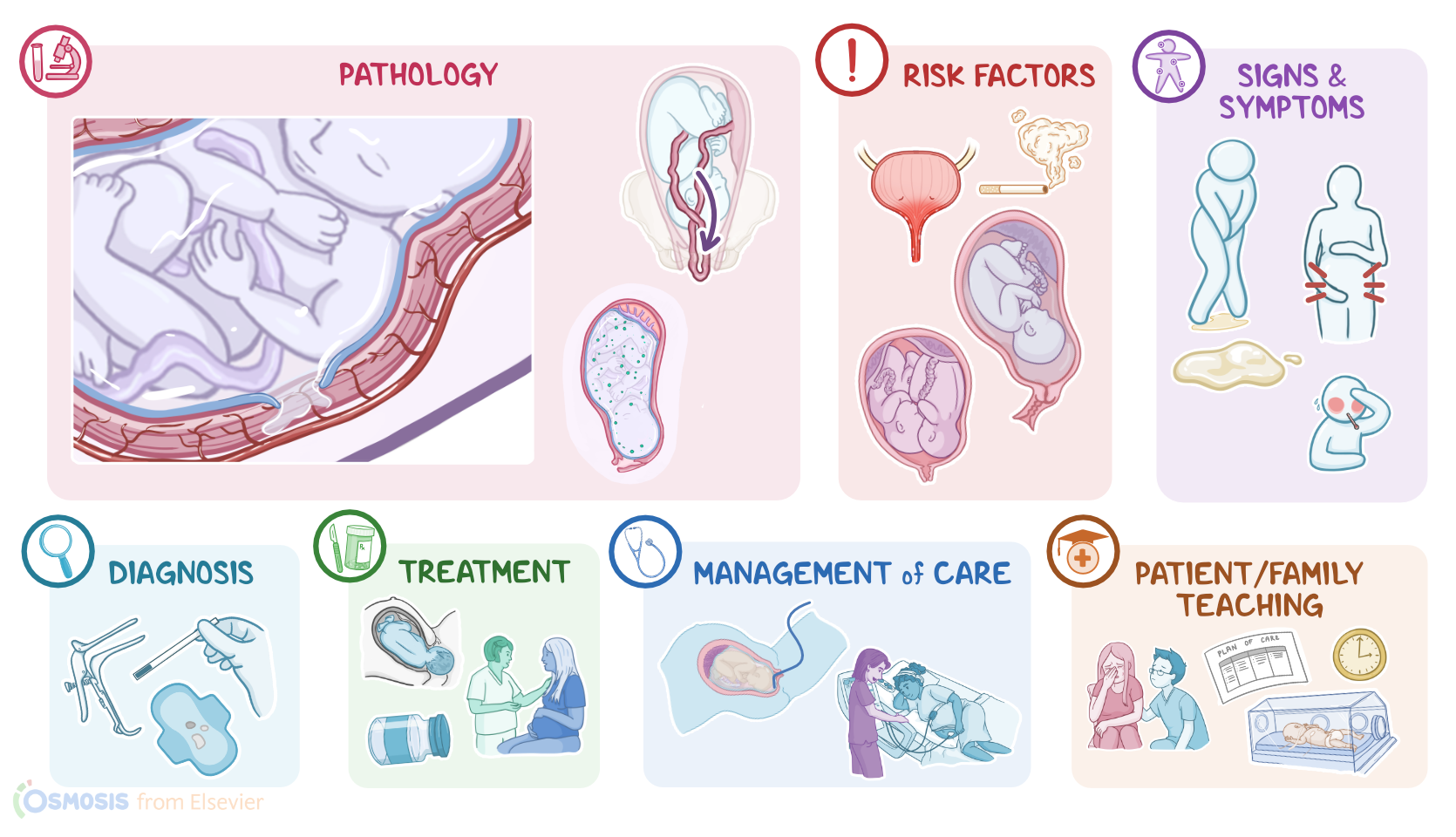
Although there are several conditions associated with premature rupture of membranes, the exact cause isn’t always clear. Risk factors include a history of PROM or PPROM in a previous pregnancy; genital or urinary tract infections; cigarette smoking; acute abdominal trauma; and uterine overdistention, which can happen as a result of a multiple pregnancy or due to polyhydramnios, which is when there’s too much amniotic fluid inside the amniotic sac.
Now, the pathology of premature rupture of membranes results from a variety of factors that lead to accelerated membrane weakening, eventually causing its rupture. When membrane rupture occurs, a sudden release of amniotic fluid results in oligohydramnios, meaning there’s too little amniotic fluid surrounding the fetus. Premature rupture of membranes is associated with complications like umbilical cord prolapse, which is when the umbilical cord prolapses into the lower uterine segment. In addition,membrane rupture provides a perfect entryway for bacteria to reach the intrauterine cavity, increasing the risk of ascending infections, causing chorioamnionitis, which is when the amniotic sac and fluid get infected. Now, chorioamnionitis is a potentially serious infection, as it can lead to fetal distress, premature labor, or even sepsis.
| PREMATURE RUPTURE OF MEMBRANES (PROM) | ||
| KEY POINTS | NOTES | |
| DEFINITION |
| |
| PHYSIOLOGY |
| |
| CAUSES AND RISK FACTORS |
| |
| PATHOPHYSIOLOGY |
| |
| SIGNS AND SYMPTOMS |
| |
| DIAGNOSIS |
| |
| TREATMENT |
| |
| MANAGEMENT OF CARE |
| |
| PATIENT AND FAMILY TEACHING |
| |
No notes for this video yet
Try adding a note below