Psychosocial changes - Pregnancy: Nursing
Introduction0:00–0:24
Psychosocial changes during pregnancy include the rollercoaster of emotions that parents experience from the moment they find out about the pregnancy to the moment they accept that they are going to be parents all the way up to birth.
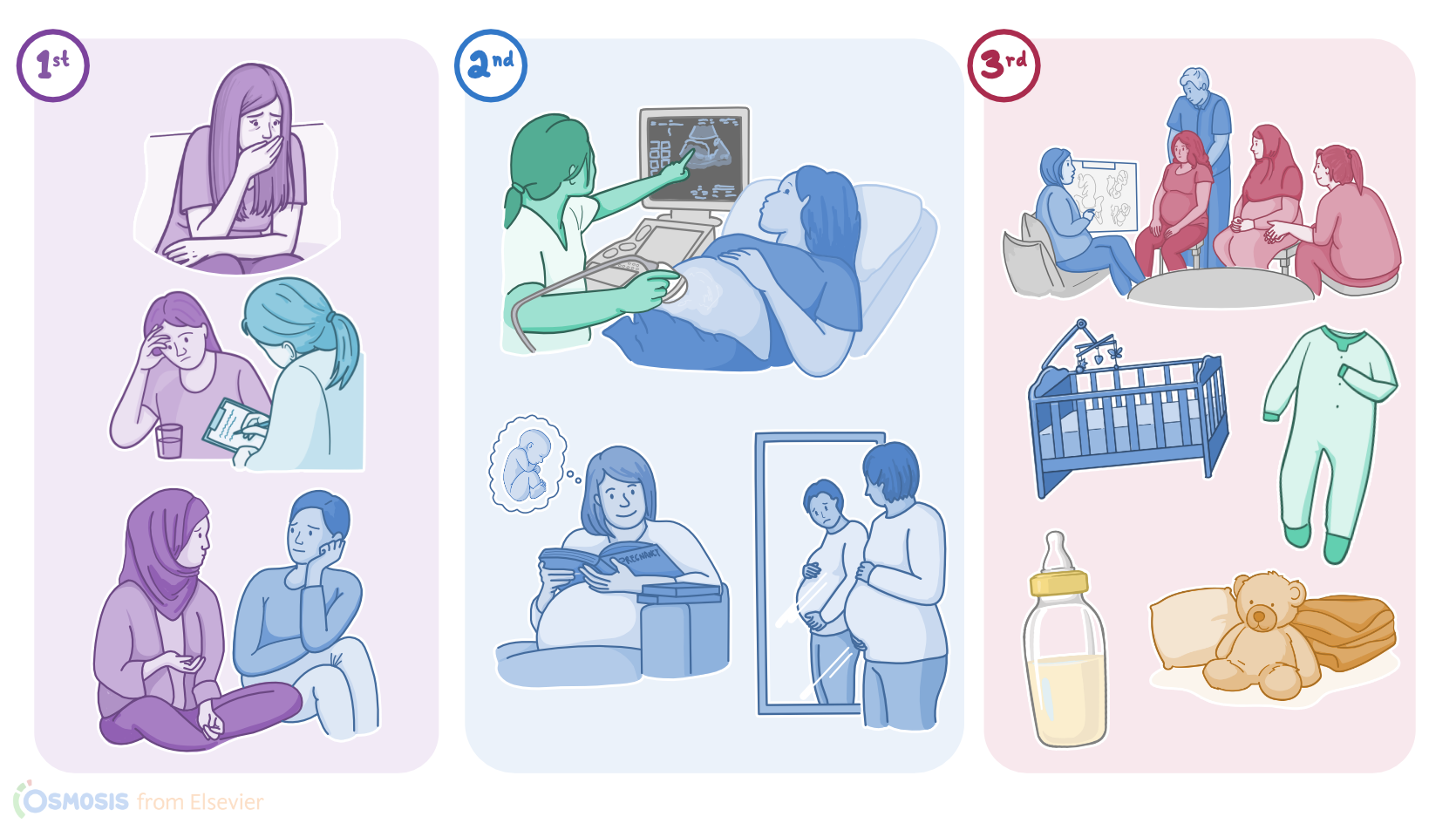
During this period, the nurse should support the client and the client’s partner and help promote a healthy outcome. Now, during the first trimester, clients typically feel uncertainty because they are not sure if they are actually pregnant.
First trimester0:24–1:59
Some may respond to uncertainty by talking to friends or family and looking for signs and symptoms of pregnancy. Others might use over-the-counter pregnancy tests, while others might seek professional help from a healthcare provider.
Once the pregnancy is confirmed, they may experience a feeling of ambivalence or internal conflict. Particularly if it's their first pregnancy, they may begin to worry about the added responsibility and life changes that come with having a child.
But, with time, ambivalence usually gives way to acceptance of their new reality. Next comes self-focus, meaning they start focusing on themselves and the effects the pregnancy symptoms.
At this point, pregnancy symptoms, such as nausea and fatigue begin to present. At the same time, hormonal changes in the body can trigger mood swings that can range from being extremely happy to irritability and even sadness.
Finally, they might experience changes in their sexuality, which can vary based on their individual cultural or religious beliefs.
So, some clients might notice a rise in their sexual interest or a fall due to the pregnancy symptoms, particularly nausea and breast tenderness.
During the first trimester, nurses can assist their clients by reassuring them about these normal changes and by suggesting ways they can cope with the discomforts of pregnancy, as well as any psychological stress they are experiencing.Once the client enters the second trimester, they have more physical evidence of pregnancy.
Second trimester1:59–3:38
Now they can see their fetus on the ultrasound assessment and can feel the first fetal movements. They develop an awareness that their fetus is a separate organism that is completely dependent on them.
Also, at this point, symptoms associated with pregnancy start to decrease, and their interest in fetal health increases.
During the second trimester, they also experience body changes, such as weight gain, breast enlargement, bulging of the abdomen, stretch mark, and hyperpigmentation of the skin.
In some individuals, these changes can trigger negative feelings, while in others, body changes might be welcomed with feelings of joy and fulfillment because they are proud of being pregnant.
Finally, changes in sexuality during this time can be highly variable. Sexual responsiveness is often increased, but at the same time, some may worry about how their partner reacts to their increase in size, or they may develop fears about harming their fetus during sexual intercourse.
Nurses can support their clients’ psychosocial needs by validating their feelings, clarifying concerns they may have, and providing factual information.
For example, if the client is concerned about their weight, the nurse can reinforce how a healthy weight gain during pregnancy will support the growth of a healthy baby, and talk about ways weight is normally lost after pregnancy.
The nurse can also reassure them that, for healthy pregnancies, sexual activity does not pose a risk to their fetus, and the nurse can suggest alternate positions the couple can use to maintain intimacy.
Okay, let’s switch gears and move on to psychosocial changes during the third trimester. During this period, the client becomes more dependent on others, and may need additional help with decision-making.
Third trimester3:38–4:57
The need for attention and love also rises. This can result in frequent calls to their partner, as well as concern about their safety.
That’s because the feelings of love, attention, and security help them cope with changes that they are experiencing. Additionally, the focus on fetal well-being grows into vulnerability.
Often, they might avoid crowded places to protect themselves and their fetus from physical dangers and infections. They might also experience nightmares about having a deformed baby or losing a baby.
Over time vulnerability decreases, and they begin to prepare for the birth. Usually, the preparation includes buying furniture, clothes, and other supplies for the baby.
This behavior is often referred to as nesting behavior. Additionally, parents might complete childbirth classes that cover education on self-care, pregnancy changes, the birth process, infant care, as well as breastfeeding and nutrition.
Finally, during this period, they may experience concerns about labor and fear of childbirth. During this time, nurses can play an active role in prenatal care and education.Now, factors that can influence maternal psychosocial adaptation during pregnancy include age, multiparity, social support, and abnormal life situations.
Factors Influencing Adaptation4:57–5:50
First, let’s start with the age. Teenage clients usually lack financial resources and have a harder time managing both adolescent and parenting tasks.
On the flip side, clients over 35 years of age might have chronic conditions, such as hypertension or diabetes mellitus, which can complicate the course of pregnancy.
Next up, there’s multiparity; as well as social support. The absence of a partner and family support might result in depression and inadequate care during pregnancy.
Nurses can support the psychosocial adaptation during pregnancy by assisting them to identify alternative sources of social support, including prenatal support groups, and childbirth classes.Alright, as a quick recap… Psychosocial changes during pregnancy include the various emotions and changes experienced throughout pregnancy.
Review5:50–6:24
Important psychosocial changes during the first trimester include uncertainty, ambivalence, and self-focus; while changes during the second trimester include focus on their fetus and body image.
Psychosocial changes during the third trimester include dependence, vulnerability, and nesting behavior. Factors that can influence psychosocial adaptation to pregnancy include age, multiparity, and social support.
| PSYCHOSOCIAL CHANGES - PREGNANCY | ||
| KEY POINTS | NOTES | |
| DEFINITION |
| |
| FIRST TRIMESTER |
| |
| SECOND TRIMESTER |
| |
| THIRD TRIMESTER |
| |
| FACTORS INFLUENCING ADAPTATION |
| |
No notes for this video yet
Try adding a note below