Urticaria: Nursing
Definitions & Key takeaways
Urticaria, commonly referred to as hives, is a kind of skin rash notable for pale red, raised, itchy bumps, which can cause a burning or stinging sensation. Lesions are frequently caused by allergic reactions; however, there are many nonallergic causes, such as autoimmune disorders like thyroid disease. Most cases of hives lasting less than six weeks (acute urticaria) are the result of an allergic trigger. Chronic urticaria (hives lasting longer than six weeks) is rarely due to an allergy.
Treatment for urticaria typically involves identifying and avoiding triggers, as well as taking medication to relieve symptoms. Antihistamines are often prescribed to block the release of histamine and reduce itching and swelling. In severe cases, oral or injectable corticosteroids may be prescribed. Nursing management and care focuses on helping to eliminate or reduce the triggering factors, manage symptoms, and monitor for complications. Client and family education focuses on prevention and symptom management.
Introduction0:00–0:15
Physiology0:15–0:49
Causes & risk factors0:49–1:37
Pathology1:37–2:20
Clinical manifestations2:20–3:04
Diagnosis3:04–3:25
Treatment3:25–3:49
Management and care3:49–4:37
General client and family teaching4:37–5:46
Review5:46–7:05
| URTICARIA | ||
| KEY POINTS | NOTES | |
| DEFINITION |
| |
| PHYSIOLOGY |
| |
| CAUSES AND RISK FACTORS |
| |
| PATHOPHYSIOLOGY |
| |
| SIGNS AND SYMPTOMS |
| |
| DIAGNOSIS |
| |
| TREATMENT |
| |
| MANAGEMENT OF CARE |
| |
| PATIENT AND FAMILY TEACHING |
| |
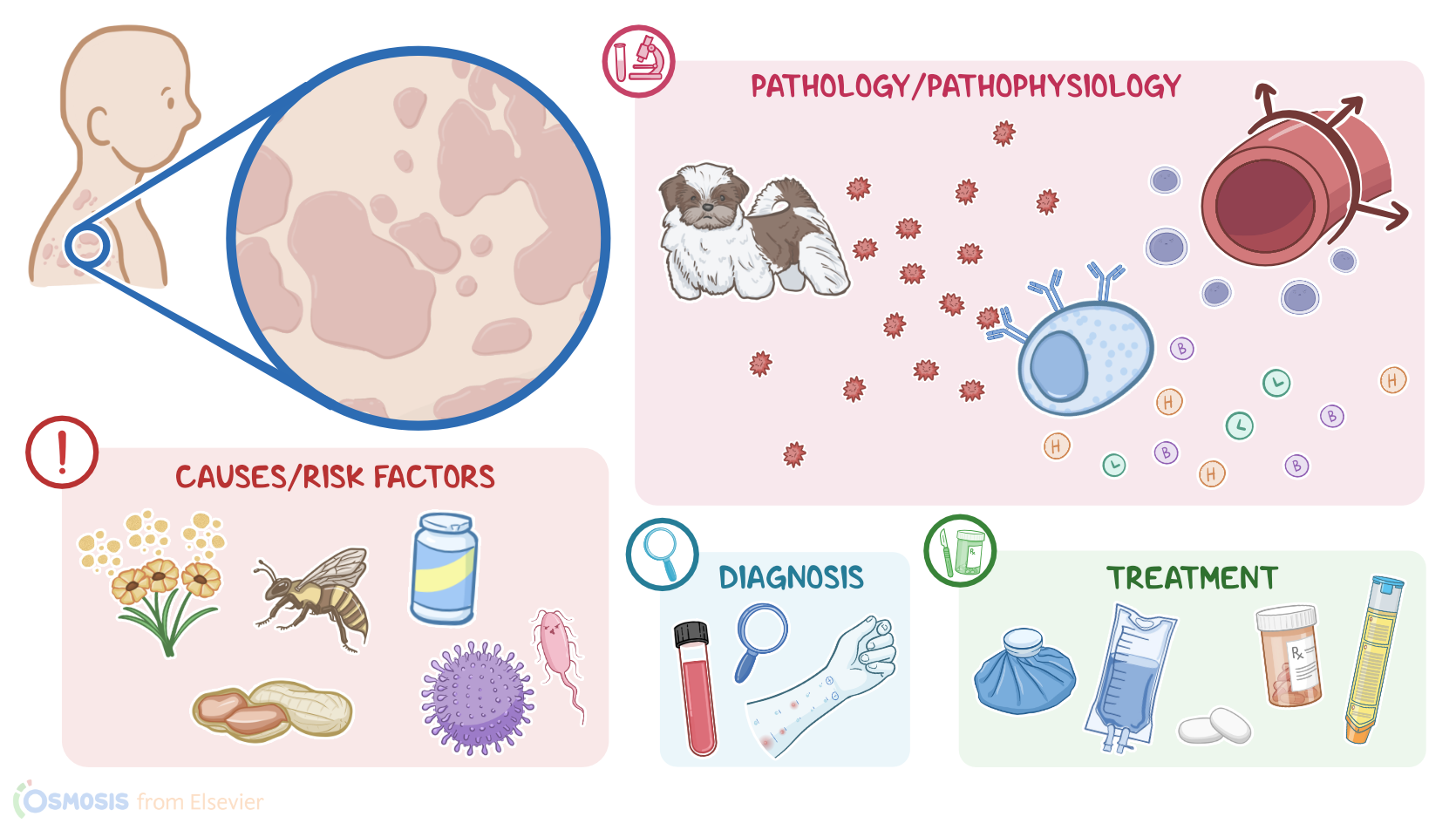
- "Lewis’s medical-surgical nursing: Assessment and management of clinical problems (11th ed.)" Elsevier (2020)
- "Medical-surgical nursing: Concepts for interprofessional collaborative care (10th ed.)" Elsevier (2021)
- "Habif’s Clinical Dermatology (7th ed.)" Elsevier (2021)
No notes for this video yet
Try adding a note below