Care of a client identifying as LGBTQ+: Nursing
As a nurse, you’ll be providing care for patients who are lesbian, gay, bisexual, transgender, queer or questioning, and other orientations and identities, also known as LGBTQ+. Members of the LGBTQ+ community often experience health inequities that can be explained by the minority stress model. This model describes how disparities can be traced to cultural stressors like stigma, harassment, and discrimination. For example, people who identify as LGBTQ+ experience higher rates of substance and tobacco use as well as increased rates of mental health disorders, like depression and anxiety.
Historically, people who identify as LGBTQ+ have experienced discrimination within the health care system. In fact, a significant majority of people who are gay, lesbian, bisexual and transgender report discrimination by a health care provider.
Additionally, health care providers receive limited education on how to provide culturally appropriate care to people who identify as LGBTQ+. This lack of training can add to the health inequities, but by using correct terminology and creating an inclusive environment, nurses can provide culturally appropriate care to the patients who identify as LGBTQ+.
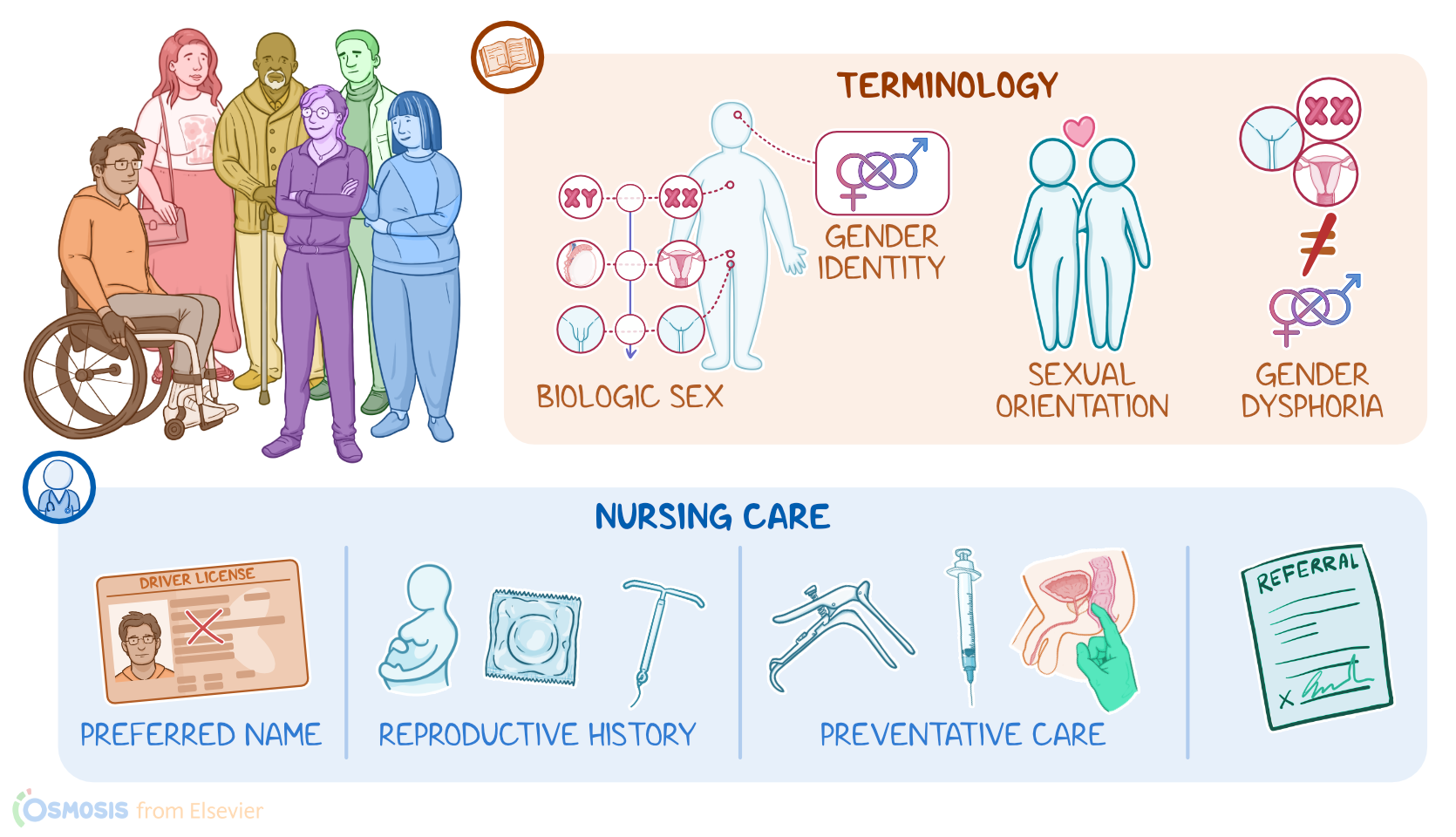
First, let‘s focus on terminology, starting with the difference between biologic sex and gender identity. Someone’s biologic sex, or sex assigned at birth, is determined by their genitalia, reproductive organs, and chromosomes, and can be classified as male, female, or intersex. On the other hand, gender identity refers to someone's self-perceived gender and may or may not align with their sex assigned at birth.
So, a person who’s cisgender has a gender identity that’s the same as their sex assigned at birth, and a person who's transgender is someone whose gender identity is different from their sex assigned at birth. For example, a transgender man is someone who was assigned female at birth but identifies as a male. Additionally, people who are non-binary may not identify as one gender at all, but instead identify on a continuum between, or outside, male and female.
When a person’s gender identity doesn't match their sex assigned at birth, some people may experience gender dysphoria, which is a mental health diagnosis describing the distress caused by this conflict.
Okay, let’s move on to sexual orientation, which is separate from someone’s gender identity. Sexual orientation is how someone identifies based on who they are attracted to sexually or romantically. A person who is heterosexual, or straight, is attracted to people of the opposite sex. Accepted terms for people who aren’t straight include gay man for a male who's attracted to other males, lesbian for a female who's attracted to other females, and bi or bisexual for a person who's attracted to more than one gender.
| CARE OF A CLIENT IDENTIFYING AS LGTBQ+ | ||
| KEY POINTS | NOTES | |
| DEFINITION |
| |
| TERMINOLOGY |
| |
| NURSING CONSIDERATIONS |
| |
- "Cultural competence in the care of LGBTQ patients" StatPearls (2022)
- "Lewis's medical-surgical nursing: Assessment and management of clinical problems (12th ed.)" Elsevier (2022)
Aún no hay notas para este video
Intenta agregar una nota a continuación