Case study - Gastroesophageal reflux disease (GERD): Nursing
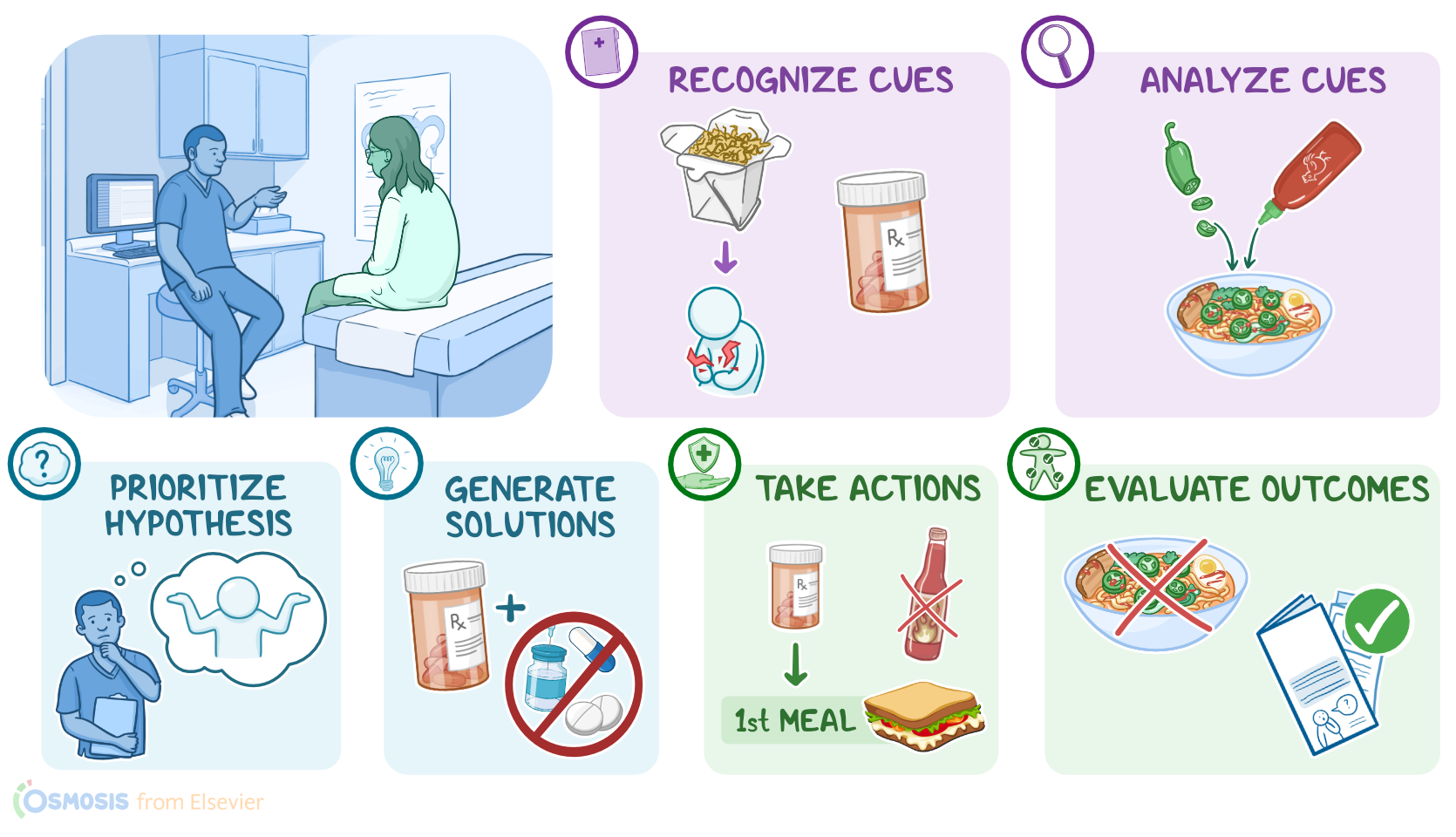
Nurse Max works in a primary care office and is caring for Anuja, a 54-year-old woman with a history of gastroesophageal reflux disease, or GERD, who's being seen for a three-month follow-up appointment. After settling Anuja in her room, Nurse Max goes through the steps of the Clinical Judgment Measurement Model to make clinical decisions about Anuja’s care by recognizing and analyzing cues, prioritizing hypotheses, generating solutions, taking action, and evaluating outcomes.
First, Nurse Max recognizes important cues including vital signs which are temperature 98.2 F or 36.9 C, heart rate 76 beats per minute, respirations 14 breaths per minute and regular, blood pressure 128/84 mmHg, and oxygen saturation 98 percent on room air. Nurse Max asks Anuja if she’s having pain, and she reports a burning in her mid upper abdomen after eating, despite taking her prescribed medication.
Next, Nurse Max analyzes these cues. They review the electronic health record, or EHR, and note Anuja has been on proton pump inhibitor, or PPI, therapy for three months to treat her GERD. Nurse Max then talks to Anuja about her lifestyle modifications.
Nurse Max: I’m glad you’ve been taking your PPI every day and I’m sorry it hasn’t been working for you. I want to figure out what might be happening. What time do you take your medication?
Anuja: I take it every night after dinner. I set an alarm, so I don’t forget.
Nurse Max: Setting an alarm is a great idea! What do you typically eat at home?
Anuja: I’ve been making a noodle dish lately with lots of fresh jalapenos drizzled with sriracha, my family loves it!
Now, using the information they’ve gathered, Nurse Max chooses a priority hypothesis of knowledge deficit.
Then, they generate solutions to address this problem that will include pharmacologic and nonpharmacologic interventions, and they establish the outcome that after intervening, Anuja will verbalize an understanding of GERD management.
| GASTROESOPHAGEAL REFLUX DISEASE (GERD) | ||
| KEY POINTS | NOTES | |
| PATIENT REPORT |
| |
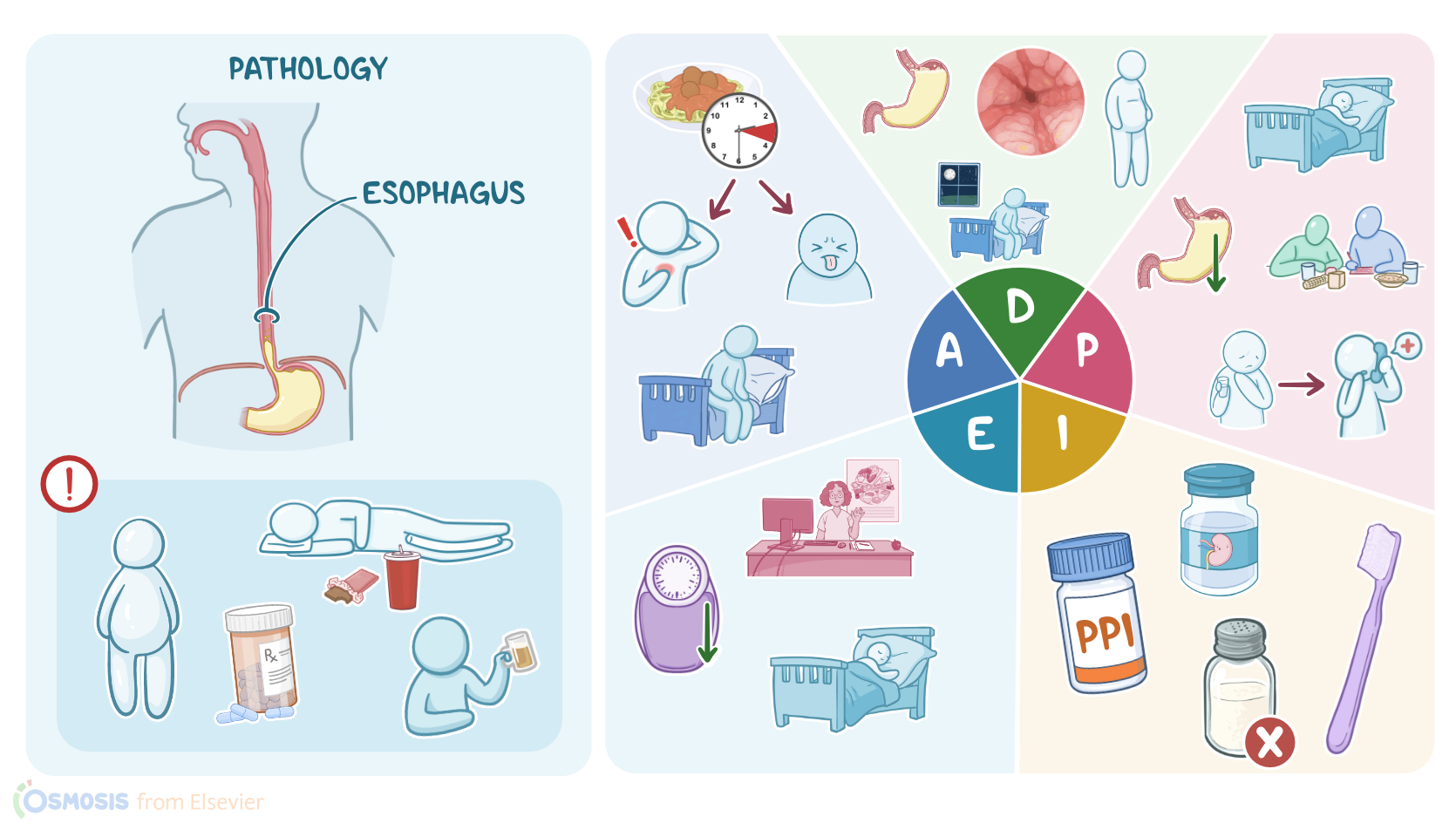
| PATHOPHYSIOLOGY |
| |
| DIAGNOSIS AND TREATMENT |
| |
| ASSESSMENT |
| |
| NURSING DIAGNOSES |
| |
| PLANNING |
| |
| IMPLEMENTATION |
| |
| EVALUATION |
| |
Notas
| CASE STUDY - GASTROESOPHAGEAL REFLUX DISEASE (GERD) | ||
| KEY POINTS | NOTES | |
| INTRODUCTION |
| |
| RECOGNIZING AND ANALYZING CUES |
| |
| PRIORITIZING HYPOTHESES, GENERATING SOLUTIONS, AND TAKING ACTIONS |
| |
| EVALUATING OUTCOMES |
| |
- "Lewis's medical-surgical nursing: Assessment and management of clinical problems. (12th ed.)" Elsevier (2022)
- "Medical-surgical nursing: Concepts for interprofessional and collaborative care. (10th ed.)" Elsevier (2021)
- "Lewis’s medical-surgical nursing in Canada: Assessment and management of clinical problems. (5th ed.)" Elsevier (2023)
Aún no hay notas para este video
Intenta agregar una nota a continuación