Geriatric considerations - Gastrointestinal: Nursing
Revisores de contenido
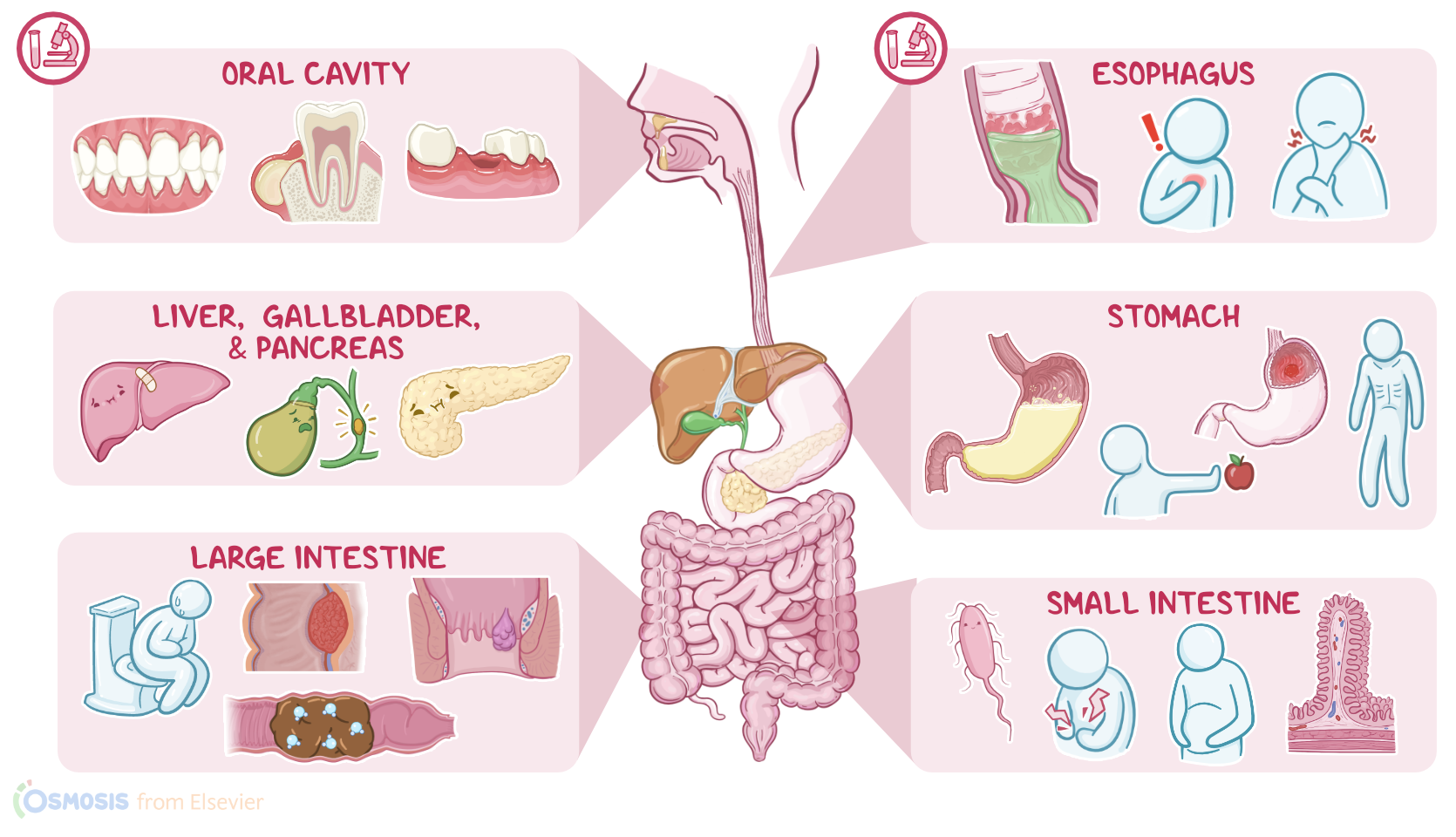
Geriatrics is the branch of medicine that deals with the physiology and psychology of aging, as well as the diagnosis and treatment of diseases affecting older clients. Now, aging affects various organ systems, one of which is the gastrointestinal system. All right, let’s start by reviewing the physiology of the gastrointestinal system, which is primarily responsible for mechanical and chemical digestion of food; absorption of nutrients; and finally, excretion of waste as feces. From top to bottom, the gastrointestinal tract starts with the oral cavity, then the esophagus, the stomach, the small intestine, the large intestine, and ends with the anus. First, let’s start with the oral cavity, which plays an important role in breaking down food. As a person ages taste buds atrophy and decrease in number, resulting in decreased ability to taste salty, sweet, bitter, sour and umami. This can decrease enjoyment of food, so poor eating habits and nutritional deficiencies could develop.
Many elderly clients also have periodontal disease, which refers to disease that affects the gum, or gingivae, and the underlying bones that support the teeth. The mildest form of periodontal disease is gingivitis, where just the gums are inflamed. If left untreated, gingivitis can progress to the more severe disease called periodontitis, where both gum and bones are affected and can eventually result in tooth loss. Additionally, with aging, the production of saliva by salivary glands decreases, which can lead to xerostomia or dry mouth, and this can also contribute to gingivitis and tooth decay. Elderly clients without teeth, or clients who have poorly fitting dentures, often find it hard to chew food. These clients tend to avoid certain hard to chew foods, which can eventually result in poor nutrition. Now, moving on to the esophagus, which is a part of the gastrointestinal system that propels the food from the pharynx down into the stomach. The esophagus and the stomach are separated by a muscular valve called the lower esophageal sphincter, which prevents the reflux of stomach contents back into the esophagus. Elderly clients may develop decreased esophageal motility, leading to symptoms such as dysphagia, as well as increasing the risk of aspiration.
| GERIATRIC CONSIDERATIONS - GASTROINTESTINAL | ||
| KEY POINTS | NOTES | |
| DEFINITION |
| |
| PHYSIOLOGY |
| |
| MOUTH |
| |
| ESOPHAGUS |
| |
| STOMACH |
| |
| SMALL INTESTINE |
| |
| PANCREAS, LIVER, AND GALLBLADDER |
| |
| LARGE INTESTINE |
| |
| PATIENT AND FAMILY TEACHING |
| |
Aún no hay notas para este video
Intenta agregar una nota a continuación