Geriatric considerations - Sensory: Nursing
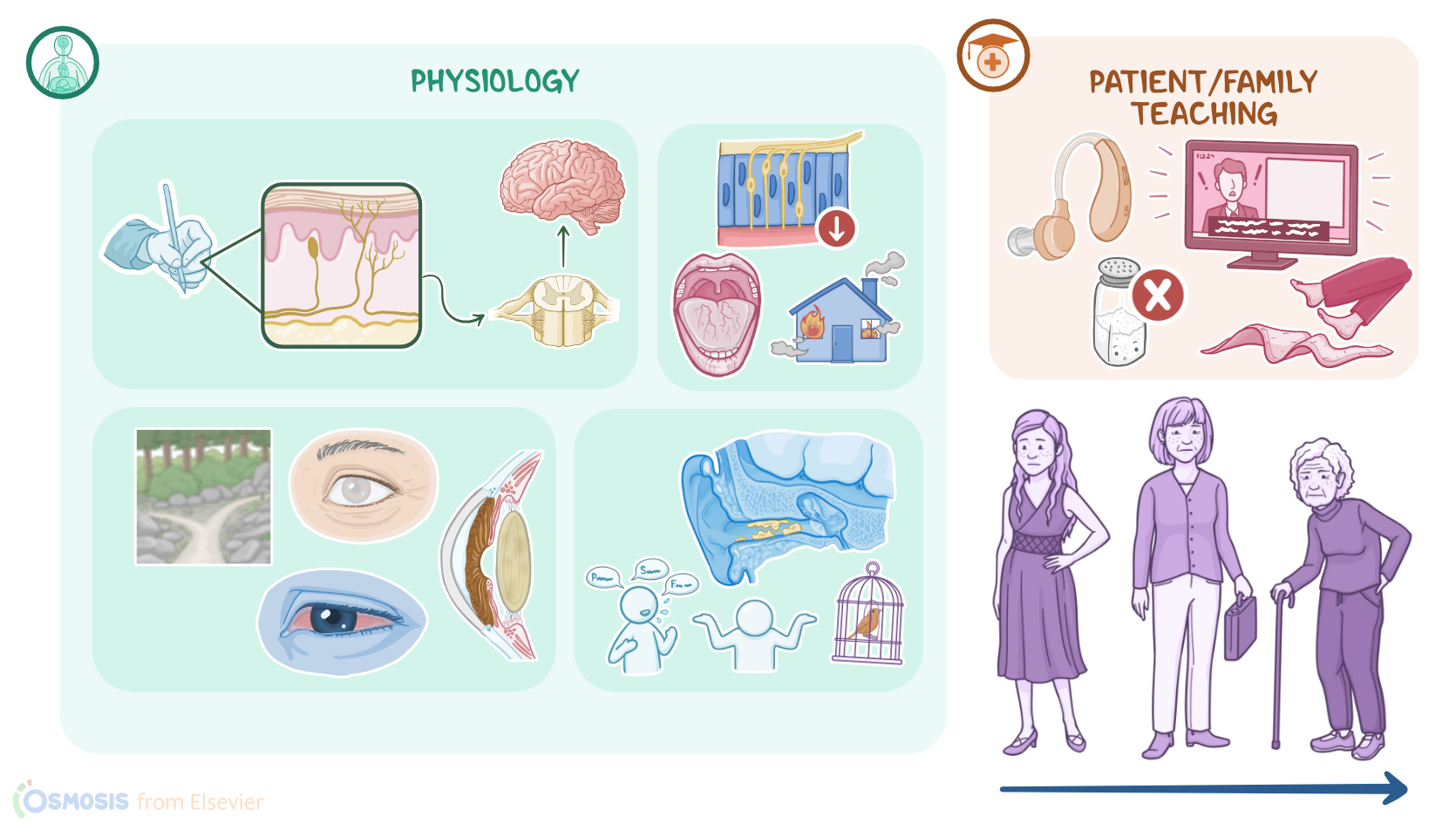
Geriatrics is the branch of healthcare dealing with both the physiology and psychology of aging, as well as the diagnosis and treatment of diseases affecting older adults. As we age, the body undergoes various changes, such as a decline in the function of the sensory system, which gathers information about our surroundings and what’s happening inside our bodies. The sensory system includes touch, vision, hearing, taste, and smell. Age-related changes in the sensory system can impact many aspects of a client’s quality of life, and thus must be taken into consideration when caring for elderly clients.
First, let’s start with touch. Tactile receptors are nerve endings that pick up sensory information when something comes in contact with your skin, like when you’re holding a pen. This sensation is then sent through sensory neurons to the spinal cord and eventually to the brain. Now, some parts of your body, like the tips of the fingers, are more sensitive to touch because they have more tactile receptors than other areas, like your back.
Now, with aging, the blood flow to nerve endings, the spinal cord, and even some parts of the brain can decrease, which causes a decreased sensation of touch. Additionally, chronic conditions, like diabetes mellitus, can affect small blood vessels that supply nerve endings and further affect sensation, particularly in distal parts of the body, like the feet. The loss of sensation makes it hard for older clients to feel pressure in specific areas of the body, which can result in complications, such as frostbites, burns, or even pressure ulcers.
Next up is vision. If we zoom into the wall of the eye, there's an outer fibrous layer made out of the cornea and sclera, which helps control and focus the entry of light. The light that passes through the cornea is directed to the lens, which in turn collects light arrays and focuses them into the retina at the back of the eye. Behind the lens is a gel-like structure called the vitreous body, which fills up the center of the eye and supports the retina. The retina is a layer that houses photoreceptors, which translate light into electrical impulses. These impulses are then carried by the optic nerve into the brain, which processes the impulses from both eyes and fuses them into one clear image.
| GERIATRIC CONSIDERATIONS - SENSORY | ||
| KEY POINTS | NOTES | |
| DEFINITION |
| |
| TOUCH |
| |
| VISION |
| |
| HEARING |
| |
| TASTE AND SMELL |
| |
| PATIENT AND FAMILY TEACHING |
| |
Aún no hay notas para este video
Intenta agregar una nota a continuación