Substance use disorder - Medications and illicit drugs: Nursing
Substance use disorder is a condition that involves cognitive, behavioral, and physiological symptoms that occur when a person continues using a substance despite significant substance-related problems, like missing work or school, or impaired relationships with family or friends. Commonly used substances include certain drugs, including stimulants like cocaine and methamphetamine; hallucinogens like ketamine and psilocybin; sedative-hypnotics like barbiturates and benzodiazepines; opioids such as heroin or morphine; and cannabis.
Okay, let’s quickly review the physiology of the brain’s reward pathway, which governs pleasure and motivation. Inside the brain are molecules called neurotransmitters that are produced and used by neurons to communicate with each other. This communication happens when one neuron releases a neurotransmitter which then binds to the receptors of another neuron, causing the neuron to react.
The reward pathway is composed of the mesolimbic system, which includes the ventral tegmental area in the midbrain and the nucleus accumbens, a cluster of cells located near the hypothalamus. The primary neurotransmitter used in this system is dopamine, which causes a feeling of pleasure when released. So, when dopamine is released in response to a substance like a sugary treat, for example, a feeling of pleasure occurs. The dopamine stays in the junction between neurons for a while until it’s taken back into the neuron via dopamine reuptake transporters, and the feeling of pleasure stops.
Now, the prefrontal cortex located in the front of the brain is the area that’s responsible for executive functions like decision making and emotional regulation. It also receives dopamine signals, where it evaluates the feelings of pleasure and directs a person’s actions, like having more of that sugary treat!
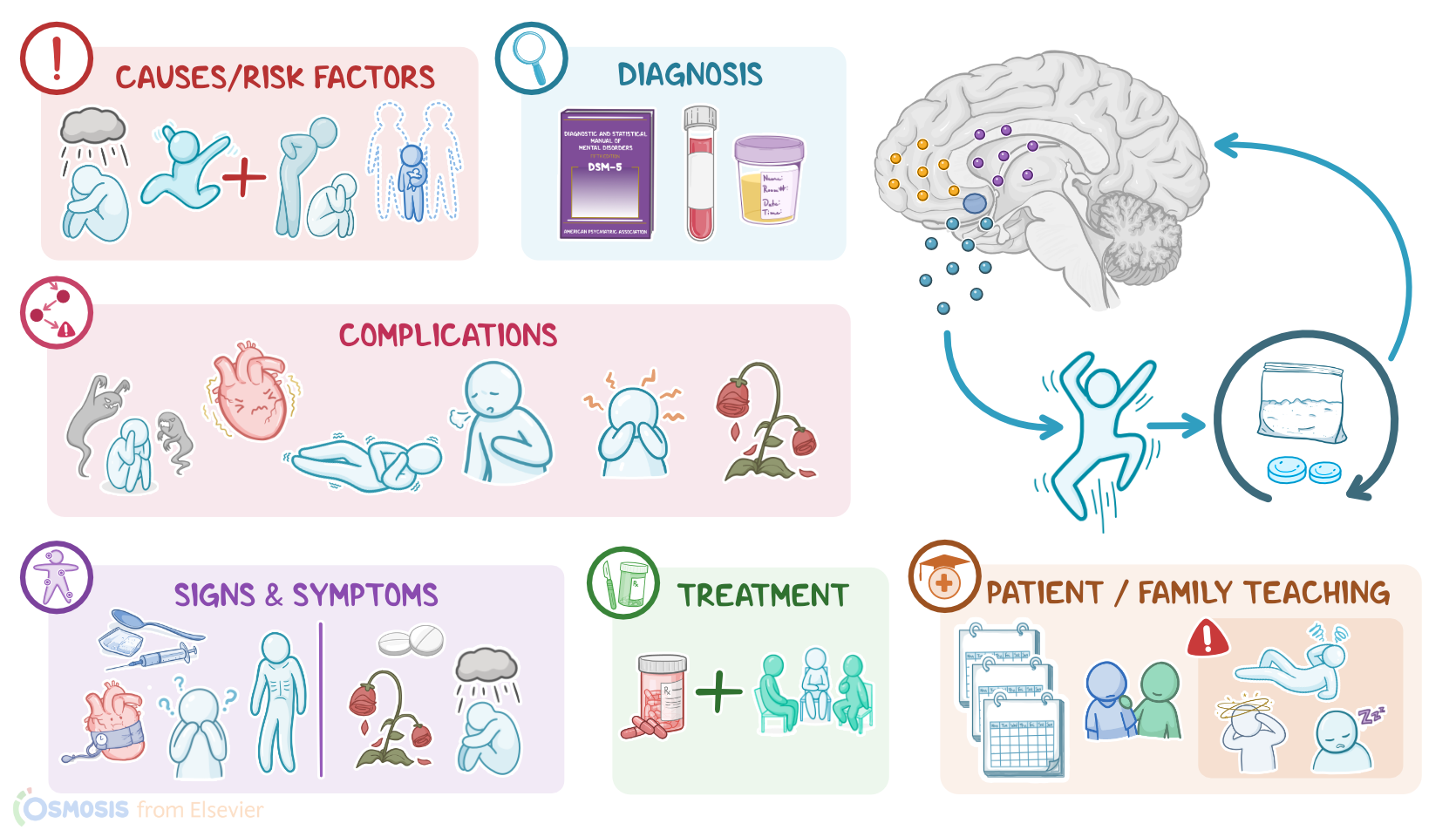
Now, substance use disorders don’t have a single cause, but rather, the cause is multifactorial, meaning there’s a combination of genetic, environmental, social, and psychological risk factors involved. These include a family history of substance use disorder; high levels of family conflict or violence; or having a mental health disorder like depression, ADHD, or PTSD. Certain experiences also put a person at high risk for developing a substance use disorder, like using the substance at an early age or experiencing abuse or neglect.
Now, when considering the pathology of substance use disorder, it’s important to keep in mind that not everyone who uses a substance develops substance use disorder; for example, a single-time dose of morphine in the ER for kidney stones will not typically lead to substance use disorder. However, repeated use of a substance can increase the risk of substance use disorder, because it can alter the brain’s reward circuitry in ways that lead to strong cravings for the substance. These cravings can be overwhelming and drive the person to continue to use the substance despite harmful consequences like missing work or school, or damaged relationships with family or friends. These brain changes also make it hard to stop using the substance, even if the person wants to; and the changes can persist and manifest as relapses, even after successful treatment of substance use disorder.
Now, when certain substances are used, it causes an increase in the level of dopamine either directly or indirectly. For example, cocaine can block the reuptake of dopamine, so it sticks around longer, while some opioids turn off the neurons that inhibit dopamine release, allowing an increased release of dopamine. These mechanisms extend the euphoric feeling, or “high,” which motivates the person to repeatedly use the substance.
Over time, tolerance can develop, which means that with repeated use, a person’s euphoric response to the substance decreases. As a result, a higher dose is needed to achieve the same pleasurable effect as before. At a cellular level, there are two main reasons why this happens. One reason is that cellular receptors become less sensitive to stimulation by a substance; and the other reason is that the neurons may remove receptors from the cell membrane in a process called down-regulation, leaving fewer receptors available for binding. In either scenario, tolerance leads to more and more of the substance to get the same euphoric feeling.
Dependence can also develop, which is the reliance on the substance to function normally. And if the person stops using the substance, they may suffer from withdrawal symptoms. These symptoms can vary widely from substance to substance; for example, symptoms of opioid withdrawal include sweating and shivering, yawning, abdominal cramps, nausea, vomiting, and diarrhea; while sedative-hypnotic withdrawal can manifest as tremors, delirium, and headaches. These symptoms can feel really awful and often prompt the person to use the substance again.
This is called negative reinforcement, since you’re removing the substance, which causes withdrawal symptoms, which then reinforces more substance use to avoid those symptoms. There’s also positive reinforcement from the dopamine-induced pleasure and euphoria associated with using the substance, again leading to more substance use. Together, this positive and negative reinforcement leads to substance use disorder.
Substances can affect many different areas of the body. For example, stimulants like methamphetamine and cocaine can increase heart rate, cause vasoconstriction, and increase blood pressure. This can lead to ischemic damage to the heart, brain, and kidneys. Other effects include paranoia, hallucinations, and dysphoria, as well as a decrease in appetite, leading to weight loss and malnutrition.
On the other hand, opioids and sedative-hypnotics can cause central nervous system depression, which could lead to confusion, respiratory and cardiac depression, and even death.
Diagnosis of substance use disorder begins with the patient’s history and physical assessment and is confirmed using the Diagnostic and Statistical Manual for Mental Disorders fifth edition or DSM-5 criteria, which defines substance use disorder as causing at least two of the following behavior patterns within one year:
1) The substance is taken in larger amount or for a longer period than intended
2) Being unable to cut down on or control the use of the substance
3) Substance use or recovery from use take up a significant amount of time
4) Having cravings to use the substance
5) Having substance use affect responsibilities at work, school, or home
6) Using the substance even if it causes recurrent interpersonal problems
7) Giving up important activities in order to use the substance
8) Using the substance in physically dangerous situations
9) Using the substance even if it’s worsening a physical or psychological problem
10) Tolerance to the substance, unless the tolerance is only under medical supervision
11) Withdrawal symptoms when the substance is stopped
Having 2 or 3 of these symptoms is considered mild, having 4 or 5 is considered moderate, and having 6 or more is considered severe substance use disorder.
| SUBSTANCE USE DISORDER - MEDICATIONS AND ILLICIT DRUGS | ||
| KEY POINTS | NOTES | |
| DEFINITION |
| |
| PHYSIOLOGY |
| |
| CAUSES AND RISK FACTORS |
| |
| PATHOPHYSIOLOGY |
| |
| SIGNS AND SYMPTOMS |
| |
| DIAGNOSIS |
| |
| TREATMENT |
| |
| MANAGEMENT OF CARE |
| |
| PATIENT AND FAMILY TEACHING |
| |
- "Primary care: Interprofessional collaborative practice (7th ed.) ISBN: 978-0-323-93584-5 " Elsevier (2025)
- "Non-pharmacological interventions for methamphetamine use disorder: a systematic review. 212:108060. " Drug Alcohol Depend (2020)
- "Substance Use and Mental Health in Emerging Adult Vs Older Adult Men and Women With Opioid Use Disorder. 29(6):536-542." Am J Addict (2020)
- "Substance use disorders and Medication-Assisted therapies. 58(2):165-181." Nursing Clinics of North America. (2023)
- "CE: Opioid Use Disorder: Pathophysiology, Assessment, and Effective Interventions. 120(6), 38–46." The American journal of nursing (2020)
- "Polygenic Risk for Aggression Predicts Adult Substance Use Disorder Diagnoses via Substance Use Offending in Emerging Adulthood and is Moderated by a Family-Centered Intervention.51(5):607-618." Behav Genet (2021)
- "Assessing Relapse in Patients with Opioid-Use Disorder and Chronic Non-Cancer Pain." Pain Management Nursing ( Published online November 1, 2023)
Aún no hay notas para este video
Intenta agregar una nota a continuación