Osmosis video - Adrenergic antagonists: Beta blockers
00:00 / 00:00
More Videos
12:16
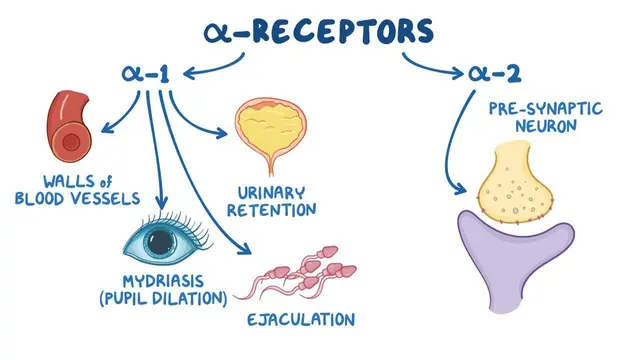
Adrenergic antagonists: Alpha blockers

16:09
Adrenergic antagonists: Beta blockers
11:12
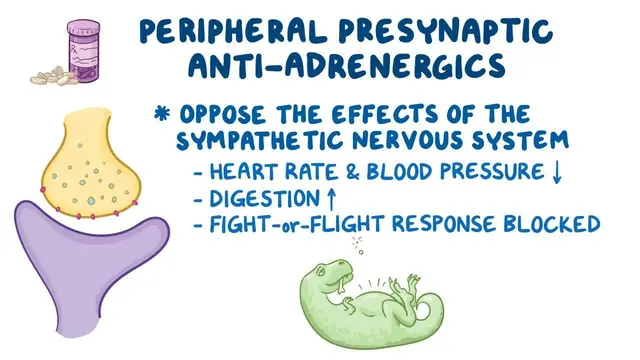
Adrenergic antagonists: Presynaptic
10:35
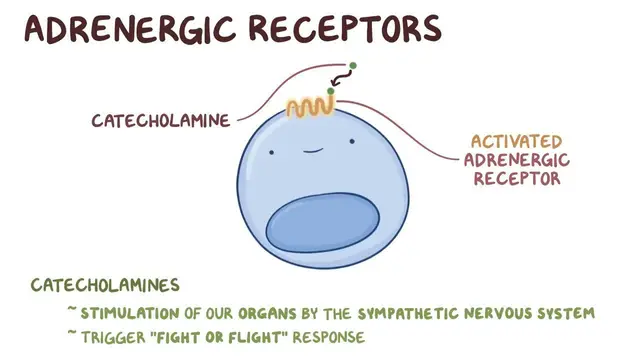
Adrenergic receptors
11:56
Cholinergic receptors
09:16
Cholinomimetics: Direct agonists

10:55
Cholinomimetics: Indirect agonists (anticholinesterases)
08:55
Muscarinic antagonists
09:40
Sympatholytics: Alpha-2 agonists
14:28
Sympathomimetics: Direct agonists
Video Summary of Adrenergic antagonists: Beta blockers
Adrenergic antagonists are a type of drug that blocks the action of adrenaline in the body. Adrenaline is a hormone that is released in response to stress or excitement, and it causes the heart rate to speed up and the blood vessels to narrow.
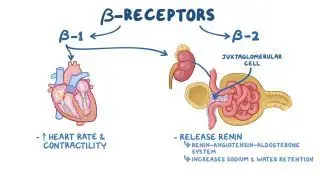
Beta-blockers are a type of adrenergic antagonist that blocks the sympathetic activation of Beta-adrenergic receptors. Beta-blockers work by blocking the action of adrenaline, which is responsible for the body's fight-or-flight response. This makes them ideal for treating conditions where the body's natural response to stress is harmful, such as high blood pressure and heart arrhythmia.